







VMPL
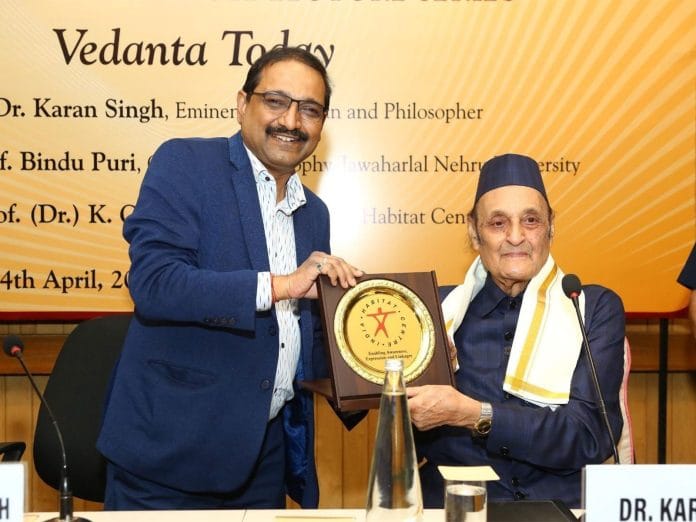
New Delhi [India], April 28: The IHC-ICPR Study Circle held a landmark lecture titled Vedanta Today by Honourable Dr Karan Singh ji at the Gulmohar Hall, India Habitat Centre, New Delhi. The session brought together distinguished scholars and public intellectuals to explore the timeless relevance of Vedantic thought in the contemporary world.
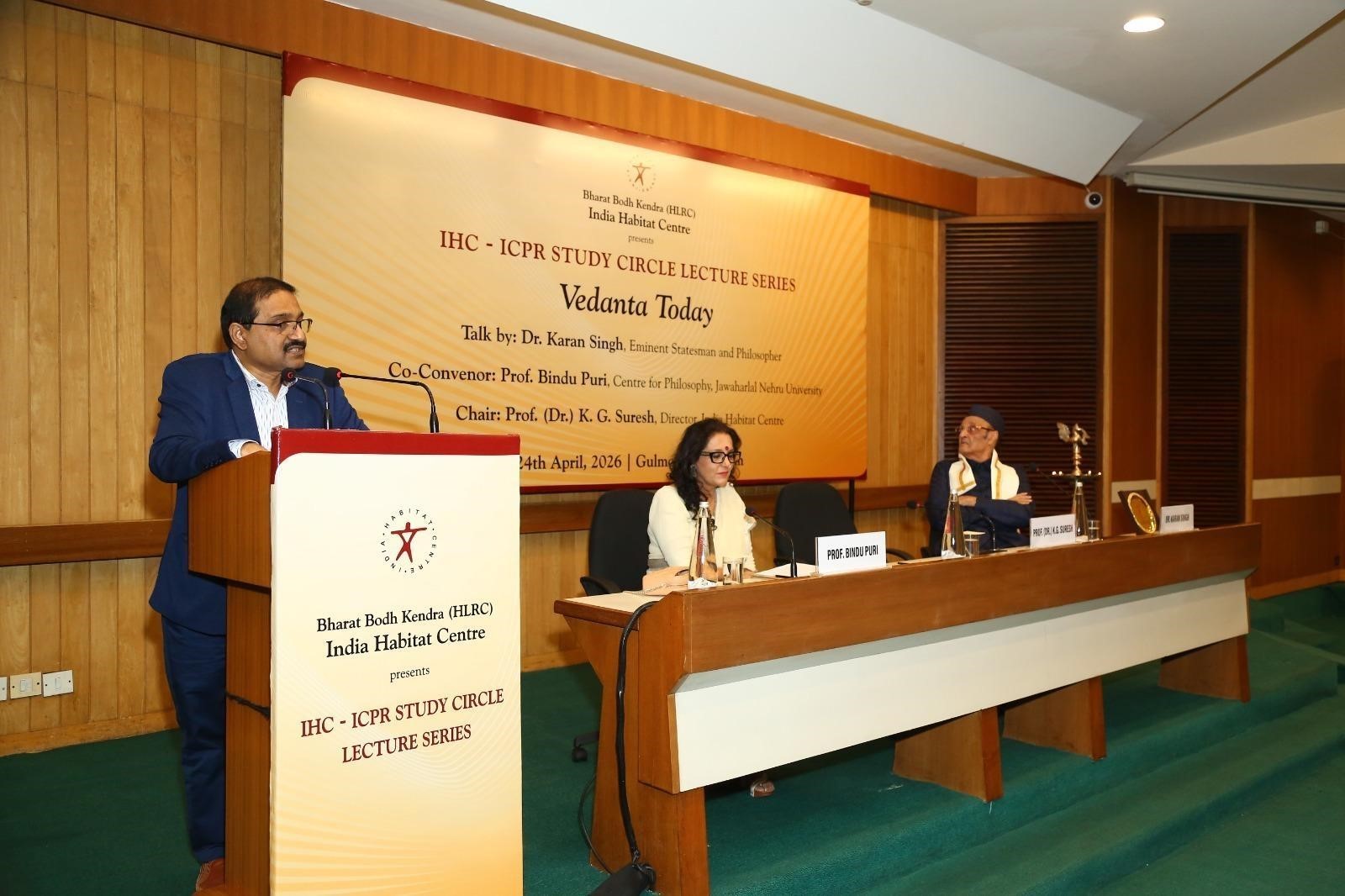
The evening began with the ceremonial lighting of the lamp, followed by a welcome address by Prof. K. G. Suresh, Director of the India Habitat Centre who welcomed the speaker and spoke of his eminence and illustrious contributions. Professor K. G Suresh spoke of the ongoing mission of the Bharat Bodh Kendra to promote outreach focused on Indian philosophy and culture. He emphasised the significance of Vedanta and explained the importance of incorporating its central message in practical life and ordinary concerns. The conceptual framework of the IHC ICPR study circle lecture series was introduced by Prof. Bindu Puri of the Centre for Philosophy, Jawaharlal Nehru University, and Co-Convenor of the Study Circle, who raised the fundamental question of the need for intellectual engagement from within India’s own philosophical tradition — invoking the concept of Intellectual Swaraj as articulated by the philosopher K. C. Bhattacharya. Prof Bindu Puri spoke of the integrated vision of man and cosmos found in the thought of Rabindranath Tagore and Sri Aurobindo.
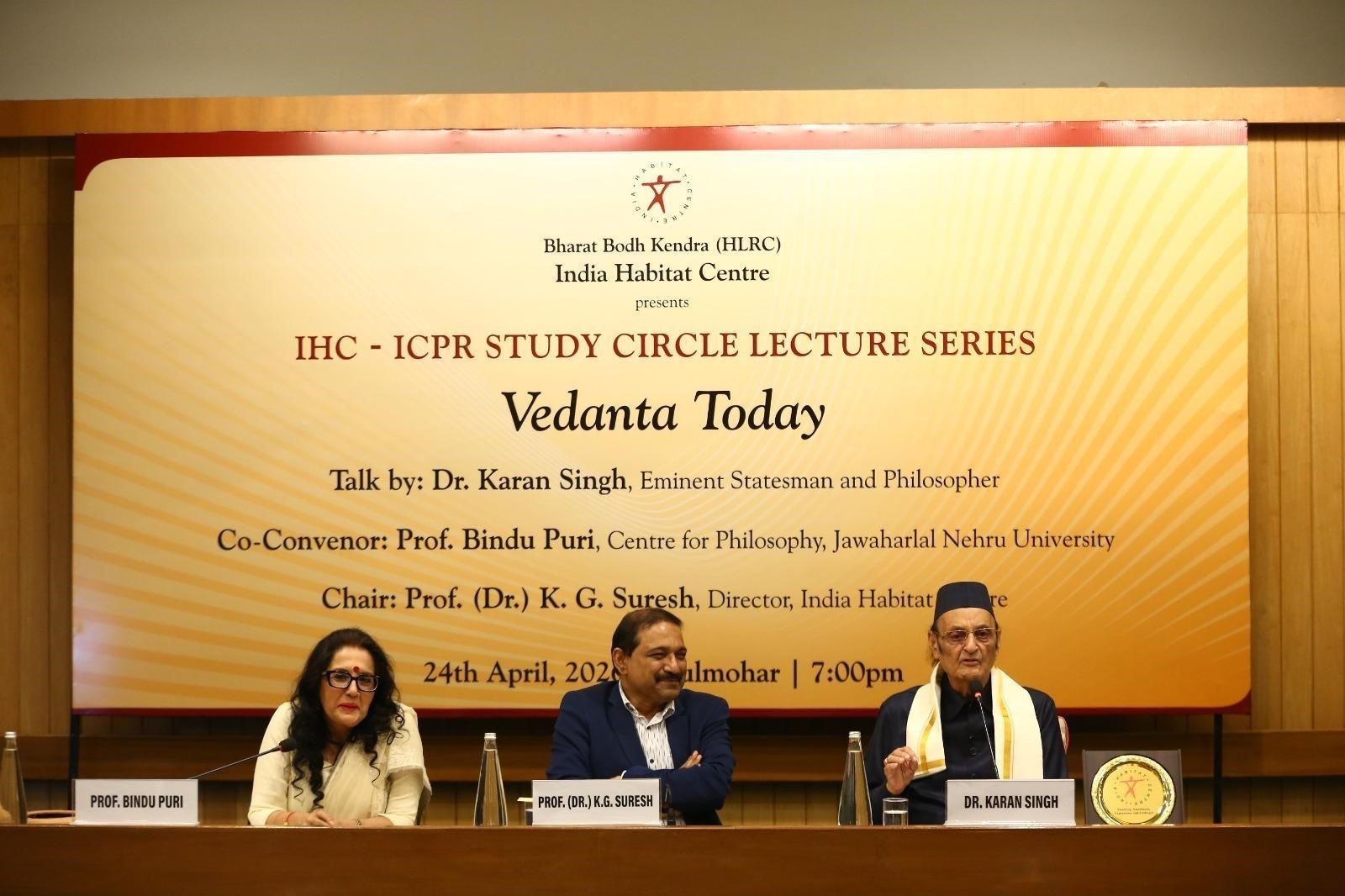
The keynote address was delivered by Honourable Dr Karan Singh, eminent statesman, author, and philosopher. Framing Vedanta as an essential guide for a world in transition — where the old order is collapsing, and the new is yet to be born — Dr Karan Singh offered a comprehensive and accessible exposition of Vedantic philosophy. He traced its foundations through the four parts of the Vedas, underscoring the centrality of the Upanishads to any genuine understanding of the Bhagavad Gita. He elaborated on the core metaphysical concepts of Brahman and Atman, and presented the four Yogas — Jnana, Bhakti, Karma, and Raja — as distinct pathways suited to different human faculties and temperaments.
Dr Karan Singh concluded with a call for social harmony and global unity, invoking the Vedic vision of Vasudhaiva Kutumbakam — the world as one family — and emphasising that India’s philosophical heritage carries a responsibility toward the alleviation of poverty and human suffering. He invoked Swami Vivekananda’s celebrated call to action as a reminder that Vedanta is not merely contemplative but transformative.
The lecture was followed by a lively question and answer session moderated by Prof. K. G. Suresh, exploring themes including the relationship between the One and the Many, the concept of Practical Vedanta, and the challenges of the yogic pa
The IHC-ICPR Study Circle is a collaborative initiative between the India Habitat Centre and the Indian Council of Philosophical Research, offering a monthly lecture series designed to make Indian philosophical traditions accessible to a general audience.
(ADVERTORIAL DISCLAIMER: The above press release has been provided by VMPL. ANI will not be responsible in any way for the content of the same.)
This story is auto-generated from a syndicated feed. ThePrint holds no responsibility for its content.