








New Delhi: Artificial Intelligence has worked wonders in medical diagnostics. In some studies, AI outperforms humans in interpreting brain scans of stroke patients. In others, they detect epilepsy lesions that radiologists miss.
On this emerging frontier, Pune-based radiology-AI startup DeepTek’s progress is encouraging. It’s striking a chord with its flagship chest X-ray AI platform. Its technology analyses chest X-rays to detect TB and over 20 other lung conditions. Not just tuberculosis. It can detect nodules, fractures, and hardware like pacemakers, within minutes in many cases, says the company’s site.
In India, where radiology resources are stretched thin and impact timely diagnostics, DeepTek could fill a crucial gap in healthcare.
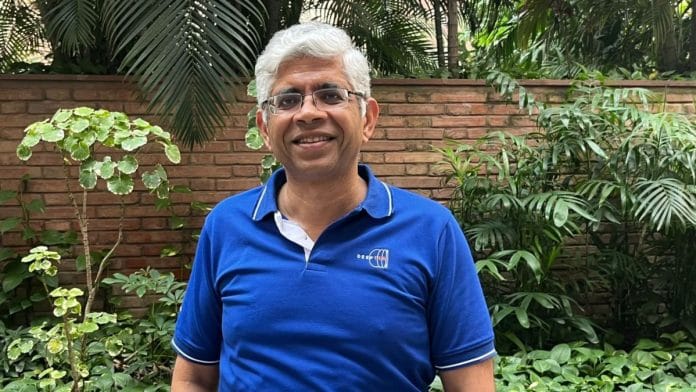
In an interview, DeepTek co-founder Ajit Patil tells ThePrint that AI “offers an opportunity” in countries like India, estimated to have just one radiologist for thousands of patients.
“AI can automate reading and reporting a scan, [and] improve the quality and productivity of the results—that’s the space we are currently in, and it’s a huge global market opportunity,” he says.
AI use, he says, identifies TB at an earlier stage too, leading to faster recovery of patients. It, he adds, brings about an improvement in patients’ quality-adjusted life by a whopping 60 percent.
DeepTek also seems to be blending technological rigour with its pragmatic focus on scalable public health deployment. Its chest X-ray AI solution got certified by the European Union Medical Device Regulation in April 2025.
Moreover, the World Health Organisation (WHO) has listed it among recommended computer-aided detection tools for tuberculosis screening, an endorsement that especially counts in low-resource settings.
Patil says there’s a huge scope for AI diagnostics in India and Africa. This is because their AI-led infrastructure is still in the developing phase, and they’ve unmet health targets.
With the WHO aiming to eliminate TB by 2030, he says, “To do this, we need to conduct chest X-rays of nearly 50 percent of the population in countries like India, Africa, and the Asia-Pacific. Owing to this volume, the WHO has allowed AI use in a completely autonomous mode in chest X-rays.”
He says DeepTek is available in 500 hospitals and imaging centres in India, and 400 mobile vans that conduct chest X-rays in remote towns without Internet. The technology diagnoses quicker, cuts down waiting time for patients, and brings consistency across multiple reports, Patel adds.
Moreover, the use of DeepTek’s AI-based X-rays is cost-saving in the long run. TB detection, he says, has doubled in districts where AI is deployed. AI technology spikes costs, he says. But with the increased chances of identifying TB, investments in Deeptek are like investments in the future.
Started in 2017, DeepTek today has over 300 employees. They include 170 radiologists spread across Asia-Pacific, India, the Middle East, and the US. The company has a strategic equity alliance with NTT DATA Japan and equity investment from Tata Capital Healthcare Fund II, making its business sustainable.
Patel says that DeepTek operates two main AI platforms. One is Augmento, a cloud-based workflow system that pre-screens every X-ray, flags urgent cases, and produces structured draft reports. These are reviewed and finalised by radiologists.
The second, Genki, is for large-scale screening, processing large volumes of images quickly and deployment in cases of public-health initiatives. Mobile vans in remote or high-density areas without Internet use Genki, says Patil.
What are the caveats? While AI tools offer faster, scalable diagnostics, their efficiency depends on proper deployment, training, and follow-up diagnostics. AI should not replace human radiologists entirely, especially for complex cases, but serve as a force multiplier, say doctors.
Secondly, infrastructure constraints, such as a lack of X-ray machines, remain bottlenecks in rural or resource-limited settings. And lastly, AI can help only if these other elements are addressed in parallel.
While AI regulatory frameworks have been evolving in India, Patil cites the need for a more robust scaffolding “As AI is dependent on big and rich data, there’s a need to consolidate all data at a wider and national level, thereby making the whole of it available to start-ups, in a cost-effective way,” he says. “Many other countries are doing it, as should India.”
Patil also cites the need for regulations for early adoption of developing technologies and experiments. For Indian start-ups to succeed at a global level, the Centre’s intervention is needed in funds and promotions, he adds.
“Globally, we have to knock on doors as start-ups. Whereas many foreign companies are entering a market through local embassies. There is teamwork among the government, venture firms, and local bodies. India must also do something similar,” Patil says.
(Edited by Madhurita Goswami)
Also Read: New cess on pan masala to fund national security and healthcare programmes