





Thank you dear subscribers, we are overwhelmed with your response.
Your Turn is a unique section from ThePrint featuring points of view from its subscribers. If you are a subscriber, have a point of view, please send it to us. If not, do subscribe here: https://theprint.in/
Years ago, in 2016, I sat in a packed hall at a Great Place to Work (GPTW) event listening to Aditya Ghosh, then president of IndiGo. It remains one of the most mesmerising business talks I have heard. He didn’t sound like an airline boss; he sounded like a behavioural scientist who had cracked the code of human expectation.
He threw a curveball at the audience with a simple, brilliant comparison to the hospitality giant JW Marriott.
His point was this: when you go to a luxury hotel like the Marriott, you never want to leave. You ask for a late checkout and linger over breakfast. Luxury there is defined by the extension of time.
But in an airline, no matter how luxurious the seat or how warm the champagne, nobody wants to remain on the plane a minute longer than necessary. In aviation, luxury isn’t about extending the experience; it’s about ending it on time.
It was a profound insight that defined IndiGo’s existence. The airline wasn’t in the business of “wowing” customers with frills; it was in the business of valuing their time.
Ghosh often compared his vision for IndiGo not to other airlines but to KFC or Domino’s. You don’t go to Domino’s for a culinary surprise; you go because the pepperoni tastes exactly the same in Mumbai as it does in Minneapolis.
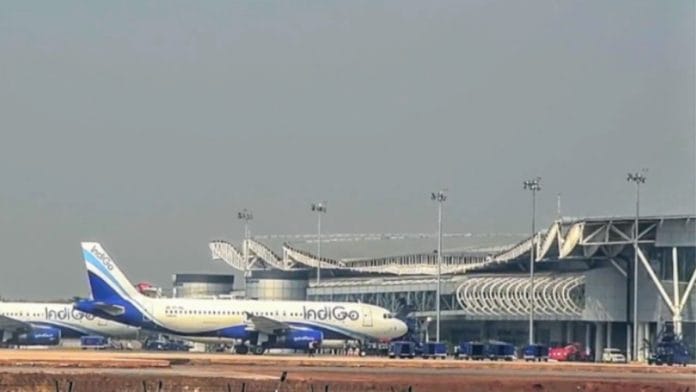
IndiGo was built to be boringly, beautifully predictable. But recent weeks have shown that even the most perfect pizza dough can turn sour if you let the kitchen burn down.
The Three Levers — and the Missing Fourth
Ghosh’s strategy was anchored in three rational levers, researched and executed with military precision:
-
Low cost: not just cheap tickets but a structural obsession with removing waste.
-
On-time performance (OTP): the holy grail; if the plane isn’t moving, it’s losing money.
-
Hassle-free service: cleanliness, simple booking, no surprises.
But there was a fourth lever he spoke about with even more passion at that GPTW event: internal culture.
Back then, IndiGo was “obsessed” with its employees. Ghosh knew that to run a “low cost” machine without it feeling “cheap”, the people running it had to feel valued. A happy crew absorbs the friction of travel; they are the shock absorbers on the runway of chaos.
The Global Pivot: Did Ambition Outpace Reality?
Fast forward to the recent operational meltdown. A significant variable has changed: the leadership mandate. Under the current CEO, Pieter Elbers — an aviation veteran with a formidable global reputation — IndiGo has pivoted from “domestic dominator” to “global giant”. The ambition is staggering: wide-body aircraft, international routes, and a desire to sit at the table with Emirates or Qatar.
But here lies the risk: scale often dilutes soul.
The “foreign CEO” effect isn’t about nationality; it’s about distance. When you import global best practice into a market as chaotic as India, you can strip away the jugaad — the cultural agility that keeps the system running. The Ghosh era was defined by a hyper-local pulse; leadership seemed to know when ground staff were stressed. The current era feels like it is run by a global algorithm that assumes perfect conditions.
IndiGo successfully picked up the scale of a global airline but may have missed the nuance of the Indian operating environment.
The Efficiency–Resilience Trade-off
From a behavioural science perspective, we are witnessing the dark side of optimisation. IndiGo spent a decade perfecting the “science” of the three levers. It optimised rosters, minimised turnaround times, and squeezed every second out of the asset.
This is brilliant on a spreadsheet but dangerous for a complex system. When you optimise a system to run at 99 per cent efficiency, you remove slack.
-
Slack is the buffer — the extra crew member, the spare aircraft, the mental bandwidth of a pilot.
-
Fat is waste.
The problem is that to an aggressive accountant, slack looks like fat — so they cut it.
The recent pilot-rostering crisis suggests that IndiGo began treating its staff like components of the plane: parts to be used to the maximum legal limit. But unlike landing gear, a pilot has morale. When you squeeze the “internal culture” lever to feed the “low cost” lever, the system loses its immunity.
Let’s be honest: I still admire IndiGo. It remains a masterclass in aviation. I have flown “legacy” carriers globally that feel like travelling in a post office from the 1980s. But you cannot run a Domino’s model if the delivery boys are exhausted. When you push the system this hard, efficiency starts eating empathy.
The Lingering Question
Given the scale of the disruption and its timing alongside the new pilot fatigue (FDTL) norms, one cannot help wondering whether there is a Machiavellian twist.
Was this entire episode simply a symptom of a system stretched too thin, or was it subtly orchestrated to capitalise on a 60 per cent market share — a demonstration of chaos designed to pressure the government into withdrawing the stricter DGCA guidelines?
I will let the facts reveal themselves.
These pieces are being published as they have been received – they have not been edited/fact-checked by ThePrint.