





Thank you dear subscribers, we are overwhelmed with your response.
Your Turn is a unique section from ThePrint featuring points of view from its subscribers. If you are a subscriber, have a point of view, please send it to us. If not, do subscribe here: https://theprint.in/subscribe/
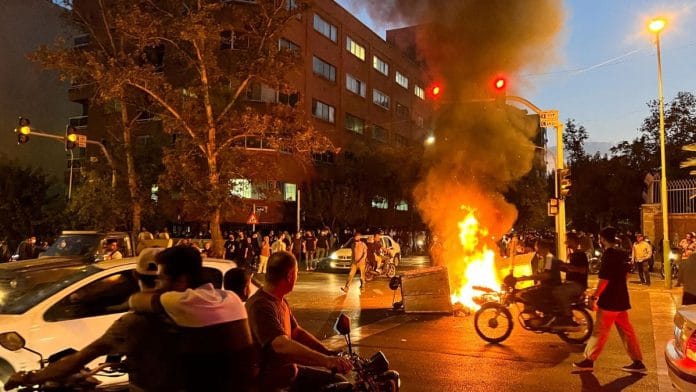
Protests are not new to Iran. Street protests, strikes, and other forms of unrest have shaped the country’s politics for decades. But the most recent wave of protests in Iranian cities seems different in tone, size, and strength. The anger in the streets is stronger than ever, the repression is stronger than ever, and the gap between the government and the people is bigger than ever. To understand why protests have gotten more violent, you need to look beyond the immediate reasons and think about Iran’s long history of political and economic unrest.
At its foundation, the violence is not unexpected. It is cumulative.
A Revolution Froze in Time
Mass mobilization resulted in the establishment of the Islamic Republic. The 1979 revolution ousted a monarchy that was perceived as repressive, corrupt, and estranged from regular Iranians. The revolution’s promise was dignity, justice, and freedom from foreign control. For many years, such pledge kept the public’s patience, especially during difficult times like the horrific Iran-Iraq war.
But revolutions get older. The revolutionary elite slowly took control, making a strict political system that was mostly made up of churches, unelected committees, and security groups. Elections started up again, but they were limited in scope. Only a very small amount of dissent was allowed. The result was a political system that kept the revolutionary symbols but fought against real change.
This stasis is harder to defend now that the people are younger, better educated, and more connected to the rest of the world.
The Economy as Pressure Cooker
If ideology once justified sacrifice, economics has taken that legitimacy away. Years of sanctions, mismanagement by the government, corruption, and structural inefficiencies have harmed Iran’s economy. Inflation has slowly reduced purchasing power, the currency has depreciated, and essential products have become more expensive. Many families now choose survival above aspiration. Importantly, economic misery is no longer exclusive to the impoverished. The middle class, which has traditionally served as a stabilizing influence, has shrunk. Shopkeepers, small company owners, salaried professionals, and pensioners are all losing money right now. When this segment begins protesting, the turmoil takes on a new character. It is no longer about marginal needs; it is instead a threat to the system’s credibility.
The latest protests began with economic frustrations, but economics cannot explain the outrage on show. What the economy did was alleviate fears.
A generation that has lost their patience. Iran’s younger population has little recollection of the revolution or the first years of the Islamic Republic. Their references include social media, global culture, and comparisons to peers from other countries. They are intensely aware of the disparity between their ideals and their actual experience.
This generation has witnessed multiple protest movements—in 2009, 2017, 2019, and 2022—and watched each one get crushed. Promises of improvement were met with arrests. Calls for accountability were answered with silence. Over time, this led to a dangerous conclusion: peaceful protest does not work. Conflict is more likely to happen when people think that institutions are closed to them. From this perspective, violence is expressive rather than ideological, functioning as an indicator that conventional channels of communication have collapsed.
Why does the state use force?
The Iranian government uses force for a reason. It shows a deep fear of losing control. The political system relies mostly on security institutions, which see dissent as a threat to the regime’s survival instead of a chance for citizens to get involved. This lens doesn’t leave much room for compromise. This time, the protests in Iran are against the system itself.
People in Iran have protested before. For decades, protests, strikes, and other types of unrest have had an effect on the politics of the country. But the most recent protests in Iranian cities seem to be different in tone, size, and intensity. The anger on the streets is worse than ever, the repression is worse than ever, and the gap between the government and the people is bigger than ever. Look beyond the obvious reasons to see why protests have become more violent. Iran has a long history of political and economic unrest.
The violence is not surprising at its core. It adds up.
A Revolution Stopped in Time
Mass mobilization led to the creation of the Islamic Republic. The 1979 revolution took down a monarchy that many people thought was authoritarian, corrupt, and out of touch with the average Iranian. The revolution promised respect, fairness, and freedom from outside rule. For a long time, this promise kept the public’s patience, even during tough times like the brutal Iran-Iraq war.
But revolutions don’t last long. The revolutionary elite slowly took over, creating a strict political system made up mostly of churches, unelected committees, and security groups. Elections started up again, but they were limited in scope. There was almost no disagreement allowed. The end result was a political system that kept revolutionary symbols but fought against real change.
It’s harder to explain this stasis now that the population is younger, better educated, and more connected to the rest of the world.
The Economy as a Pressure Cooker
Ideology used to make sacrifice seem right, but economics has taken that right away. The Iranian economy has suffered from years of sanctions, bad government management, corruption, and structural problems. Inflation has slowly lowered the value of money, making it harder to buy things. The currency has lost value, and basic needs have become more expensive. Many families now put survival ahead of their dreams. It’s important to note that economic problems are no longer just affecting the poor. The middle class, which has always been a stabilizing force, has gotten smaller. Right now, shopkeepers, small business owners, salaried professionals, and retirees are all losing money. The chaos gets worse when this group starts to protest. It’s no longer about small needs; it’s a threat to the system’s credibility.
The most recent protests started because people were angry about the economy, but the anger on display can’t be explained by economics. The economy eased people’s worries.
People of a certain age have lost their patience. The younger generation in Iran doesn’t remember much about the revolution or the early years of the Islamic Republic. They talk about things like social media, global culture, and how they compare to kids from other countries. They know very well that their ideals and their real-life experiences are very different.
This generation has seen many protests, including those in 2009, 2017, 2019, and 2022, and each one has been put down. There were arrests after promises of change. There was no response to calls for accountability. This ultimately resulted in a catastrophic conclusion: nonviolent protest is futile. People are more likely to fight when they think that institutions are closed to them. This perspective posits that violence is expressive rather than ideological, functioning as a signal that conventional means of communication have deteriorated.
The way ahead
There is a specific reason why the Iranian government uses force. It shows a deep fear of losing control. The political system is mostly made up of security institutions that see dissent as a threat to the regime’s survival instead of a chance for people to get involved. This lens doesn’t leave much room for compromise. Once again, the Iranian government might be able to stop protests by using violence. History shows that it can. But just stopping something doesn’t make it better. The scars get deeper, the anger grows, and the people feel more alone every time there is turbulence.
The violence on the streets of Iran today is not the problem; it is a sign of a bigger one. It shows that people in that culture don’t believe that small changes are possible anymore. There will be protests again, but not tomorrow or next year. This is true as long as the political and economic systems that are in place don’t change.
The issue in Iran does not pertain to disorder. It’s about being honest. And once you’ve lost credibility, it’s much harder to get it back than order.
About the author:
Anusreeta Dutta is a columnist and climate researcher with experience in political
analysis, ESG research, and energy policy.
These pieces are being published as they have been received – they have not been edited/fact-checked by ThePrint.