





Thank you dear subscribers, we are overwhelmed with your response.
Your Turn is a unique section from ThePrint featuring points of view from its subscribers. If you are a subscriber, have a point of view, please send it to us. If not, do subscribe here: https://theprint.in/subscribe/
In Rajasthan’s parched land, the well once stood as a quiet assurance—of water, of gathering, and of life itself—bringing people together at dawn and dusk.
It held a shared rhythm—women carrying water and stories, children leaning over its edges, the creak of the pulley, and the echo of the bucket marking the pulse of everyday life.
Then came borewells, turning water from a shared lifeline into a private extraction. As groundwater was drawn deeper and faster, wells and community water systems were gradually neglected.
Today, as borewells run dry, tankers arrive—not as a solution, but as a symptom of that shift.
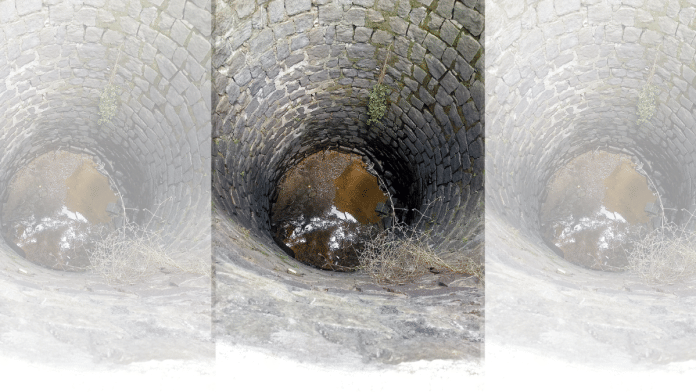
In the process, knowledge has eroded—of how water moves, how soil holds, and how trees sustain. Wells that once held life now stand abandoned—choked with waste, left uncleaned, sealed at the mouth, and weakened by cracks and seepage.
Even as these sources fade, our use of water has only grown—often unexamined, often excessive. In ways both visible and unseen, our changing lifestyles have distanced us from the discipline of water, making us less mindful of what we draw and what we waste.
What remains, then, is not a new solution, but a return—to revive the wells we abandoned, to restore them as shared sources, and to rebuild, with them, a more mindful way of living with water.
A simple, economical, and replicable model to revive a dried well.
Collect:
Collect equipment for digging, repairing, constructing, cleaning, planting, and pipelines.
Creating diagrams:
On a sheet of paper, map the village on the ground. Plot the wells on the map. Color the wells with red, blue, and green depending upon whether they are dried, almost dry, or have water, respectively.
Select a red, dried well you wish to revive and make a purple circle around it.
On the second sheet of paper, redraw the map of the village, leaving only the well to be revived. Use yellow to depict existing structures such as houses, schools, temples, gaushalas, trees, and fields surrounding the well.
Plot the recharge zone encircling the dried well. Plot the recharge wells on the map. Plot the pipelines from rooftops to recharge wells. Plot the trenches, from courtyards to the nearest recharge well.
Work in the field:
Clean the well (if needed) and the area around it.
Mark a 10-meter recharge zone encircling the dried well.
Dig recharge wells radiating outward from the recharge zone.
Lay pipelines from the rooftops of the houses, temples, gaushalas, etc. to the nearest recharge well.
Dig trenches connecting the courtyards to recharge wells.
Plant trees in two rings. The first is just outside the recharge zone on the front side of the existing structures, and the second is behind them.
Dig small/medium/big percolation ponds on the empty plots in this area.
Why, what is being done?
Percolation ponds add another layer of water recharge and become a hub for life and biodiversity.
Selected trees are Neen and Kejri, as both are drought resistant. they have deep roots, so they facilitate deeper water infiltration. So besides binding the soil, contributing to shade they reinforce the ecological balance of the area.
The model is circular, as that makes it powerful both physically and philosophically. The circular layout ensures equal distribution of recharge points and creates a sense of unity. There is no center versus periphery; every household is equidistant in responsibility and benefit. The well becomes central again not through dependence but through collective care.
Impact:
Water availability. But the impact extends far beyond water availability. As groundwater levels rise, agriculture becomes more viable, reducing migration. Livestock thrives, supporting rural livelihoods. Women and children gain time and dignity. The village begins to breathe again. The community reconnects with a value system rooted in respect for nature, restraint in consumption, and collective responsibility. Water is no longer considered an endless resource to be extracted but as a shared gift to be nurtured.
The dried well is not an end. It is a beginning. With thoughtful design, community participation, and ecological sensitivity, it can once again become the lifeline of the village—quietly and enduringly sustaining life around it.
These pieces are being published as they have been received – they have not been edited/fact-checked by ThePrint.