




Your Turn is a unique section from ThePrint featuring points of view from its subscribers. If you are a subscriber, have a point of view, please send it to us. If not, do subscribe here: https://theprint.in/subscribe/
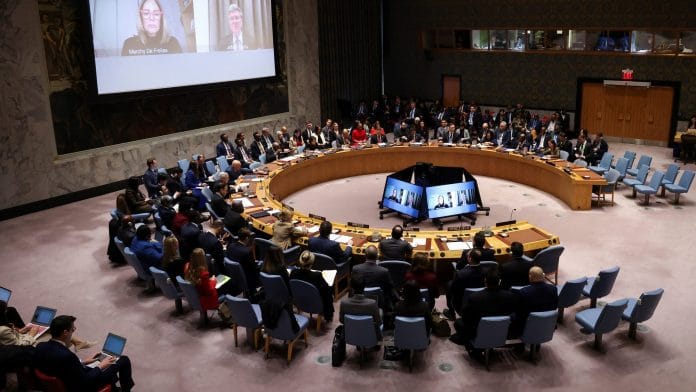
The United Nations and its member countries often say things like “we condemn” whenever there is violence somewhere in the world. They ask people to calm down and talk to each other. It is getting more and more uncomfortable to hear these words because it seems like the United Nations cannot do much to stop the violence. What does it mean to be safe when the important international organization cannot do much to protect us?
This question is very important now because there are conflicts happening all over the world at the same time. The war between Russia and Ukraine is still going on. It is not clear when it will end. In West Asia there is a lot of tension between Israel and Iran and many people are getting hurt in Gaza. There is also violence in parts of the world that people are not paying much attention to. In all these situations the United Nations has tried to help by calling meetings, passing resolutions and trying to mediate. It does not seem like it can stop the violence. Many people think the world is less stable now than it has been since the Cold War.
The United Nations was created to prevent this kind of situation. It was established in 1945 after World War II. The organization was meant to make sure that humanity would never again experience the kind of destruction that killed tens of millions of people. The United Nations Charter says that member states have to maintain peace and security work together and protect human rights. The Security Council has the power to take action when global peace is threatened and other parts of the organization like the General Assembly, the Economic and Social Council, the International Court of Justice and the Secretariat are meant to support the framework of international governance.
Over the years the United Nations has had some successes. United Nations peacekeeping missions have helped stabilize conflict zones in places like Cambodia and Liberia. Agencies like UNICEF the World Food Programme and the World Health Organization have played roles in helping people in need improving health and developing communities. The United Nations has also given countries a platform to talk to each other even when they are not getting along. In this way the organization has helped a lot with cooperation.
However the limitations of the United Nations become very clear during geopolitical confrontations. The Security Council has 5 members- The United States, Russia, China, the United Kingdom and France-who have veto power. This means that if these countries are involved in a conflict they can stop the United Nations from taking action. Resolutions that could authorize intervention often fail because of vetoes or political divisions. As a result the United Nations often seems like it can only condemn violence but not prevent it.
The human cost of this is very deep. In conflicts over the world ordinary people are suffering the most. Thousands of people have been killed in wars and many children have been displaced, hurt or deprived of education and security. Whole cities have been destroyed. Humanitarian agencies are warning of food shortages, health crises and the psychological trauma that people are facing. Every day the violence continues, it makes the suffering of people worse.
The economic impact is also very serious. Conflicts disrupt trade, fuel supply and financial stability. For example during the tensions between Iran and Israel ships passing through the Strait of Hormuz are at risk. Some are not allowed to move. Since a lot of the world’s oil and LPG passes through this area even small disruptions can slow down supply and increase prices. Countries like India, which depend on these imports, are facing delays in LPG delivery and rising fuel costs. As a result transportation becomes more expensive, prices of goods increase and uncertainty spreads. In a global economy a conflict in one region can quickly affect everyday life in another.
Maybe the troubling thing is the threat of nuclear weapons. Several countries involved in rivalries have nuclear capabilities and the risk of escalation is always there. Even a limited nuclear confrontation would have humanitarian and environmental consequences. For an organization that was founded to prevent war the inability to reduce these risks raises fundamental questions about the current international security architecture.
At the same time it would be wrong to say that the United Nations is completely ineffective. Much of its work happens quietly through diplomacy, assistance and development programs. The organization depends on the will and financial contributions of its member states. Countries like the United States are among the contributors to the United Nations budget while emerging powers like India are playing more active roles in peacekeeping and international diplomacy. The limitations of the United Nations often reflect the divisions among states than the failure of the institution alone.
This reality suggests that reforming governance requires more than just criticism. Debates over Security Council reform expansion of membership and changes in decision-making procedures have been going on for decades. Countries like India argue that the current structure does not reflect geopolitical realities. More representation and inclusive decision-making could strengthen the legitimacy of the institution.
Beyond reforms there is a bigger philosophical question. In today’s world can countries really accept that all people belong to one shared community? This idea was expressed long ago in Indian thought through the phrase Vasudhaiva Kutumbakam, which means that the world is one family. If this principle is to mean anything in international relations cooperation must go beyond words. States must recognize that global peace ultimately serves the interests of all.
India is not just talking about these crises, it is directly affected by them. It has a stake in how they unfold. With ties across West Asia including Iran, Israel and the Gulf states, India is one of the few countries that can talk to all sides without being seen as aligned to any one bloc. Its long standing position of strategic autonomy along with its record in peacekeeping and humanitarian response gives it practical credibility rather than just a moral voice. In a time when trust between powers is low, this ability to stay engaged with competing sides and push for dialogue makes India a relevant if limited stabilizing presence.
The real problem is not about institutions, it is about political will. The United Nations works when countries choose cooperation over rivalry. When powerful states act in their interest, its role becomes weak.
Still, there is no alternative. Despite its limits, the United Nations is the place where almost every country comes together. Strengthening it matters if the world wants any chance at stability.
For now, however, the uncomfortable reality persists. As conflicts intensify and humanitarian crises deepen the world continues to hear diplomatic phrases. The United Nations condemns. The violence continues. The hope that global institutions might prevent the next Great War grows increasingly fragile.
References
- Charter of the United Nations, 26 June 1945, 1 UNTS XVI.
- United Nations Security Council, Repertoire of the Practice of the Security Council (United Nations).
- United Nations Peacekeeping, ‘Our History’ https://peacekeeping.un.org/en/our-history accessed 24 March 2026.
- United Nations General Assembly, Annual Reports of the Secretary-General (United Nations).
- International Energy Agency, World Energy Outlook (IEA).
- World Bank, Global Economic Prospects (World Bank).
- United Nations High Commissioner for Refugees (UNHCR), Global Trends: Forced Displacement (UNHCR).
- United Nations Children’s Fund (UNICEF), Children in Armed Conflict Reports (UNICEF).
- World Food Programme (WFP), Global Report on Food Crises (WFP). These pieces are being published as they have been received – they have not been edited/fact-checked by ThePrint.