





Thank you dear subscribers, we are overwhelmed with your response.
Your Turn is a unique section from ThePrint featuring points of view from its subscribers. If you are a subscriber, have a point of view, please send it to us. If not, do subscribe here: https://theprint.in/subscribe/
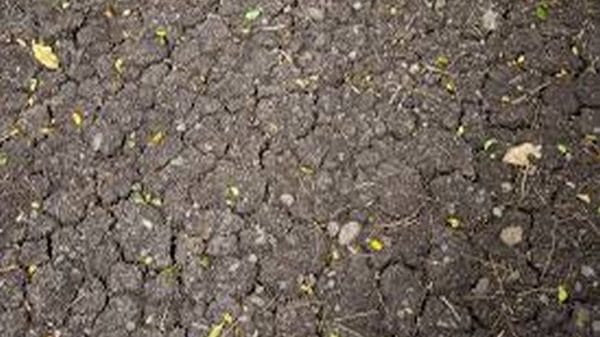
For decades, Punjab was the backbone of India’s food security. The Green Revolution transformed the state into one of the country’s most productive agricultural regions, supplying a large share of wheat and rice to the national food system. Yet the very policies that once ensured prosperity are now pushing Punjab toward a serious environmental crisis.
Groundwater levels are falling at an alarming pace. According to the Central Ground Water Board, more than 110 of Punjab’s 138 groundwater blocks are classified as over-exploited, meaning water extraction exceeds natural recharge. In many districts, the groundwater table is dropping by 40–50 centimetres each year, forcing farmers to drill deeper wells and install ever more powerful pumps.
The scale of the problem is staggering. Punjab extracts over 160% of its annually rechargeable groundwater—the highest rate in India. Nearly 95% of this water goes to irrigation, largely to sustain rice cultivation. If the current trajectory continues, parts of the state could see groundwater levels drop hundreds of metres over the next two decades, making irrigation increasingly costly and environmentally damaging.
The roots of this crisis lie in decades-old policy. Government procurement systems guaranteed the purchase of wheat and rice at minimum support prices, encouraging farmers to concentrate on these water-intensive crops. Rice cultivation alone consumes between 2,500 and 5,000 litres of water per kilogram. Free or highly subsidized electricity for tube wells further incentivized extraction. Farmers responded rationally to these signals—but the long-term cost is a thirsty Punjab.
The task today is not to assign blame but to design smarter policies. Water must now be treated as Punjab’s most valuable economic and ecological resource.
- Crop diversification: Farmers should be encouraged—and economically supported—to shift from rice to maize, pulses, oilseeds, and horticultural crops. Success depends on assured procurement, stable pricing, and strong market linkages. Without these incentives, “diversification” risks remaining a paper exercise.
- Rainwater and floodwater capture: Every monsoon, vast quantities of water flow through Punjab’s rivers and canals—sometimes causing floods, often going unused. Village reservoirs, floodwater basins, and canal recharge systems can turn this seasonal bounty into a reliable groundwater source, reducing dependence on tube wells.
- Groundwater recharge in planning: Cities like Chennai demonstrate the power of mandatory rainwater harvesting. Punjab could require recharge wells and rooftop systems in homes, institutions, farms, and industries—turning rainfall into a long-term investment rather than a seasonal nuisance.
- Strategic water management: Punjab, the historic “land of five rivers,” has significant surface water potential. Regional cooperation and agricultural trade agreements can improve water use efficiency while boosting farmers’ incomes—a pragmatic solution that benefits both ecology and economy.
- Sustainable industrial development: Water-intensive or polluting industries would worsen the crisis. Punjab should instead focus on sectors that support agriculture with minimal water usage, such as food processing, farm technology, and value-added manufacturing.
Punjab once led India’s agricultural transformation. Today, it faces another challenge: leading a new revolution—one focused on sustainable water management, resilience, and long-term prosperity.
The land and water that sustain Punjab are not inherited—they are borrowed from future generations. Protecting them must become one of the state’s most urgent policy priorities before the silent drought becomes irreversible.
Gurbarn Singh, P.Eng., is a professional engineer and doctoral researcher in Metallurgical Engineering through a joint programme between IIT Madras and the University of Alberta. He writes on public policy, infrastructure, and sustainable resource management.
Cell Number: +91 7009069115 / +1 7807141055
Email: gurbarn@ualberta.ca
These pieces are being published as they have been received – they have not been edited/fact-checked by ThePrint.