




Thank you dear subscribers, we are overwhelmed with your response.
Your Turn is a unique section from ThePrint featuring points of view from its subscribers. If you are a subscriber, have a point of view, please send it to us. If not, do subscribe here: https://theprint.in/subscribe/
As I watch breathless TV anchors, whispering experts on YouTube debates, wheezing expatriates running from the falling shrapnel making reels and posting on social media, for us Merchant Navy personnels in our mid-sixties, it feels like déjà vu!
It was 1984 or thereabouts, we had done our internship, passed our junior officer’s examination when we found ourselves unemployed. Iran Iraq war of 1980s was in full bloom. The world economy was heaving a sigh. Oil tankers entered Persian Gulf (PG) via Strait of Hormuz (SOH) and sneaked out with oil. The area was a “war zone” and the risks were immense however; the contractual payments were substantial with a steady job. Some of us went in on those ships. Nobody knew much, especially the families. The information overload was still to come.
We saw with envy Indian flagged vessels moving in and out of PG easily. Indians were great friends of both Iraq and Iran. Indian ship’s hull had “INDIA” painted in huge letters. We were on ships with dubious flags of convenience something like “shadow fleet” of these days.
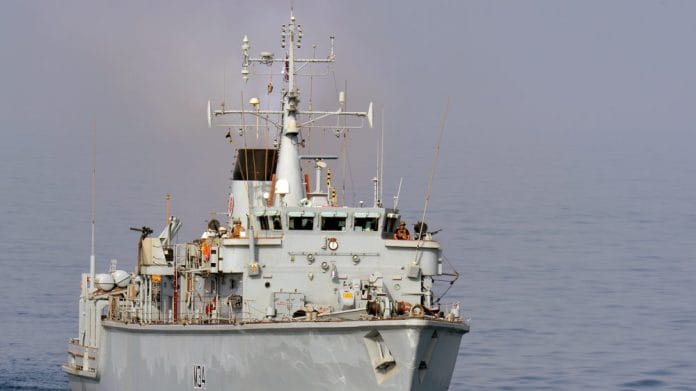
Ships would enter the SOH at night, with all navigation lights off, portholes (windows) painted black. There was no AIS (Automatic Identification System) or GPS then. It was pure seamanship, blind navigation with RADARS. While entering SOH, Iran was on our righthand side, everyone slept and stayed on the left of the ship. Shells came from the Iranian shore batteries. They fired indiscriminately as they had no information about ship’s destination. The ships would quietly move and anchor at Lavan Island just North of the straits, an Iranian territory. Ships had to wait here till Iranians gave go ahead to proceed towards Kharg Island, a massive Iranian oil terminal, up North.
Once a ship’s staff was injured. Lavan control allowed ship’s Captain to bring in the patient in lifeboat. Landing ashore, one of the first impression was of exceptional terminal infrastructure. Even the remote industrial hospital was well staffed and spotless. The medicines were from India. The doctors and staff were extremely competent. The roadside walls were spray painted with anti-American slogans. American flags were painted on the roads so you had to walk over it thus demeaning USA. Ayatollah scowled from billboards.
The passage from Lavan to Kharg Island (off Bushehr city) was treacherous. Iraqi now knew our Iranian destination thus targeted inbound ships. The missiles came from lefthand side thus crew remained on the righthand side. Pilot would join the vessel to assist in berthing. The final approach channel was littered with bombed shipwrecks. Only the pilot, Captain and a helmsman remained on bridge with Chief Engineer monitoring the machinery remotely. Remaining sailors were stationed in forecastle (forward) each with dollars, passport and seamen book bodily strapped in waterproof pouches. Heatseeking missiles invariably struck hot machinery space in the after end of the ship.
One-night, terminal guards started pumping bullets in the air from their guns. We promptly hit the deck, prone. Tanker is a sitting bomb. Apparently, Iran had captured few meters of Shatt al-Arab, a constant seesaw battle, thus the celebrations
On a trip local “Ayatollah” decided to visit our ship. The food was sourced from ashore (halal etc.). The gentleman, in clerical outfit, came on board along with four fully covered four wives and ten children ranging from in arms to teenagers. Whilst the priest sat with Captain, wives and kids sat in huge officer’s lounge. Bond store (sealed by customs) was opened, Coke (banned) cases were taken out for kids, Chuck Noris movie (banned) played for kids. Wives found old American women fashion magazines (banned). They went through them with animated passion.
Once our loading ceased due mechanical breakdown. There was no spare onboard. The authorities allowed ship’s staff to hand carry the broken part to Bushehr. Bushehr was immaculate and beautiful. City had unique blend of Anglo Dutch architecture. The women, mostly, moved about in western cloths. Some were covered.
The workshop was impressive and with high level of engineering skills. Machinist started fabricating the part while the owner kept passing very sweet black tea in glasses. He spoke fluent English. He laughed, telling us they keep fabricating all spares for entire American made oil industry. He mentioned that Bushehr was expanded from a sleepy fishing by Nadir Sah, yes, the same gentlemen who plundered Delhi and then ordered the genocide. He had carried back the Peacock throne. Apparently, he was looking for “strategic depth” thus conquered Afghanistan. When Afghanis used Mogul territory to launch raids into Iran, he invaded India to curb “cross border terrorism.” Sounds familiar!
We went for lunch. It was lovely spicy sea food. Spices were from India and recipe was partially Indian.
The war is part of human history. “Cela aussi passera,” this too shall pass.
These pieces are being published as they have been received – they have not been edited/fact-checked by ThePrint.