





Thank you dear subscribers, we are overwhelmed with your response.
Your Turn is a unique section from ThePrint featuring points of view from its subscribers. If you are a subscriber, have a point of view, please send it to us. If not, do subscribe here: https://theprint.in/subscribe/
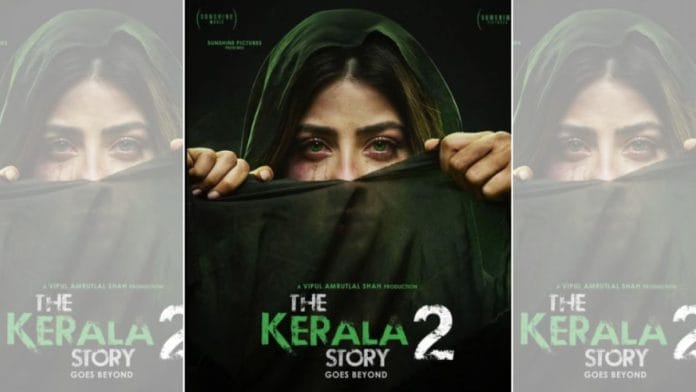
The Kerala Story became one of the most controversial Hindi movies in recent years in 2023. Sudipto Sen directed the movie, which starred Adah Sharma. It claimed to be a movie about the supposed radicalism and trafficking of women in Kerala. Even before it was released, there was a lot of disagreement about its statistics and narrative claims in national debate. State governments got involved, political leaders either supported or spoke out against it, and news studios made it a topic of debate every night.
Now that there is talk of a possible sequel, informally known as “Kerala Story 2,” a bigger question comes up: what do these sequels say about the state of Bollywood itself?
Sequel as a continuation of ideas
Sequels are often used to make character arcs longer, raise the emotional stakes, or add to imaginary worlds. In politically charged movies, on the other hand, a sequel often has a different purpose: it proves a point. In the story of Kerala, there was more than one person. It seemed like a big warning to everyone. The fight over fake data and selective storytelling made the movie more than just a good time. Some people who liked it thought it was an exposé, while others who didn’t like it said it was too much.
In this case, a sequel is not likely to make things more complicated. It could make it stronger instead of weaker by restating a point of view instead of questioning it. Political sequels tend to make more sense over time, with clearer messages, more emotional framing, and more obvious signs of ideology.
Bollywood’s Changing Reasons
The way the Hindi film industry works is changing a lot. There are a lot of different types of people who go to multiplexes; streaming services are fighting hard for viewers. and mid-budget movies are fighting for attention. In this case, scandal is used as a way to sell things.
Polarization draws attention. Attention is what makes opening weekend numbers happen. People talking about The Kerala Story may have helped its chances of making money instead of hurting them. So, making a sequel would not only be an artistic choice but also a business decision.
This is part of a larger trend in Bollywood. Films about national security, historical grievances, or cultural pride have been in the news a lot. At the same time, stories about unemployment, rural suffering, institutional responsibility, or economic instability don’t get as much advertising support.
It’s not a problem that movies deal with politics; Indian movies have always done that. The problem is in selective emphasis.
The Issue of Representation
Kerala has symbolic meaning as a place. It means that India has a high literacy rate, a history of coalition politics, and a unique way of doing things in politics and society. A movie set in Kerala that is about radicalism does more than just tell a story; it changes how people think about the whole state.
Recruitment by extremists and violence based on ideology are two serious problems that need a lot of work. But for a good depiction to work, it needs to be rich in context. This means taking into account things like socioeconomic factors, digital networks, global geopolitics, and the diversity of communities. When stories simplify things down to one cause, they can make people suspicious of each other. The power of cinema comes from the fact that it can make subtle things seem more human. When this kind of power is replaced by rhetorical certainty, public conversation gets smaller.
Courage and Cultural Risk
Bollywood often calls itself brave. But its confidence doesn’t seem to be consistent. Movies that challenge established social hierarchies or criticize powerful institutions often have trouble getting funding or being shown. On the other hand, projects that fit with common political stories may get support from institutions.
This imbalance has an effect on creative risk-taking. Filmmakers react to incentives. If one ideological orientation guarantees both market viability and political legitimacy, repetition is rational. Repetition eventually turns into a genre. The problem isn’t that there is only one kind of movie. Different points of view try to find a middle ground. Diversity is important for a strong cultural industry. When one narrative mode takes over, cinematic language gets weaker.
Movies, Memory, and Democracy
Political movies change how people remember things. They shape societal perceptions of threats, belonging, and identity. In plural democracies, this effect has moral consequences.
There is no room for negotiation when it comes to freedom of speech. Filmmakers should be able to deal with tough topics. But freedom comes with responsibility, especially when movies try to look like real news reports. A sequel to The Kerala Story would test not only the audience’s interest but also the direction of the industry. Would it involve more in-depth research, storytelling from different points of view, and analysis of the structure? Or would it make the current binaries stronger? The answer would tell us a lot about how Bollywood is doing right now.
If “Kerala Story 2” goes ahead, it should try to be more complicated than certain. It could look into how networks of radicalization work across borders, how internet propaganda affects young people who are easily swayed, or how institutions react. These are big problems that need a lot of different solutions.
Bollywood’s relationship with politics will change depending on whether it goes that way or back to being open about controversy. Movies are becoming more and more connected to political stories and news events. The stakes are higher than just making money at the box office. The path that mainstream Hindi cinema takes will have an impact on both its artistic reputation and its role in democratic debate. So, a sequel wouldn’t just pick up where the first movie left off. It would keep a trend going.
———————————————————————————————————————About the author:
Anusreeta Dutta is a columnist and climate researcher with experience in political
analysis, ESG research, and energy policy.
These pieces are being published as they have been received – they have not been edited/fact-checked by ThePrint.