




Thank you dear subscribers, we are overwhelmed with your response.
Your Turn is a unique section from ThePrint featuring points of view from its subscribers. If you are a subscriber, have a point of view, please send it to us. If not, do subscribe here: https://theprint.in/subscribe/
India’s independence was not merely a transfer of power in 1947. It was also the birth of a political culture shaped by resistance, suspicion, and a rallying cry against authority. For nearly a century, the freedom movement had conditioned the Indian mind to distrust power, to paint rulers as villains, and to view opposition as a patriotic duty. While this mindset served its purpose under colonial rule, its unintended legacy continues to inhibit progress and development in post-independence India.
The birth of suspicion
The Indian national movement, particularly under Mahatma Gandhi, elevated nonviolent resistance into a moral and political weapon. Protests, boycotts, satyagraha, and civil disobedience framed the British as oppressors and the Indian public as victims of injustice. The effectiveness of this framing was undeniable, but it also etched a deep reflex; authority must always be distrusted. Independence was thus celebrated not just as freedom from foreign rulers, but as liberation from authority itself.
Democracy and overextended freedom
Post-1947, this reflex entered the bloodstream of Indian democracy. The Constitution granted citizens unprecedented freedoms and rights. However, over time, “democracy” came to be interpreted less as participatory governance and more as unqualified freedom as the right to criticize endlessly, demand relentlessly, and resist perpetually, while contributing little in return. Duties, though written into the Constitution, faded from public discourse.
The result is that citizens often expect the state to deliver everything from jobs to subsidies, from security to prosperity, without a matching emphasis on personal responsibility, discipline, or civic sense. This culture of entitlement is particularly corrosive in a country as diverse and complex as India, where development requires both cooperation and sacrifice across communities.
Media as perpetual opposition
The media, inheriting the same adversarial mindset, has positioned itself as a permanent critic of government. Its default mode is not balanced scrutiny, but aggressive suspicion. Every policy is seen as suspect, every authority figure as a potential villain, and every setback as proof of incompetence. While a free press is vital for accountability, a perpetually antagonistic press fosters cynicism, divides public opinion, and stalls consensus-building.
In a diverse democracy like India, this becomes doubly dangerous. Regional, linguistic, and communal diversities already create fault lines; when the media amplifies distrust instead of fostering understanding, it entrenches division and weakens the state’s capacity to act decisively.
Development and the culture of distrust
This culture of suspicion has tangible consequences for India’s development. Large infrastructure projects, for example, are frequently delayed by protests, litigation, and public resistance often driven less by reasoned critique and more by reflexive distrust of authority. Policies aimed at reforming land use, labor laws, or taxation face automatic opposition, sometimes even before they are debated.
In such an environment, governments, fearing backlash, either dilute bold policies or retreat into populism. The result is slower progress, half-implemented reforms, and a cycle of underachievement. India’s vast diversity makes consensus-building difficult to begin with; the added layer of reflexive antagonism makes it harder still.
A maturity test for Indian democracy
Seventy-five years after independence, the challenge is no longer foreign domination but self-inflicted inertia. The old reflex of distrusting authority, once a tool of liberation, has outlived its purpose. India must now cultivate a new civic culture—one that balances questioning with cooperation, and freedom with responsibility.
This does not mean blind obedience or surrendering democratic rights. It means recognizing that authority in a democracy is not a colonial oppressor but a representative of the people. To constantly paint it as the enemy is to undermine one’s own institutions. In a country of India’s scale and diversity, progress depends on trust—trust in institutions, in policies, and in each other.
Towards a new civic culture
For India to realize its true potential, citizens must move beyond perpetual opposition. Media must rediscover its role as a mediator rather than a megaphone of cynicism. Political leaders must encourage consensus-building rather than exploit divisions. And the public must embrace duties alongside rights, contribution alongside criticism.
The freedom struggle gave India independence by teaching its people how to resist authority. The next stage of India’s journey demands learning how to work with authority for the common good. Unless this shift occurs, suspicion will remain a self-imposed shackle, holding back progress in a nation otherwise brimming with energy, diversity, and potential.
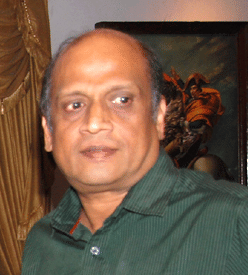
Col KL Viswanathan
(The author is an Indian Army veteran and a contemporary affairs commentator. The views are personal. He can be reached at kl.viswanathan@gmail.com )
These pieces are being published as they have been received – they have not been edited/fact-checked by ThePrint.