




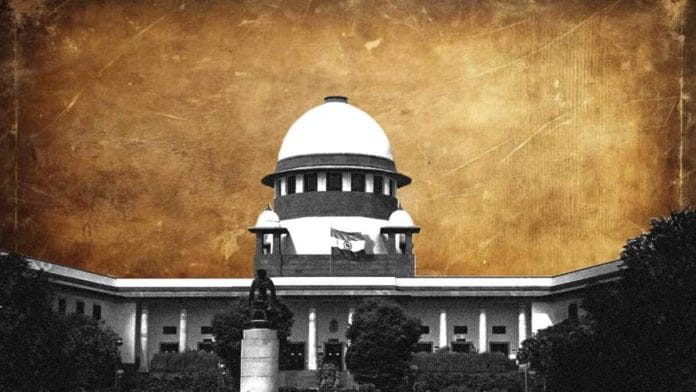

A recent ruling by the Supreme Court of India has once again brought national attention to the contentious use of anti-conversion laws and the broader implications for religious freedom in the country. In a significant decision delivered on 16 March 2026, the Court quashed a forced conversion case filed against a father and his son, citing a complete lack of credible evidence. The judgment not only provided relief to the accused family but also reinforced concerns about how such laws are being applied on the ground.
The case centered on allegations of forced religious conversion, a charge that carries serious legal and social consequences in several Indian states where anti-conversion statutes are in force. However, upon review, the Court found that the accusations were unsupported by verifiable facts. Importantly, the complaint had not originated from any alleged victim but was instead based on third-party claims – an aspect that the Court viewed with considerable skepticism.
In reaching its decision, the Court referred to a prior judgment from Fatehpur, where 98 Christians had been accused under similar provisions. In that instance, the judiciary had also dismissed the case due to insufficient evidence and the questionable nature of complaints filed by individuals who were not directly affected. By invoking this precedent, the Court underscored a consistent judicial approach: allegations of forced conversion must be substantiated by credible, firsthand testimony rather than speculative or indirect accusations.
This ruling is part of a broader pattern emerging across several states, particularly Uttar Pradesh and Madhya Pradesh, where anti-conversion laws have been increasingly invoked in recent years. These laws are intended to prevent conversions carried out through coercion, fraud, or inducement. However, critics argue that their vague wording and broad scope leave them open to misuse.
In many reported instances, individuals and groups have faced legal action based on complaints from unrelated parties, often leading to arrests, prolonged legal battles, and social stigma. Even when courts eventually dismiss such cases due to lack of evidence, the process itself can be punitive. The recent Supreme Court judgment highlights this concern, emphasizing that legal safeguards must not be used as tools for harassment or intimidation.
A key issue lies in the reliance on third-party complaints. In principle, laws addressing coercion or exploitation are designed to protect victims. However, when complaints are filed by individuals who are neither victims nor witnesses to the alleged act, the integrity of the legal process comes into question. The Court’s insistence on direct evidence reflects an attempt to prevent the criminal justice system from being misused in this manner.
Another dimension of the problem is the social context in which these cases arise. Allegations of forced conversion often intersect with existing communal tensions, amplifying mistrust and polarization. In such an environment, even unverified claims can quickly escalate into legal action, drawing in law enforcement and triggering wider repercussions for communities.
The judiciary’s role, therefore, becomes crucial in maintaining a balance between preventing genuine instances of coercion and safeguarding individual freedoms. The Constitution of India guarantees the right to freely profess, practice, and propagate religion, subject to public order, morality, and health. Any law or its enforcement must align with these constitutional protections.
The recent ruling signals a reaffirmation of these principles. By dismissing cases that lack substantive evidence, the Court is effectively setting a higher threshold for prosecution under anti-conversion statutes. This could have a ripple effect on how lower courts and law enforcement agencies handle similar cases in the future.
At the same time, the recurrence of such cases raises questions about the need for legislative review. Legal experts have pointed out that ambiguities in existing laws create room for subjective interpretation, which can lead to inconsistent application. Terms like “inducement” or “allurement,” for example, are often broadly defined, making it difficult to distinguish between legitimate religious expression and unlawful activity.
Calls for reform have grown louder as more cases come to light. Some argue that clearer definitions, stricter evidentiary requirements, and safeguards against frivolous complaints are necessary to prevent misuse. Others contend that the laws themselves may be fundamentally flawed and require reconsideration in light of constitutional guarantees.
The human impact of these cases cannot be overlooked. Individuals accused under such laws often face not only legal challenges but also reputational damage and social isolation. Even when acquitted, the effects can be long-lasting. The recent Supreme Court decision provides relief in one such instance, but it also highlights a systemic issue that extends beyond a single case.
Ultimately, the judgment serves as both a corrective measure and a cautionary signal. It reinforces the principle that serious allegations must be backed by solid evidence and that the legal system must not be weaponized through unfounded claims. As similar cases continue to emerge, the need for clarity, fairness, and adherence to constitutional values remains paramount.
The broader debate around anti-conversion laws is far from settled. However, rulings like this contribute to an evolving legal framework that seeks to balance competing concerns while upholding the fundamental rights of individuals. Whether this will lead to lasting changes in how such laws are interpreted and enforced remains to be seen, but the direction set by the judiciary is unmistakably clear: the rule of law must prevail over conjecture and misuse.
These pieces are being published as they have been received – they have not been edited/fact-checked by ThePrint.