




Thank you dear subscribers, we are overwhelmed with your response.
Your Turn is a unique section from ThePrint featuring points of view from its subscribers. If you are a subscriber, have a point of view, please send it to us. If not, do subscribe here: https://theprint.in/subscribe/
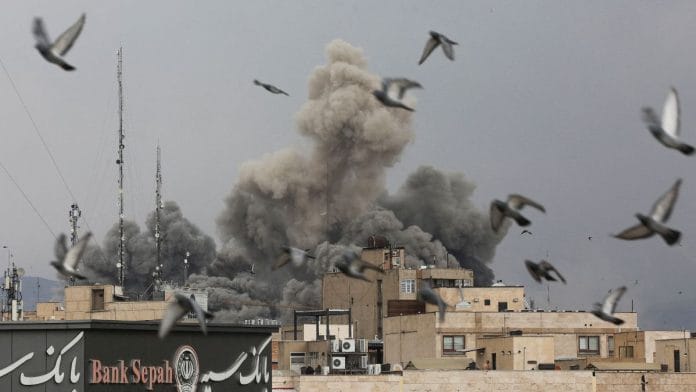
After decades of proxy hostility, the U.S.–Israel–Iran confrontation has exploded into direct military strikes and now tops the global conflict list. Ukraine bleeds on. Gaza burns without resolution. India–Pakistan tensions remain brittle; Afghanistan simmers on the side. Escalation is no longer the exception; it is the structure of the age.
And in the middle of this churn, India proclaims itself a “leading power.”
But leadership is not a slogan. It is a choice.
For decades, non-alignment — later rebranded as “strategic autonomy” — gave India space to manoeuvre. In a bipolar world, restraint was wisdom. Avoiding entanglement protected sovereignty and bought time for development.
That era is over.
Today’s multipolar disorder rewards countries that shape events, not those that carefully comment on them. It rewards risk-takers, conveners, agenda-setters.
India has the diplomatic reach to do so. It maintains relations with Washington and Moscow, Tehran and Jerusalem, the Gulf and Europe. It speaks for the Global South while participating in Western-led coalitions. Few countries have such access across fault lines.
Yet access has produced little initiative.
There is no Indian-led mediation effort in West Asia. No sustained diplomatic architecture on Ukraine emerging from New Delhi. No institutionalized Global South peace platform headquartered in India. There are summits, speeches, and carefully balanced statements urging “dialogue and restraint.”
That is not leadership. It is positioning.
Other middle powers have moved. Turkey brokered the Black Sea grain deal. Qatar has mediated sensitive negotiations. China engineered a Saudi–Iran thaw. These efforts may be imperfect or self-interested, but they demonstrate a willingness to shape the diplomatic terrain.
India, by contrast, appears determined above all not to offend anyone.
Caution is understandable. Mediation carries risk. It can strain partnerships. It demands political capital. With economic growth uneven and a live border with China, prudence seems sensible.
But when caution becomes reflex, it projects something else: fear of consequence.
A country that claims global leadership cannot behave like a status-quo manager. Strategic autonomy was meant to preserve freedom of action, not justify inaction. It was a means, not an end.
Instead, autonomy increasingly looks like strategic evasion — a way to remain equidistant from every crisis while being decisive in none.
If India truly seeks to be a leading power, it must build institutions, convene adversaries, and accept the friction that comes with relevance. It must be prepared to irritate partners and expend diplomatic capital. Influence requires exposure.
In a world defined by normalized escalation and collapsing mediation frameworks, bridge-builders matter. The question is no longer whether India can balance. It is whether its leadership is willing to step into the arena — or remain a careful observer while others shape the order.
A leading power does not whisper from the sidelines. It acts.
These pieces are being published as they have been received – they have not been edited/fact-checked by ThePrint.
_________________________________________________________________________________