





Thank you dear subscribers, we are overwhelmed with your response.
Your Turn is a unique section from ThePrint featuring points of view from its subscribers. If you are a subscriber, have a point of view, please send it to us. If not, do subscribe here: https://theprint.in/subscribe/
By late evening of June 3rd, Bengaluru and its residents were in absolute ecstasy. Their long-cherished dream of winning the IPL title finally achieved, their joy seemed boundless. In less than 24 hours, however, the city would be shocked into mourning.
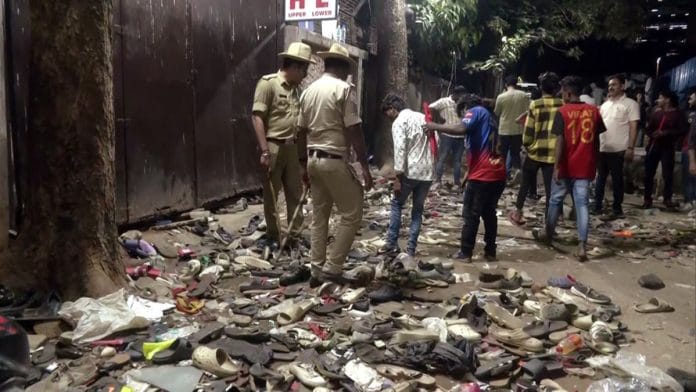
The tragic stampede at the Chinnaswamy Stadium resulted in 11 deaths and around 60 injuries, leaving a cloud of gloom on what was supposed to be a celebration of belief and perseverance.
A few days later, on the 9th of June in Mumbai, a local train brushed against bags carried by passengers of another train, on a different track leading to 5 deaths and 8 injuries. Both trains were packed to the brim with commuters hanging outside their doors due to which the gap between tracks became negligible, resulting in an unfortunate loss of lives.
Overcrowding and resulting stampedes in the last year resulted in hundreds of deaths and injuries. At Hathras in July 2024, a stampede at a religious gathering caused 120+ deaths and 150+ injuries. In Feb 2025, a stampede on a bridge at the New Delhi Railway Station resulted in 18 deaths and 15 injuries. At the Kumbh Mela in Jan 2025, various sources claim deaths anywhere between 30 to 80 and many more injured. A stampede at the Tirumala temple this January caused 6 deaths and 40 injuries. Even a film premiere resulted in a stampede and a death, as was with Pushpa 2 in Hyderabad last December.
No place is safe and nobody is immune. Every religious gathering, political rally, train station, bus stand, film premier, market, concert, stadium and office is susceptible to a crowd crush.
What happens in the aftermath? Our leaders offer condolences, announce inquiries, declare ex-gratia amounts, a few arrests are made, suspension orders issued and accusations hurled. The playbook repeats and the tragedies continue.
Administrative failures, lax safety standards, poor crowd control, apathy to human costs compounded by a serious lack of civic sense among citizenry have made us vulnerable to the next disaster waiting in the corner. And worse, a toxic fatalism has creeped into our psyche, where we assign blame of these tragedies to destiny than to ourselves. We do not question and we do not demand reforms. The easiest culprit that’s paraded around is that we have a large population and so these calamities are bound to happen.
Yes, India is the largest country in the world by population, but perhaps that is why we should be the most aware of the dangers that unregulated overcrowding in public spaces can cause. And this needs an all-encompassing approach.
Technology has been a great enabler to counter this issue in countries like Japan and China, which have some of the most densely populated cities in the world. Implementation of real-time crowd analytics, assessing crowd movements to determine patterns of peak congestion, identifying bottlenecks in public spaces and taking steps to eliminate them has helped these countries take concrete steps in this direction.
In the administrative domain, there needs to be strict capacity limits to all public spaces. Anyone violating these norms need to be dealt with extreme seriousness, even if there are no mishaps. Having specific departments trained in crowd control, conducting periodic evacuation & emergency drills in public spaces and training civic volunteers at a local level will go a long way.
Public training is of paramount importance. Simple things like being calm and not panicking, maintaining a specific posture to protect vital organs, identifying the nearest exit, paying attention to instructions need to drilled into our citizens right from a young age. Being trained and aware of possible risks will save a lot of lives and spare us a lot of heartache.
The next question is if these are doable? The answer is a resounding yes. Indians have shown in the recent past to be amenable to mobilisation at a unparalleled scale anywhere in the world. From COVID induced lockdown adherence to the Emergency drills during Operation Sindoor, we have demonstrated great ability to respond to crises. The instinct is present. What it needs is seriousness and conviction from everyone and channelling it towards crowd control to avoid the needless loss of lives that stampedes cause.
The 21st Century is by all accounts, set to be Asia’s century and by an extension, it is India’s century. The fact that we’re gunning to become the third largest global economy and yet have recurring tragedies due to overcrowding and poor management, is a terrible shame. They’re not only a blot on our nation but can also be interpreted as how little we care for human lives.
We need to change.
These pieces are being published as they have been received – they have not been edited/fact-checked by ThePrint.