




Thank you dear subscribers, we are overwhelmed with your response.
Your Turn is a unique section from ThePrint featuring points of view from its subscribers. If you are a subscriber, have a point of view, please send it to us. If not, do subscribe here: https://theprint.in/subscribe/
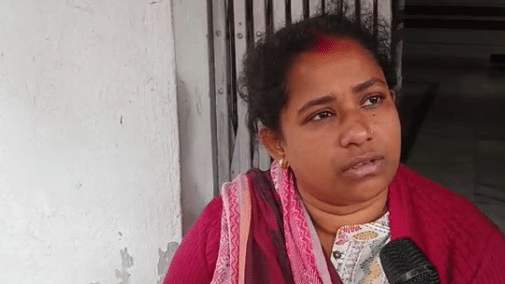
The recent death of the Sandeshkhali witness—killed in a sudden truck accident before testifying—echoes a troubling pattern India has seen before. From Dr. R.N. Chugh, Shastri’s physician who died in a suspicious crash, to Ravindra Patil, the isolated whistleblower in the 2002 hit-and-run case, witnesses tied to powerful networks often die before they can speak. Different decades, same outcome: intimidation, “accidents,” and institutional apathy. India protects VIPs, not witnesses. Without independent oversight and real protection, truth continues to die on highways long before it reaches a courtroom. Sandeshkhali isn’t new—it’s a repetition India refuses to confront.
Dr. Chugh: The Whistleblower Who Never Testified
In 1966, Prime Minister Lal Bahadur Shastri died in Tashkent under still-unexplained circumstances. His physician, Dr. R.N. Chugh, was one of the only people who saw Shastri in his final moments—and may have known whether Shastri was poisoned with Serenace, the same drug reportedly used in Soviet Gulag experiments. But Chugh never lived to testify. In 1977, he died in a violent “road accident” that also killed his wife and daughter. No independent probe, no transparent forensics. A key witness to a Cold War-era mystery was eliminated. In India, silencing the truth often begins with an “accident.”
Ravindra Patil: The Witness Who Was Destroyed Before He Died
Then there is Ravindra Patil, the police constable and prime eyewitness in the 2002 Mumbai hit-and-run case involving a convicted criminal with multiple #MeToo allegations against this Bollywood actor. Patil repeatedly stated that the actor was driving under the influence. But instead of being protected, he was systematically broken down:
- He was suspended.
- He was pressured to retract.
- He was ostracized by his department.
- He lived in poverty, illness, and isolation.
By the time he died in 2007—again, under deeply troubling circumstances—his testimony had been dismissed as “unreliable.” It is a textbook case of India’s witness protection failure: when intimidation fails, character assassination is used. When that fails, neglect finishes the job.
Patil’s last words to journalists were haunting:
“Nobody stood by me. I am a witness who is dying.”
He knew what the system does to inconvenient witnesses.
Rinse and repeat with Steve Pinto in the SSR and Disha Salian case in the summer of 2020.
Sandeshkhali: The Pattern Repeats
The death of a Sandeshkhali witness on December 10th, 2025, on the eve of giving testimony fits almost too neatly into this lineage of silenced truth-tellers.
The similarities are unsettling:
- All were key witnesses in cases involving powerful entities—political, geopolitical, or celebrity networks.
- All deaths involved convenient circumstances that neutralized their testimony.
- All investigations exhibited institutional lethargy, if not suppression.
- All cases saw local authorities unprepared or unwilling to protect those whose voices could alter outcomes.
It is hard not to see a pattern. When testimonies threaten entrenched ecosystems—political, criminal, or economic—India’s witnesses die in accidents, disappear in poverty, or are broken by the system long before they get justice.
A New Framework for Justice
India urgently needs:
- A Central Witness Protection Bureau independent of state influence
- Encrypted digital check-ins for witnesses
- Automatic CBI or judicial investigation when a witness dies before testifying
- Public release of forensic and accident data
- A secure national registry of high-risk witnesses, to be protected even after testimonies.
Until such systems exist, death will remain an unofficial form of judicial closure.
The Real Question
The real question is:
Why does India, in 2025, still produce the same outcomes as 1966 and 2002?
Why do witnesses still die right before they speak?
Why does the system still fail to protect them?
Why does truth still die on the highway or in hospitals before it reaches the courtroom?
Sandeshkhali is not a new tragedy.
It is the same tragedy—repeating until India decides it has had enough.
The Solution
In this day and age with secure video conferencing with encryption, anonymized locations, and biometric proof of witnesses, using continuous verification, why are physical trips to courthouses even needed by witnesses. Shouldn’t secure video conferencing solve this problem?
Why aren’t older cases like the Ravindra Patil witness case not re-opened? Who orchestrated his silencing?
Will India solve this using technology?
Or will India remain a Banana Republic?
—Akshay Sharma
Akshay Sharma is a former Gartner analyst and contributor to both the SWIFT protocol for International Banking and ARINC 629 Databus used in Boeing and Airbus aircraft, for fly-by-wire. He served as CTO for firms supporting the World Bank, India’s DRDO, and Air Force. Now Chief Technology Evangelist for an AI/ML company, he is a board member of Somy Ali’s nonprofit No More Tears, and has over 30 published essays in ThePrint.IN. He draws inspiration from Swami Vivekananda’s teachings, and is a descendent of Maharishi Bhardwaj, inventor of the Vimanas.
These pieces are being published as they have been received – they have not been edited/fact-checked by ThePrint.