





Thank you dear subscribers, we are overwhelmed with your response.
Your Turn is a unique section from ThePrint featuring points of view from its subscribers. If you are a subscriber, have a point of view, please send it to us. If not, do subscribe here: https://theprint.in/subscribe/
Capital Investment to strengthen Institutional capabilities in public healthcare is a necessity, but the PPP model is not an efficient solution.
AP Health Budget at a glance :
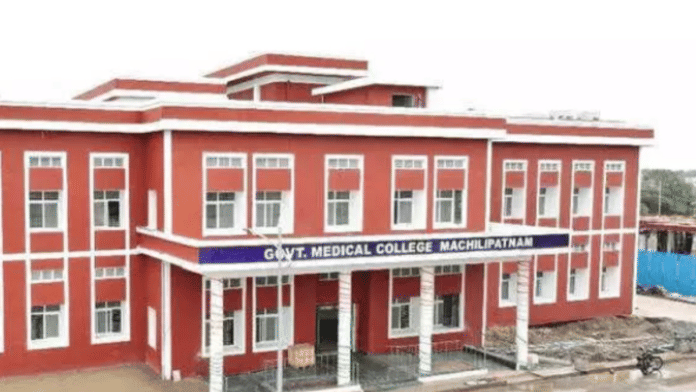
Andhra Pradesh Budget 2026-27 allocated Rs 19,306 cr towards the health and medical sector, which is 5.81% of the total budget of Rs 3.32 lakh cr falling short of the 8% benchmark set by the National Health Policy 2017. Of the total allocation Rs 19,306 cr, revenue expenditure accounts for 16,244 cr and capital expenditure for Rs 3,061 cr, raising concerns about the completion of Government Medical colleges and the upgradation of existing hospital infrastructure.
Public-Private Partnership Model as core Healthcare Strategy:
Due to strong opposition, earlier tenders to implement PPP model in medical colleges received low bidder interest but the ruling AP govt has made PPP model as its key healthcare strategy.
On February 17th, AP Medical and Health Minister Satyakumar Yadav, replying to questions during Question Hour in Andhra Pradesh Legislative Assembly, said that the government has decided to establish multi-speciality hospitals in 61 constituencies under the Public-Private Partnership (PPP) mode.
Concerns around PPP model in Healthcare :
Public Private Partnership (PPP) in the health care sector is being widely criticised by health experts, instead recommending building institutional capabilities and bringing efficiencies. Firstly, while diagnostics, pharmacy, outpatient & inpatient services are key areas of interest for private players, but government hospitals are the backbone for running public health programs like vaccination drives, family planning programs and preventive care campaigns. As these programmes are not commercially attractive for private players may pose a risk in their implementation, affecting long term health outcomes.
Secondly, regardless of who makes the initial investment, ultimately user charges are borne by the government exchequer. Over time, this model may not prove to be the most cost-effective and efficient way to finance public healthcare.
Thirdly, there are several instances before where PPP model in hospitals failed, one such being the Rajiv Gandhi Super Speciality Hospital (RGSH) in raichur which was handed over to Apollo group, saw under utilization of in & out patient services by below poverty line (BPL) patients due to missmanagement yet the government had to compensate for operational losses and ultimately karnataka govt terminated their contract.
Recently AP High Court, hearing a PIL has expressed concern over the absence of facilities in Govt Hospitals and Medical Colleges in the state to treat Bone-Marrow Transplantation (BMT).
The Court made sharp remarks “In our opinion, if the other states in the country could provide for such a treatment, we have no reason to believe that a progressive State like Andhra Pradesh does not have such a capacity or have not conceived a programme whereby such a treatment could be made available in Government run hospitals or the medical colleges.” drawing attention towards the need to build institutional capabilities.
The Way Forward :
According to the National Sample Survey in 2020, AP topped the list in providing the government health insurance scheme, covering 76.1 per cent of the population. AP has also been credited for the effective handling of covid outbreak . Given a strong record of welfare commitment, the government should consider healthcare as an investment and focus on exploring other options to raise capital rather than institutionalising private partnership in public health.
These pieces are being published as they have been received – they have not been edited/fact-checked by ThePrint.