




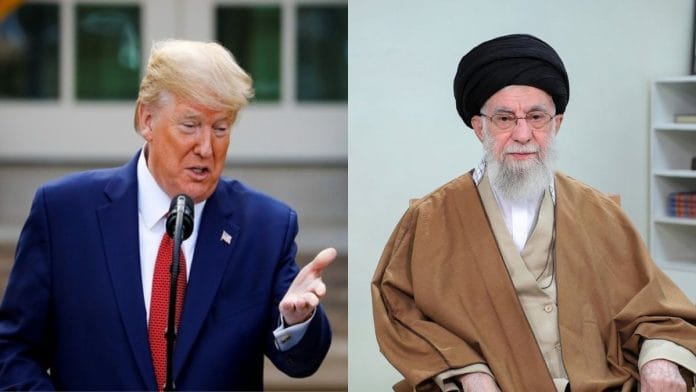

The Iran question is back at the centre of global geopolitics. Indirect U.S.–Iran talks are once again underway, mediated quietly, cautiously, and with the unmistakable awareness that time is thin. The nuclear file has thickened. Enrichment levels have risen. Regional tensions have multiplied. And hovering over all of it is the unspoken but very real possibility of American military action.
The debate is strategic. What could a U.S. strike on Iran realistically achieve? And more importantly, what could it destabilize? For India, watching from what appears to be a safe distance, the stakes are neither distant nor theoretical.
The Case for Force: Delay, Not Dismantlement
Proponents of military action argue from a narrow but powerful premise: a strike could delay Iran’s nuclear progress. Precision attacks on enrichment facilities, centrifuge production sites, or missile infrastructure could set Tehran back materially. Infrastructure can be damaged. Supply chains can be disrupted. Technical setbacks can be imposed. But delay is not dismantlement.
Iran’s nuclear program is deeply embedded, dispersed, and learned. It is not a single facility that can be erased; it is a network of knowledge, logistics, and political will. Even a successful campaign would likely buy time rather than end capability. And buying time only matters if it is converted into a durable political settlement. Without a negotiated end-state, one that includes verification, monitoring, and incentives, kinetic action risks becoming an expensive pause button.
The Risk Multiplier: Escalation Without Borders
The Middle East no longer functions as a series of isolated crises. It behaves as a connected system. A strike on Iranian territory would not remain geographically contained. The Strait of Hormuz is the first pressure point. Iran may not “close” it outright, but it does not need to. Harassment of shipping, drone activity, naval skirmishes, or asymmetric disruption can be enough to spike insurance costs and rattle global markets.
Second comes the proxy network. Iran’s deterrence posture relies on influence in Iraq, Syria, Lebanon, and Yemen. Any U.S. attack expands the space for calibrated retaliation, against American assets, Gulf infrastructure, or maritime traffic. Even if Tehran avoids direct confrontation, escalation through partners allows it to respond without triggering full-scale war.
Third is the nuclear transparency paradox. If strikes push Iran to reduce cooperation with international inspectors, the world may end up knowing less about the program than before. In nuclear politics, opacity increases suspicion. Suspicion accelerates worst-case planning. And worst-case planning breeds instability.
The Coalition Question
An extended American operation would also strain alliances. Gulf states prefer deterrence but fear entrapment. European powers seek non-proliferation but dread energy shocks. Asian economies depend on stability but cannot control escalation. A weeks-long campaign would force uncomfortable choices. Public alignment, private hedging, or quiet dissent would fracture the diplomatic coherence that any long-term solution requires. And once fractured, coalitions are difficult to reassemble.
India’s Quiet Exposure
For India, an Iran crisis is not ideological, it is economic and strategic. Energy remains the most immediate vulnerability. Even limited disruption in the Gulf would transmit directly into India’s inflation trajectory. Then there is the diaspora dimension. Millions of Indians live and work across Gulf states. Escalation risks job displacement, evacuation challenges, and remittance volatility.
Strategically, India’s westward connectivity ambitions hang in the balance. The Chabahar port project represents more than infrastructure; it is India’s access route to Afghanistan and Central Asia that bypasses Pakistan. But Chabahar operates under the shadow of sanctions politics. A U.S. strike followed by tighter enforcement regimes could freeze financial channels and complicate India’s balancing act between Washington and Tehran.
The Illusion of Clean Outcomes
History suggests that military action rarely produces tidy strategic results in the Middle East. Iraq, Libya, Syria, each demonstrates that dismantling infrastructure is easier than shaping aftermaths. Even a “successful” strike risks producing a hardened Iran, accelerated weaponization incentives, and reduced diplomatic flexibility. Domestic politics within Iran would likely consolidate around resistance rather than compromise. National pride often outlasts physical damage.
The Only Sustainable Off-Ramp
The most desirable outcome in this moment is not dramatic. It is procedural. It involves intrusive inspections, enforceable caps, credible incentives, and a regional security conversation that acknowledges mutual vulnerability. Diplomacy is slow. Military action is swift. But only one produces frameworks that endure.
For India, the prudent posture is clear: support de-escalation, preserve diplomatic channels, and prepare contingencies. Because if escalation comes, Delhi will be absorbing the economic shock, navigating strategic constraints, and recalibrating its balancing act in a region it cannot afford to ignore.
The Middle East sits once again at a hinge moment. The question is not whether force is possible. It is whether force would leave the region more stable than it finds it. History suggests that answer is rarely yes.
These pieces are being published as they have been received – they have not been edited/fact-checked by ThePrint.