




Thank you dear subscribers, we are overwhelmed with your response.
Your Turn is a unique section from ThePrint featuring points of view from its subscribers. If you are a subscriber, have a point of view, please send it to us. If not, do subscribe here: https://theprint.in/subscribe/
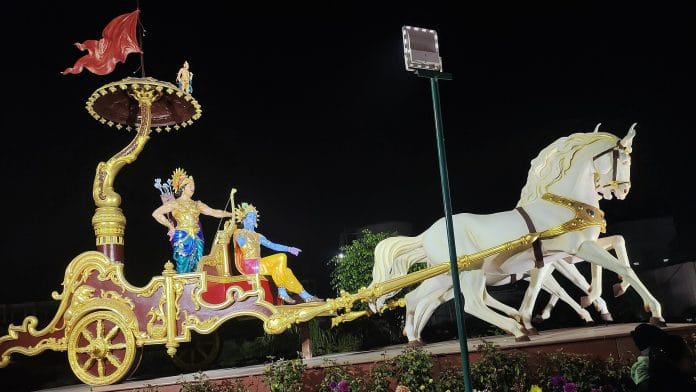
Bhagavad Gita III.42
Indriyāṇi parāṇy āhur
Indriyebhyaḥ paraṁ manaḥ
Manasas tu parā buddhir
Yo buddheḥ paratas tu saḥ
The senses, it is said, are powerful. Greater than the senses is the mind (manas). Greater than the mind is intelligence (buddhi). But beyond even buddhi lies the Self — the highest level of consciousness.
Consciousness must rise step by step. The higher we rise, the freer we become. When we act under the sway of the senses, we are least free. We are freer when guided by the mind. We become freer still when the mind aligns with buddhi, giving rise to wisdom. The highest freedom is attained when buddhi itself is illumined by the Self.
Yet in the modern world, the senses are constantly stimulated. Social media has made it possible for almost anyone to broadcast views and opinions to a global audience. Platforms such as YouTube, Facebook, and TikTok host and promote such content, often operating on an engagement-driven model.
In the course of my reading and observation, I have noticed that many of these views tend to be extreme rather than balanced. Most broadcasters present only one side of a presumed argument, strongly pro one side or the other. Balanced perspectives appear to be relatively rare.
These one-sided narratives often rest on three reinforcing elements. They are frequently agenda-driven, catering to particular interests. They attract audiences constantly searching for views that confirm their own beliefs. And such “like-minded” followers often forward and amplify these messages, unintentionally increasing viewership and engagement.
In the process, many remain unaware that their enthusiasm for forwarding such material helps expand the reach – and sometimes the revenue – of those producing it.
Everything else, the noise of media, social media, expert panels, and the endless bombardment of “information” and competing “truths”, often becomes little more than narratives shaped by vested interests. When we repeat them uncritically, we too become part of the deluge.
It is here that the role of the mind and buddhi becomes important. Nothing can truly be taught to a person; he must learn. Teaching may provide information, but learning requires the application of the mind, the act of thinking. That is why not all students perform equally. Rote learning or parroting may fetch marks, but it rarely produces knowledge, and even more rarely wisdom.
A few simple truths follow from this.
- History cannot be rewritten. It can be interpreted differently; narratives may change; but the past itself does not change.
- Blind faith and rigid dogma often play with sentiments while suppressing reasoning and debate.
- Self-criticism is essential for harmony and peace. In most disputes it is rarely the case that one side is completely right and the other entirely wrong. If that were so, there would be no dispute in the first place.
- Those involved in a dispute must genuinely seek peace, guided by a spirit of “live and let live.”
Over time, particularly in democracies – and perhaps more so in India – public discourse in its enthusiasm to hold governments accountable often focuses primarily on shortcomings, while achievements are taken for granted. This can leave the impression that the machinery of governance is a complete failure. Yet when successes are occasionally mentioned, they are sometimes dismissed as self-congratulation.
Such tendencies illustrate the very challenge described in the Gita. The senses react quickly, the mind forms impressions, but only buddhi can step back, weigh evidence, and distinguish noise from understanding.
Wisdom, therefore, sometimes lies not in adding to the noise, but in stepping back from it.
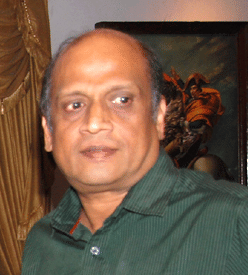
Col KL Viswanathan
(The author is an Indian Army veteran and a contemporary affairs commentator. The views are personal. He can be reached at kl.viswanathan@gmail.com )
These pieces are being published as they have been received – they have not been edited/fact-checked by ThePrint.