




Thank you dear subscribers, we are overwhelmed with your response.
Your Turn is a unique section from ThePrint featuring points of view from its subscribers. If you are a subscriber, have a point of view, please send it to us. If not, do subscribe here: https://theprint.in/subscribe/
There are moments in public life when a single image tells you more about governance than a hundred official press releases ever will. Karnataka has just handed us one.
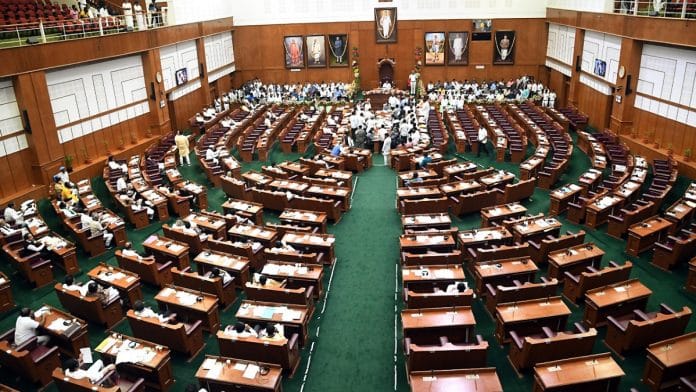
While patients reportedly struggle for timely medical care and MRI centres are said to be shutting down over unpaid government dues, our elected representatives have discovered an urgent priority: reclining massage chairs inside the Assembly.
You could not script a more perfect metaphor for the distance between rulers and the ruled.
Let us be clear. This is not about furniture. Legislatures around the world provide decent working conditions for lawmakers. The scandal lies in the sequencing of state capacity. In Karnataka today, the government appears able to move with impressive speed when it comes to political comfort, but develops sudden administrative arthritis when hospitals, roads, or public payments are involved.
Drive through Bengaluru — India’s supposed technology crown jewel — and the story writes itself on the asphalt. Roads cratered with potholes that return every monsoon like a seasonal festival. Traffic that has long since crossed from inconvenience into daily urban punishment. Infrastructure projects that begin with ribbon-cutting enthusiasm and end in bureaucratic coma.
Citizens do not need opposition speeches to understand decay. They live it every morning on their commute.
Meanwhile, reports of MRI and diagnostic centres facing closure due to delayed government payments, if fully borne out, raise a far more serious question: what exactly are the state’s fiscal and administrative priorities? When private medical providers start stepping back because dues are not cleared on time, the first casualty is never the government. It is the ordinary patient standing in the queue.
And hovering above all this is Karnataka’s now-familiar political theatre — the musical chairs of Chief Minister and Deputy Chief Minister equations, the constant calibration of power within the ruling establishment. Governance, in such an atmosphere, risks becoming a side activity conducted between bouts of political management.
Investors watch this. Citizens feel this. Bureaucracies absorb this signal faster than anyone.
Because governance is ultimately about attention. What the political class focuses on gets done. What it treats as background noise slowly decays.
Today, the optics are unforgiving.
A state that aspires to lead India’s knowledge economy cannot afford Third World public infrastructure. A government that speaks the language of global investment cannot allow basic urban management to resemble municipal neglect. And no administration that claims pro-poor credentials can remain comfortably silent if critical diagnostic services are indeed being squeezed by payment delays.
Karnataka still has deep institutional strengths. Its human capital remains among the best in India. Its innovation ecosystem is real. But reputations, like roads, erode gradually and then suddenly.
The danger for the political class is not one news cycle about recliners.
The danger is the cumulative public mood that forms when citizens repeatedly see the same pattern: potholes outside, comfort inside; traffic chaos outside, procedural smoothness for political perks inside; payment delays for healthcare providers outside, budgetary agility for legislative upgrades inside.
Democracies do not collapse dramatically. They corrode quietly through everyday indifference.
If Karnataka’s leadership is wise, it will treat this moment not as a media irritation but as an early warning signal. Fix the roads visibly. Clear legitimate medical dues transparently. Stabilise administrative priorities beyond factional politics. And, above all, remember a simple democratic truth:
In an unequal republic, political comfort is always judged against public suffering.
Right now, the contrast is becoming impossible to ignore.
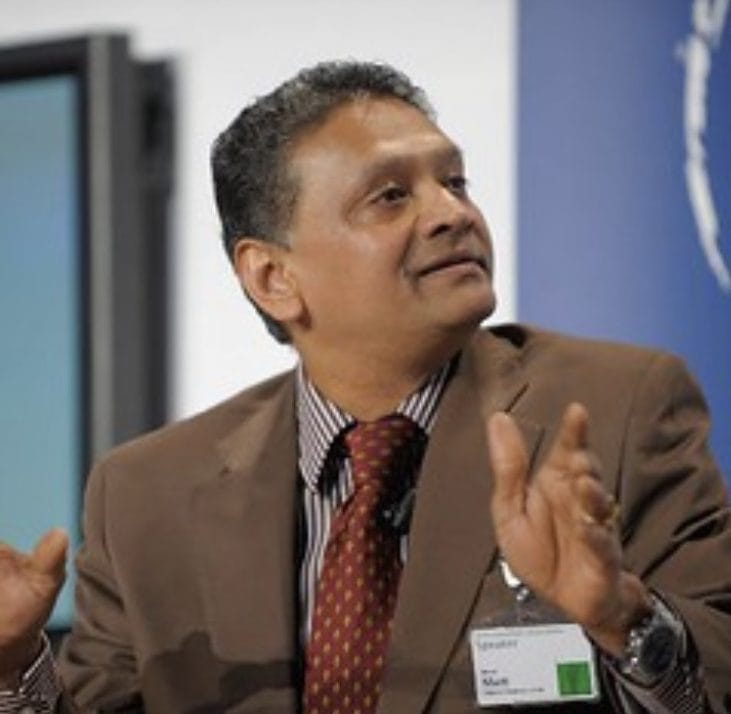
Mohan Murti
Senior Advocate & International Arbitrator
Public Policy & International Affairs Commentator
These pieces are being published as they have been received – they have not been edited/fact-checked by ThePrint.