





Thank you dear subscribers, we are overwhelmed with your response.
Your Turn is a unique section from ThePrint featuring points of view from its subscribers. If you are a subscriber, have a point of view, please send it to us. If not, do subscribe here: https://theprint.in/subscribe/
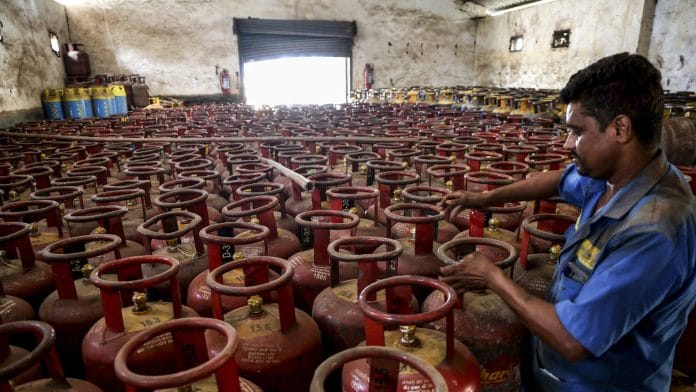
India’s urban transformation is unfolding fastest not within its historic city centres but along their expanding edges. Across the country, peri-urban settlements and newly emerging suburbs are absorbing millions of residents pushed outward by rising land prices and housing shortages. Yet this rapid outward growth has not been accompanied by adequate infrastructure planning. Among the most visible consequences today is an emerging scarcity of liquefied petroleum gas (LPG) in many suburban regions—an issue intensified by global geopolitical tensions and distortions within domestic fuel markets.
Cooking gas has long been presented as one of India’s major welfare successes. Over the last decade, the country dramatically expanded LPG access through government programmes and wider distribution networks. India now has more than 31 crore LPG connections, and nearly 9.6 crore of these were provided under the Pradhan Mantri Ujjwala Yojana, which aimed to move households away from polluting fuels such as firewood and kerosene. Today, roughly 70–75 percent of Indian households depend primarily on LPG for cooking.
However, the presence of a connection does not automatically guarantee reliable fuel access. The actual functioning of LPG supply depends on distribution infrastructure, local market stability, and global energy conditions. In India’s rapidly expanding suburbs, all three of these factors are now under strain.
The Infrastructure Deficit of Suburban Growth
India’s urban population is expected to reach nearly 600 million by 2030, with a substantial share of this growth occurring in peri-urban belts that exist between rural and urban administrative systems. These areas often fall under panchayat governance even though their economic patterns resemble those of cities.
Residential complexes, migrant settlements, and private housing clusters emerge rapidly along highways and industrial corridors. Yet infrastructure planning rarely anticipates this growth. LPG distribution networks were designed around established cities and rural supply programmes, leaving suburban zones caught in an administrative grey area.
Distributors located inside municipal limits must often service housing clusters located dozens of kilometres away. Congested roads, fragmented layouts, and expanding residential demand make delivery routes inefficient. As a result, refill waiting times in suburban neighbourhoods frequently extend well beyond those in city centres.
But the problem runs deeper than distribution inefficiency. The model of suburban development itself assumes that LPG will remain the default—and often the only—cooking fuel. Unlike dense urban areas where households may have access to piped natural gas (PNG) networks, community kitchens, or other decentralised energy solutions, suburban housing projects rarely incorporate alternative cooking infrastructures.
Developers focus primarily on housing units and road connectivity while ignoring energy resilience. When LPG deliveries are delayed or supply becomes uncertain, households in these areas have few viable alternatives. Electricity-based cooking systems are rarely designed into the energy load planning of such residential clusters, and piped gas networks seldom extend beyond city limits. The result is a form of energy monoculture, where millions of households depend almost entirely on one fuel source.
When that source becomes unstable, the entire domestic ecosystem becomes vulnerable.
Global Energy Turbulence
The strain on LPG availability is also linked to broader geopolitical developments. The ongoing tensions surrounding Iran and the wider Gulf region have placed pressure on global oil markets. The Strait of Hormuz, through which nearly one-fifth of the world’s crude oil supply travels, remains one of the most strategically sensitive maritime corridors.
India’s exposure to such disruptions is substantial. The country imports around 85 percent of its crude oil requirements, and LPG production is closely tied to oil refining processes. In addition, a significant portion of India’s LPG demand is met through imports.
When geopolitical tensions disrupt supply routes or create uncertainty in shipping lanes, global oil prices rise and energy markets become volatile. Even before actual shortages occur, these disruptions can alter refinery output decisions and distribution patterns within domestic markets.
For suburban consumers already facing infrastructural limitations, such global shocks translate into longer delivery cycles and rising refill costs.
Panic Buying and Hoarding
Global turbulence has also triggered behavioural responses within the domestic market. In recent weeks, LPG distributors have reported a significant surge in refill bookings as consumers attempt to secure cylinders earlier than usual. Daily booking requests reportedly rose from about 5.5 million to nearly 7.6 million, indicating widespread panic purchasing.
Such demand spikes can overwhelm distribution systems calibrated for predictable consumption patterns. But panic buying is only part of the problem.
Periods of perceived scarcity often create opportunities for speculative hoarding. Intermediaries and informal distributors may attempt to stockpile cylinders and redirect them into parallel markets where they can be sold at higher prices. Suburban zones, where regulatory oversight and monitoring are weaker than in urban centres, become particularly vulnerable to such practices.
Households waiting weeks for official deliveries frequently turn to these informal markets, paying significantly more than the regulated price. The cycle becomes self-perpetuating: panic buying raises demand, hoarding restricts supply, and the perception of shortage deepens.
The Structural Fault in India’s Urbanisation
The emerging LPG scarcity ultimately reveals a deeper structural issue in India’s development model. Urbanisation in the country often proceeds faster than governance structures can adapt. Populations move outward rapidly, but infrastructure planning remains anchored to older municipal boundaries.
Suburbs become dense residential spaces without the institutional capacity of cities or the supply frameworks of rural regions. Basic services—from water supply to fuel distribution—operate under overlapping authorities with limited coordination.
Energy infrastructure is particularly vulnerable in such conditions. When a system designed for a smaller and more centralised population must suddenly serve dispersed suburban communities, logistical stress becomes inevitable.
Planning for Energy Resilience
If suburban India is destined to become the country’s primary zone of urban growth, planning frameworks must evolve accordingly.
First, peri-urban settlements must be integrated into formal urban governance structures so that infrastructure planning reflects actual population distribution.
Second, LPG distribution networks should be decentralised through additional suburban dealerships and storage facilities to reduce logistical bottlenecks.
Third, regulators must strengthen oversight during periods of market stress to prevent hoarding and ensure fair distribution.
Finally—and perhaps most importantly—future suburban planning must move beyond a single-fuel assumption. Expanding piped natural gas networks, encouraging electric cooking infrastructure, and integrating energy-resilient housing design could reduce the risks associated with overdependence on LPG.
A Warning from the Suburbs
India’s suburbs are often portrayed as spaces of opportunity—places where expanding housing markets promise upward mobility and urban prosperity. Yet the everyday realities of these settlements increasingly reveal fragile infrastructure and limited service resilience.
The emerging LPG scarcity is therefore more than a temporary inconvenience. It is a warning that India’s urban expansion is proceeding faster than the systems required to sustain it.
If the country’s urban future is indeed suburban, ensuring reliable access to something as basic as cooking fuel will become a crucial measure of whether that future is sustainable
These pieces are being published as they have been received – they have not been edited/fact-checked by ThePrint.