





Your Turn is a unique section from ThePrint featuring points of view from its subscribers. If you are a subscriber, have a point of view, please send it to us. If not, do subscribe here: https://theprint.in/
India’s new labour codes, mark one of the biggest overhauls of the country’s labour framework since Independence. For decades, India’s labour laws were a patchwork of 40 central regulations and more than 100 state-level rules. Many were outdated, some overlapped, and others slowed both business growth and worker welfare. The new labour codes promise to simplify this complex structure and create a more balanced, modern, and productive working environment. Yet, like any major reform, their real impact will depend on how they are implemented and received on the ground.
The four labour codes i.e. on wages, industrial relations, social security, and occupational safety, aim to bring clarity and consistency. At the heart of the reform is the idea that India needs laws that protect workers while also supporting economic growth, formalisation, and job creation. One of the major changes comes through the new definition of wages. Under the new rule, the basic salary must be at least 50 percent of total pay. This is expected to increase employees’ contributions to provident fund and gratuity, strengthening social security. For workers, this means better long-term financial protection. For employers, this may mean an increase in upfront costs, particularly for companies that structured salaries in a way that kept basic pay low. While businesses have raised concerns about rising expenses, the reform nudges India towards a system where employee welfare is seen as central, not optional.
Another major change lies in the flexibility offered to businesses under the Industrial Relations Code. The threshold for seeking government approval for layoffs or closures has been increased for larger establishments. Supporters argue that this gives companies the freedom to adjust to market conditions quickly, making India more competitive globally. Critics worry that this may weaken job security and may lead to increased contractualisation. What the reform really requires is strong oversight and transparent grievance systems to ensure that flexibility for employers does not translate into exploitation of workers.
For India’s vast informal workforce, the Social Security Code is perhaps the most important part of the reform. It seeks to extend benefits like provident fund, maternity protection, health coverage, and disability insurance to gig workers, platform workers, and unorganised workers. This is a landmark move, reflecting the changing nature of employment in India. As the country becomes more digital and service oriented, many workers depend on apps, platforms, and short-term contracts. Bringing them under formal social protection is a step towards a more inclusive, fair economy. However, the success of this reform will depend on building easy, accessible systems for registration and benefit delivery. If the process becomes too complex, India risks leaving out the very groups it aims to help.
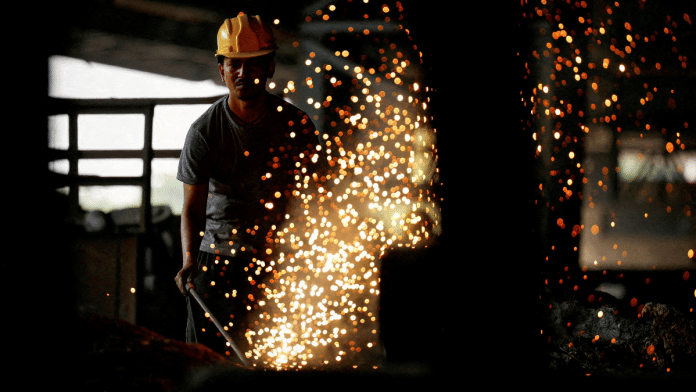
Workplace safety is also addressed in the Occupational Safety Code, which consolidates various rules and aims to strengthen norms in factories, mines, and construction sites. India has long needed stronger safety regulations, especially in industries where workers often face hazardous conditions. The new law sets clearer standards and responsibilities for employers. But laws are only as good as their enforcement. For this reform to work, inspectors need adequate training, industries must embrace a culture of safety, and violations must be penalised without exception.
Overall, the new labour codes represent a serious attempt to update India’s labour market to match the needs of a fast-growing economy. They aim to strike a balance between growth and fairness, protection and flexibility. Yet, the biggest challenge will be implementation. India’s economy is diverse, with large corporations on one end and millions of small businesses on the other. One uniform policy will affect them differently. The government must invest in awareness campaigns, digital tools, and simplified compliance systems so that employers and workers understand their rights and responsibilities clearly.
As India enters 2026, the new labour codes offer an opportunity to reshape the way the country works. If implemented with transparency, empathy, and efficiency, they could strengthen both industry and labour, and bring India closer to a future where economic growth and worker welfare move hand in hand.
By:
Siddharth Roy
Civil Engineer, Writer and Columnist
These pieces are being published as they have been received – they have not been edited/fact-checked by ThePrint.