




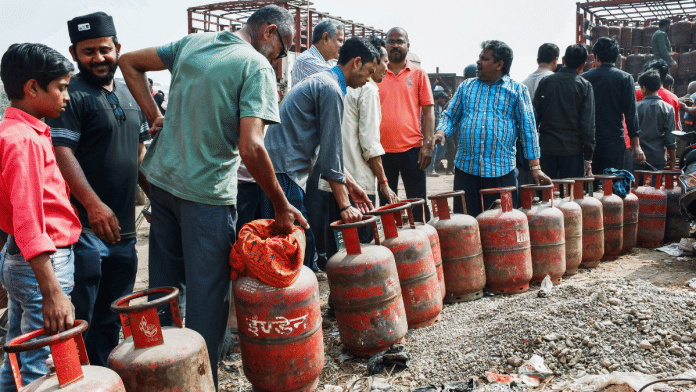

India’s kitchens are undergoing a transformation that few policy debates acknowledge. Not because culinary preferences are changing, but because cooking fuel itself is becoming uncertain. Across several Indian towns and expanding suburban regions, delays in LPG cylinder deliveries and rising price volatility are beginning to affect something fundamental: the ability to cook daily meals.
In response, a quiet shift is taking place. Ready-to-eat and instant packaged foods are increasingly filling the gap left by irregular cooking gas supply. What appears at first glance to be a lifestyle trend is in fact an emerging intersection of energy insecurity, urban expansion and consumer behaviour.
Over the past decade, LPG has become the backbone of India’s domestic cooking system. Government initiatives such as the Pradhan Mantri Ujjwala Yojana dramatically expanded access to clean cooking fuel, particularly among low-income households. According to official data from the Petroleum Ministry, the number of domestic LPG consumers in India increased from around 14.5 crore in 2014 to more than 31 crore by 2023. Today LPG is the primary cooking fuel for more than 70 percent of Indian households.
This transition is widely considered one of the most significant clean energy shifts in the developing world. By reducing reliance on firewood and biomass fuels, LPG expansion has helped address indoor air pollution and improved health outcomes for millions of women.
Yet expanded access has also created deep structural dependence. When LPG supply becomes uncertain—even temporarily—the consequences ripple quickly across households that rely entirely on gas stoves for cooking.
Recent price adjustments illustrate the vulnerability of this system. Earlier this year domestic LPG prices were increased by approximately ₹60 per cylinder. While such adjustments are part of broader global energy price movements, they highlight how deeply domestic cooking fuel is tied to international geopolitics.
India imports nearly 60 percent of its LPG requirements, with a large share coming from the Middle East. As a result, geopolitical tensions in West Asia or disruptions in maritime energy routes such as the Strait of Hormuz can indirectly influence India’s domestic cooking fuel market.
Even the perception of supply instability can trigger behavioural reactions. Reports in recent weeks suggested that daily LPG booking requests jumped from around 5.5 million to nearly 7.6 million during periods of supply anxiety. Panic booking itself can strain distribution systems that are already under pressure from rising demand.
Urbanisation adds another layer to this challenge. India’s suburban belts and peri-urban settlements are expanding faster than infrastructure systems can adapt. New housing clusters, migrant neighbourhoods and rapidly growing townships frequently emerge before stable distribution networks are fully established.
LPG distribution chains designed for earlier population patterns often struggle to keep pace with this demographic expansion. The result is periodic delivery delays, uneven availability and, in some cases, the emergence of informal resale markets.
In certain cities, reports have indicated that commercial LPG cylinders have been sold in black markets at prices far higher than official rates. Such distortions typically emerge when supply networks become strained and demand rises suddenly.
While domestic consumers are generally prioritised in official distribution systems, even short disruptions can create immediate difficulties in households where LPG is the sole cooking fuel.
In rural contexts, families historically retained fallback cooking options such as biomass stoves or firewood. Urban living, however, has eliminated many of these alternatives. Apartment housing, dense settlements and environmental regulations make it difficult to revert to traditional fuels.
It is in this context that ready-to-eat food has quietly emerged as an alternative.
India’s ready-to-eat food market has grown rapidly over the past decade, driven by changing lifestyles, expanding retail networks and rising disposable incomes. Industry estimates place the market at around $870 million in 2023, with projections suggesting it could approach $2.9 billion by 2031.
Until recently, the sector’s growth was largely associated with convenience consumption—working professionals, students and nuclear households seeking faster meal options. But cooking fuel uncertainty is introducing a new dimension.
Products such as instant noodles, packaged curries, frozen parathas and microwaveable rice require minimal cooking time and significantly less fuel. In situations where LPG supply becomes irregular, these foods provide a practical short-term substitute.
Retailers have already begun noticing shifts in consumer behaviour. Reports indicate that sales of ready-made meals and frozen foods have risen as households seek alternatives that require little or no cooking gas.
The implications extend beyond convenience. India’s traditional dietary culture is rooted in freshly prepared meals cooked daily from raw ingredients. Such meals are not merely nutritional practices but also cultural routines that structure family life.
When structural constraints gradually replace fresh cooking with processed packaged meals, the transformation affects more than taste.
Ready-to-eat foods often contain higher levels of sodium, preservatives and stabilising additives designed to prolong shelf life. While occasional consumption is unlikely to cause harm, sustained dependence on such products could influence public health patterns in the long run.
India already faces rising rates of hypertension, obesity and metabolic disorders in urban populations—conditions often linked to dietary transitions associated with urbanisation and processed food consumption.
There is also an economic paradox embedded in this shift. Ready-to-eat food typically costs more per serving than meals prepared from basic raw ingredients at home. For lower-income households experiencing cooking fuel disruptions, this means spending more money on less nutritious meals.
The LPG shortage therefore reveals something larger than an energy supply issue. It highlights how closely energy systems, urban infrastructure and food habits are intertwined.
Policy discussions in India often treat energy access, urban planning and food systems as separate domains. Yet the experience inside everyday kitchens shows that these sectors are deeply connected.
When cooking fuel supply becomes uncertain, dietary behaviour changes. When infrastructure fails to keep pace with urban growth, consumer markets adapt in unexpected ways.
Addressing the challenge requires a broader policy approach. Strengthening LPG distribution networks in rapidly expanding urban regions is essential. Diversifying household cooking energy—through technologies such as electric induction stoves supported by reliable electricity—can reduce dependence on a single fuel source.
Equally important is improving transparency in LPG distribution to prevent hoarding and black-market activity during periods of supply stress.
The rise of ready-to-eat food in India is often interpreted as a marker of modern consumer culture. But in many households today, it reflects something else: adaptation to infrastructural fragility.
India’s food habits are not changing only because lifestyles are evolving. They are increasingly shaped by the political economy of energy. And when cooking fuel becomes uncertain, what people eat inevitably changes with it.
These pieces are being published as they have been received – they have not been edited/fact-checked by ThePrint.