





Thank you dear subscribers, we are overwhelmed with your response.
Your Turn is a unique section from ThePrint featuring points of view from its subscribers. If you are a subscriber, have a point of view, please send it to us. If not, do subscribe here: https://theprint.in/subscribe/
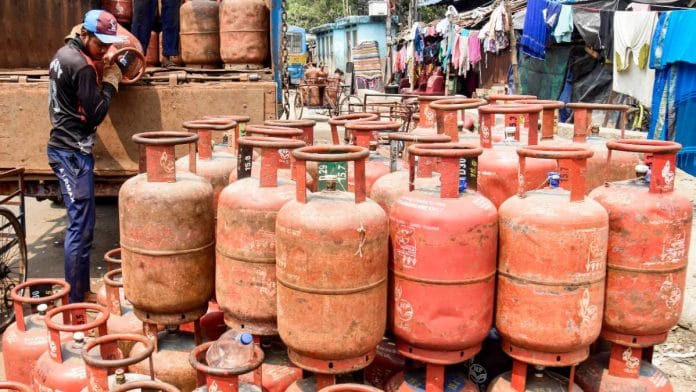
India’s kitchens are once again at the centre of a structural crisis. Across urban peripheries and smaller towns, households report delays in LPG cylinder deliveries, rising refill anxieties, and erratic supply patterns. Official assurances continue to insist that there is “no shortage.” Yet, as is often the case in India’s political economy, the truth lies not in binary claims of scarcity or sufficiency, but in the uneven terrain between them—where global disruptions, domestic policy shifts, and market behaviour intersect.
At stake is not merely a temporary LPG disruption. What is unfolding is a reordering of India’s cooking energy regime, where crisis is becoming the pretext—and perhaps the instrument—for a large-scale transition toward piped natural gas (PNG).
The Global Roots of a Domestic Crisis
India’s LPG system is structurally import-dependent. The country consumes over 33 million metric tonnes of LPG annually, with nearly 60% sourced through imports, primarily from West Asia. This dependency makes India acutely vulnerable to geopolitical instability.
Recent tensions in the Gulf—particularly around the Strait of Hormuz, a critical chokepoint for energy shipments—have disrupted supply chains, leading to delays in LPG cargo movement and increased freight costs. Industry reports indicate that vessels have faced bottlenecks and rerouting, affecting delivery schedules.
The implications are immediate:
- Slower replenishment of domestic LPG stocks
- Prioritisation of household supply over commercial distribution
- Increased pressure on last-mile delivery networks
Thus, even if aggregate supply figures appear stable, temporal and spatial disruptions create lived scarcity. In suburbs and semi-urban regions, where distribution networks are already fragile, these disruptions are felt most acutely.
Welfare Expansion and Structural Vulnerability
Over the past decade, India’s LPG ecosystem has expanded dramatically, driven by welfare interventions such as the . The scheme enabled millions of low-income households—especially women—to transition away from biomass-based cooking.
Today:
- India has approximately 33.3 crore domestic LPG connections
- A substantial share of these users belong to economically vulnerable groups
- Subsidy rationalisation has already increased the effective cost burden for many households
While this expansion marked a significant public health and gender milestone, it also deepened India’s exposure to global LPG volatility. The system now supports a massive consumer base without corresponding domestic production capacity.
This creates a paradox:
A welfare-driven expansion has produced a fragile dependency on global energy markets.
The Shift to PNG: Policy by Compulsion
In response to the current crisis, the Indian state has accelerated its push toward PNG. A recent policy direction makes this explicit: households with access to piped gas are being required to shift from LPG within a stipulated timeframe or risk losing cylinder supply.
The numbers reveal the asymmetry:
- LPG users: ~33.3 crore households
- PNG users: ~1.6 crore households
At present, PNG remains an urban-centric infrastructure, concentrated in metropolitan regions and select tier-2 cities. Yet, the state’s strategy is clear: reduce LPG burden by migrating urban consumers to pipelines.
On paper, the logic is compelling:
- PNG reduces logistical challenges associated with cylinder distribution
- It offers continuous supply, eliminating booking delays
- It enables better targeting of LPG subsidies to underserved populations
However, the method of transition—through restriction rather than incentive—raises critical concerns.
PNG vs LPG: Efficiency vs Accessibility
Technically, PNG appears superior:
- Continuous, metered supply
- No storage or handling concerns
- Lower risk of accumulation due to its lighter-than-air properties
Yet, these advantages are contingent upon infrastructure availability. Unlike LPG, which requires minimal setup, PNG depends on extensive pipeline networks, city gas distribution systems, and regulatory clearances.
This creates a fundamental divide:
- Urban households: positioned to benefit from seamless PNG access
- Rural and peri-urban households: remain dependent on LPG, with all its vulnerabilities
The transition, therefore, risks institutionalising a two-tier energy system, where reliability becomes a function of geography.
Crisis, Hoarding, and the Manufacture of Scarcity
Beyond global disruptions and policy shifts, the LPG crisis is also being shaped by market behaviour.
Reports from multiple states indicate:
- Panic booking of cylinders
- Hoarding by intermediaries
- Black-market diversion of LPG supplies
In several instances, enforcement agencies have seized thousands of illegally stored cylinders, suggesting that scarcity is being artificially amplified.
This raises an uncomfortable but necessary question:
To what extent is the crisis being mediated—if not manufactured—by market actors seeking to profit from uncertainty?
Scarcity, in such contexts, is not merely a condition—it becomes a strategy.
PNG and the Corporate-State Nexus
The shift toward PNG is not occurring in a vacuum. It is embedded in a broader restructuring of India’s energy sector, where city gas distribution (CGD) companies—often backed by large corporate entities—are expanding their footprint.
The implications are significant:
- Assured Consumer Base
As LPG users are compelled to switch, CGD companies gain a steady and expanding market. - Infrastructure-Led Capital Accumulation
Pipeline networks require substantial investment, creating opportunities for long-term capital consolidation. - Regulatory Alignment
State policies increasingly align with corporate expansion, using regulatory tools to nudge—or coerce—consumer behaviour.
In this configuration, the state functions less as a neutral arbiter and more as a facilitator of market expansion, leveraging crisis conditions to accelerate infrastructural adoption.
From Energy Transition to Energy Reordering
The shift from LPG to PNG is often framed within the discourse of “clean energy transition.” However, this framing warrants scrutiny.
- Both LPG and PNG are fossil fuels
- PNG in India is significantly dependent on imported LNG
- The transition does not eliminate carbon dependency but reconfigures it
What is occurring, therefore, is not a transition in the ecological sense, but a reordering of supply chains and delivery mechanisms.
The emphasis is on:
- Efficiency over equity
- Infrastructure over accessibility
- Market expansion over welfare continuity
West Bengal and the Subnational Response
In states like West Bengal, where urbanisation is rapid but uneven, the LPG-PNG transition presents distinct challenges.
1. Infrastructure Gaps
PNG networks remain limited to select urban clusters. Expanding pipelines to suburban and semi-urban areas requires coordinated investment and long-term planning.
2. Consumer Awareness and Adaptation
Many households remain unfamiliar with PNG systems, necessitating awareness campaigns and technical support.
3. Regulatory Oversight
State authorities must ensure that:
- LPG distribution remains stable in non-PNG areas
- Hoarding and black marketing are strictly controlled
- Pricing mechanisms remain transparent
4. Potential Policy Interventions
The West Bengal government could consider:
- Phased transition models rather than abrupt mandates
- Subsidies or incentives for PNG adoption, especially for middle- and lower-income households
- Strengthening LPG supply chains in peri-urban regions to prevent exclusion
- Public sector participation in city gas distribution to counter excessive corporate concentration
Conclusion: Who Benefits from the Crisis?
India’s LPG crisis is not an isolated disruption—it is a symptom of deeper structural tensions within the country’s energy economy. Import dependence, infrastructural inequality, and market opportunism have converged to produce a moment of instability.
Yet, within this instability lies a pattern.
The crisis is being utilised to:
- Rationalise subsidy burdens
- Expand pipeline infrastructure
- Consolidate corporate participation in the energy sector
For urban consumers with access to PNG, the transition may indeed bring convenience. But for millions outside this network, the risk is clear: greater precarity within an already fragile system.
The question, then, is not whether India should transition from LPG to PNG.
It is whether this transition will be equitable, voluntary, and inclusive—or whether it will proceed through coercion, crisis, and uneven development.
Until that question is addressed, the Indian kitchen will remain not just a site of domestic life, but a terrain of political economy.
These pieces are being published as they have been received – they have not been edited/fact-checked by ThePrint.