




Thank you dear subscribers, we are overwhelmed with your response.
Your Turn is a unique section from ThePrint featuring points of view from its subscribers. If you are a subscriber, have a point of view, please send it to us. If not, do subscribe here: https://theprint.in/subscribe/
A Small Prelude…
Warren Buffett, Bill Gates, Narayana Murthy and Azim Premji have parted with significant portions of their wealth for social causes. How do we categorise them? Are they practitioners of spiritualism, or simply philanthropists? The question is worth pondering, for it compels us to examine what truly constitutes spirituality.
Spiritualism
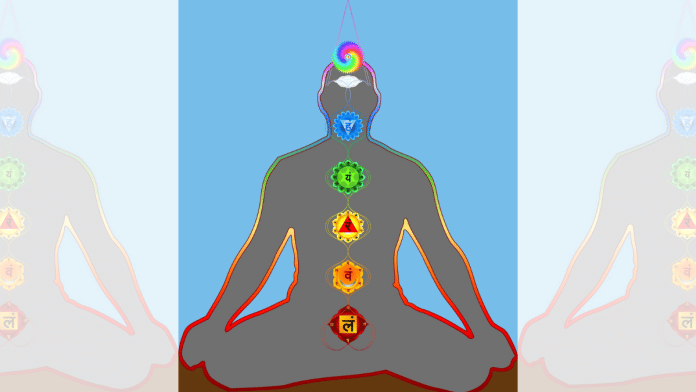
It is often said that the cosmic process, which, in simple terms, explains how the Earth and life came into existence, unfolds through five progressive stages: matter (anna), life force (prana), mind (manas), intelligence (vijnana), and bliss (ananda).
Human beings presently function at the fourth stage, intelligence. In varying degrees, we understand matter, harness life processes, and navigate the complex workings of the mind. Humanity has achieved remarkable mastery over the material world, the vitality of life, and the dynamism of thought. Yet, the fifth stage, illuminated consciousness or bliss, has not become a natural or universal milestone in human evolution.
The movement from intelligence to consciousness, I believe, is the true realm of spiritualism. It is neither institutional nor collective. It is profoundly personal; it is a dialogue between the self and the self.
Guru
Traditionally, we attend schools, the Gurukuls of old, to acquire knowledge. Teachers accelerate learning. There are inspiring teachers and indifferent ones, just as there are brilliant students and those who struggle. Ultimately, however, a teacher can only indicate the path; it is the student who must interpret, internalise, and transform knowledge into wisdom.
Similarly, Gurus may guide those seeking to move from intellectual understanding towards spiritual awareness. Yet, just as students eventually leave academic institutions to pursue independent inquiry, the spiritual seeker too must, at some stage, step beyond the Guru and walk alone. History frequently demonstrates that pupils often outgrow their teachers.
Moreover, the presence of a Guru, while beneficial, is not indispensable. Prince Siddhartha, who became the Buddha, arrived at enlightenment through relentless personal pursuit. Jesus Christ charted his own spiritual course. Closer home, Adi Shankaracharya, even as a child in a remote village, displayed extraordinary spiritual insight through largely self-driven quest.
Spiritualism, therefore, remains an inward journey. External influences such as Gurus, scriptures, or traditions, are aids and not substitutes for personal realisation.
Yoga
A discussion on spiritualism would be incomplete without reference to Yoga. I do not intend to examine the various schools of Yoga or debate their comparative merits. In its essence, Yoga is a discipline designed to harmonise the body and mind.
Practices aimed at physical well-being strengthen the body and improve resilience. However, the deeper Yogic principles, particularly those reflected in Chapter IX of the Bhagavad Gita, assist the individual in progressing from intelligence towards higher consciousness. Yoga, in its truest sense, is the science of self-integration.
Spiritualism, therefore, cannot be established through public discourse, ritual display, or rigid adherence to prescribed methods. It remains an inner evolution.
A Gita Perspective
Bhagavad Gita II.46 states:
Yavan artha udapane
Sarvatha samplutodake
Tavan sarvesu vedesu
Brahmanasya vijanatah
Its essence may be understood thus:
Just as a well loses its importance in a land flooded with water everywhere, the ritualistic aspects of the Vedas lose relevance for one who has attained true knowledge. For an individual of illuminated consciousness, ritual observances become incidental, not essential.
Godmen
Dr. Sarvepalli Radhakrishnan, philosopher, statesman, and former President of India, observed that when a finite individual develops profound spiritual insight combined with compassion and moral courage, such a personality may trigger a spiritual and social awakening. Society then interprets such emergence as divine intervention, as though God has incarnated to preserve righteousness and counter evil.
The question, however, remains pertinent. How many modern-day “Godmen” truly fit this description? And where do we place those who exist somewhere between spiritual teachers and institutional personalities? For a genuine Guru, the relationship remains deeply personal; between the guide and the seeker. All else is peripheral.
Conclusion
In the final analysis, spiritualism neither thrives in congregations nor diminishes in their absence. It is not validated by the number of followers a Guru commands, nor weakened by the absence of one. The journey from intelligence to consciousness is solitary, introspective, and deeply personal. Gurus may illuminate the path, Yoga may discipline the body and mind, and scriptures may inspire thought — but realization dawns only when the individual confronts and understands the self. Spiritualism, therefore, is not about seeking divinity outside; it is about discovering it within.
Col KL Viswanathan
(The author is an Indian Army veteran and a contemporary affairs commentator. The views are personal. He can be reached at kl.viswanathan@gmail.com )
These pieces are being published as they have been received – they have not been edited/fact-checked by ThePrint.