




Thank you dear subscribers, we are overwhelmed with your response.
Your Turn is a unique section from ThePrint featuring points of view from its subscribers. If you are a subscriber, have a point of view, please send it to us. If not, do subscribe here: https://theprint.in/subscribe/
Advocate & International Industry Arbitrator
In moments of political fever, television graphics shout before the Constitution whispers. The phrase “Islamic Republic”—tossed into Kerala’s latest quarrel—has been made to sound either seditious or sacramental, depending on the studio you choose. The law, however, is unmoved by decibels. It asks quieter questions: Is this belief? Is it advocacy? Is it incitement? The answers matter, because India’s Constitution protects speech generously—right up to the point where speech seeks to command politics.
Begin with first principles. India is not merely “secular” as a mood; it is secular by design. The Preamble declares a Sovereign, Socialist, Secular, Democratic Republic. Articles 25 to 28 guarantee freedom of conscience and religion—but conspicuously not the freedom to establish a religious State. Equality before the law (Articles 14 and 15) and popular sovereignty leave no constitutional oxygen for a theocracy of any denomination. There is, in short, no lawful route to a Hindu Rashtra, an Islamic Republic, or any clerical republic within the Indian constitutional order.
That settled, what does the law do with speech that praises or discusses such ideas? It distinguishes—carefully and consistently—between ideas and instructions. Abstract discussion, theological reflection, historical analysis, even admiration for foreign models (Medina, Tehran, Islamabad) fall within the wide canopy of Article 19(1)(a). Our Supreme Court has repeatedly held that the Constitution does not police taste or theology. It protects even uncomfortable ideas. Advocacy—mere advocacy—remains lawful.
The hinge turns on what follows the advocacy. When belief begins to posture as politics—when speech moves from “this is virtuous” to “this must govern”—courts ask three precise questions. First, is it still discussion, or has it become mobilisation? Second, does it propose to displace the Constitution or subvert democratic institutions? Third, does it incite discrimination, coercion, violence, or public disorder? Only when speech answers yes to the third does the criminal law enter.
This is not a technicality; it is the Republic’s safety valve. Our jurisprudence insists on a high threshold. The State must show intent and effect—words aimed at action, not merely at persuasion; a likelihood of disorder, not speculative offence. That is why revolutionary rhetoric, monarchist nostalgia, and religious supremacy can all be spoken in India without a police knock—until they demand obedience, draw lines of citizenship by creed, or summon the crowd to act.
Where, then, lies the grey zone that alarms viewers and delights polemicists? It appears when faith is yoked to political loyalty—when believers are told that fidelity to religion requires fidelity to a particular political arrangement; when critics are cast not as dissenters but as apostates; when constitutional democracy is described as morally illegitimate by comparison. Such speech is not automatically criminal. But it is constitutionally suspect. It invites scrutiny under the limits clause of Article 19(2) and, if it threatens communal harmony, under provisions dealing with public mischief and enmity. Courts will still demand proof—clear words, clear intent, clear consequence.
What of politics—alliances, understandings, local adjustments? The Constitution is agnostic. Parties may cooperate with any lawful organisation; ideology alone is not a crime. Liability attaches to speech and conduct, not to proximity. This is why political condemnation is not the same as constitutional violation. One may rightly question the wisdom of legitimising illiberal ideas without pretending that every handshake is a handcuff.
The confusion in our public square stems from a failure to respect these boundaries. Television collapses belief into incitement; social media inflates offence into illegality. The Constitution does neither. It permits faith. It tolerates fantasy. It forbids command—especially command that seeks to replace the people’s sovereignty with the sovereignty of doctrine.
A mature republic must be capable of this distinction. To criminalise belief is to betray liberty. To ignore incitement is to endanger order. Between these poles lies the discipline of constitutional law—calm, exacting, unseduced by slogans. India’s founders understood that the Republic would host many gods, many prophets, and many passions. They entrusted us with a framework robust enough to endure them all, provided none claims the throne.
The lesson, then, is unromantic but vital. Talk of an “Islamic Republic” may be constitutionally irrelevant, politically combustible, or morally troubling—sometimes all three at once. It becomes unlawful only when it asks citizens to act against the Constitution, or to sort loyalty by belief, or to disturb the public peace. Until that line is crossed, the answer to bad ideas is not the baton but the ballot—and, above all, the better argument.
India’s Constitution is confident enough to allow speech that questions it—and strong enough to stop speech that seeks to command it. That balance is not weakness. It is the Republic at work.
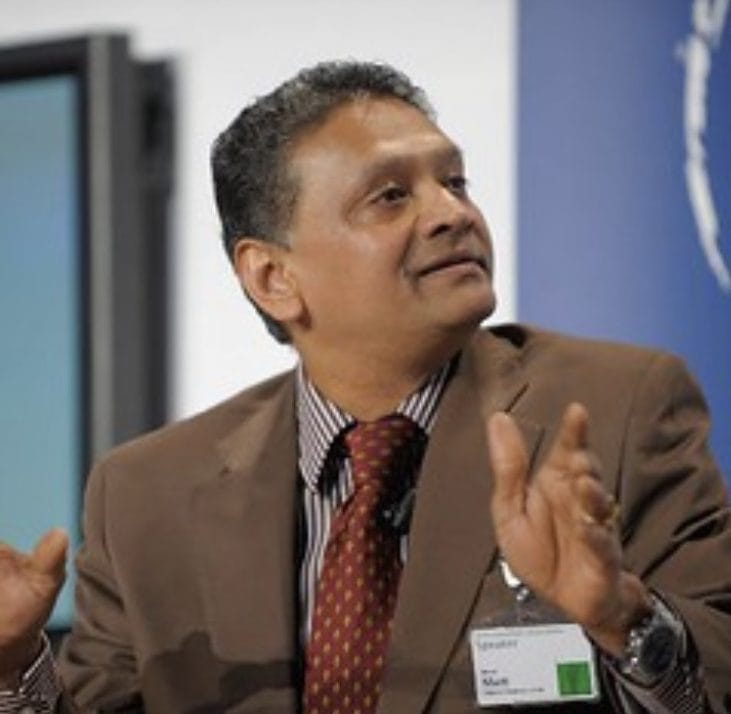
Mohan Murti was Former Managing Director- Europe
Reliance Industries Ltd, Germany
These pieces are being published as they have been received – they have not been edited/fact-checked by ThePrint.