





Thank you dear subscribers, we are overwhelmed with your response.Your Turn is a unique section from ThePrint featuring points of view from its subscribers. If you are a subscriber, have a point of view, please send it to us. If not, do subscribe here: https://theprint.in/subscribe/
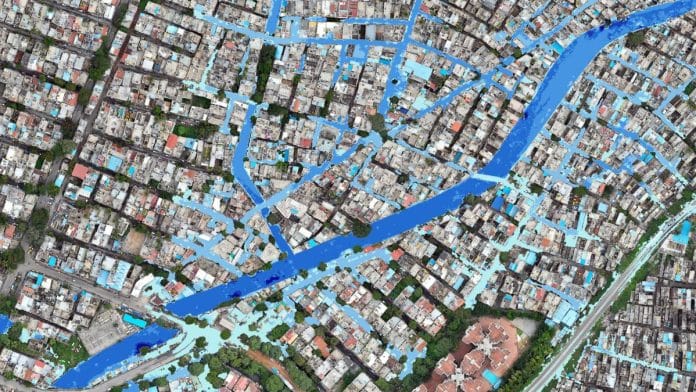
Urban flooding has emerged as one of the most pressing environmental and governance challenges confronting India’s rapidly expanding cities. Once seen as a consequence of rare, extreme rainfall events, flooding within city limits has now become a recurring phenomenon. From metropolitan centres like Mumbai and Chennai to fast-growing urban hubs such as Guwahati, even short spells of intense rainfall are enough to paralyse infrastructure, disrupt economic activity and expose systemic weaknesses in urban planning.
Unlike riverine floods, which are caused by overflowing rivers, urban flooding is largely man-made. It stems from inadequate drainage systems, unplanned construction and the steady disappearance of natural water-absorbing ecosystems. Modern cities are dominated by impermeable surfaces such as concrete and asphalt, which prevent rainwater from seeping into the ground. As a result, water accumulates rapidly on roads and in low-lying areas. When drainage systems are outdated or poorly maintained, they fail to cope with high-intensity rainfall, bringing urban life to a standstill.
This problem has been exacerbated by the pace and pattern of urbanisation in India. With the country’s urban population projected to exceed 600 million by 2030, cities have expanded rapidly, often at the cost of environmental sustainability. Wetlands, ponds and natural drainage channels that once regulated water flow have been encroached upon or replaced by built infrastructure. The loss of these ecological buffers has significantly reduced the capacity of cities to manage excess rainwater.
The situation is particularly acute in Guwahati, one of the fastest-growing cities in the Northeast. Situated along the Brahmaputra and surrounded by hills, the city’s geography makes it inherently vulnerable to waterlogging. Over the past two decades, unchecked urban expansion has encroached upon wetlands and natural drainage basins that historically acted as reservoirs during heavy rainfall.
Among the most critical of these ecosystems is Deepor Beel, a Ramsar-designated wetland that once played a vital role in absorbing excess rainwater. Increasing encroachment and environmental degradation in and around the wetland have diminished its capacity, leading to severe waterlogging in many parts of the city during the monsoon. What was once a natural safeguard has been weakened by unsustainable development.
Climatic factors further compound the challenge. Assam receives some of the highest rainfall in India, and climate change is intensifying this pattern. Rainfall is becoming more erratic and concentrated, with sudden cloudbursts overwhelming drainage systems designed for lower volumes. In Guwahati, the surrounding hills add another layer of complexity. Construction on hill slopes has destabilised the terrain, increasing soil erosion. During heavy rainfall, runoff carrying debris flows into low-lying urban areas, clogging drains and exacerbating flooding.
Similar patterns are visible across India. The devastating floods in Chennai in 2015 and the recurrent waterlogging in Mumbai illustrate how poorly planned urban expansion can turn heavy rainfall into large-scale disasters. In most cases, the underlying causes remain the same: loss of wetlands, obstruction of natural drainage pathways and inadequate stormwater infrastructure.
The economic and social costs of urban flooding are considerable. Flooded roads disrupt transport networks, halt business operations and break supply chains. Informal sector workers, who rely on daily wages, are particularly vulnerable when mobility is restricted. Additionally, stagnant water creates serious public health risks by increasing the spread of water-borne diseases.
Addressing urban flooding requires a fundamental shift in how cities are planned and managed. Protecting and restoring wetlands and water bodies must be a priority. Natural ecosystems such as lakes, marshes and floodplains act as buffers, absorbing excess rainwater during peak rainfall events. Their preservation is not merely an environmental concern but an urban necessity.
Equally important is the modernisation of stormwater drainage systems. Many Indian cities continue to rely on outdated infrastructure that cannot handle current rainfall intensities. Upgrading these systems, combined with regular maintenance, is essential for effective water management. At the same time, cities must adopt nature-based solutions such as increasing green cover, using permeable pavements and promoting rainwater harvesting to enhance water absorption.
In Guwahati, integrated planning is crucial. Protecting ecosystems like Deepor Beel, regulating construction on hill slopes and strengthening drainage infrastructure should form the core of long-term flood mitigation strategies. Effective coordination between municipal authorities, environmental agencies and urban planners will be key to achieving sustainable outcomes.
Urban flooding is no longer an isolated occurrence but a recurring warning about the unsustainable trajectory of urban development in India. As cities continue to grow, the challenge lies in balancing economic expansion with ecological resilience. Without proactive planning and environmental sensitivity, seasonal rainfall will increasingly translate into urban crises. Building resilient cities will require not only stronger infrastructure but also a renewed commitment to preserving the natural systems that sustain them.
By:
Siddharth Roy
Civil Engineer, Short Story Writer and Columnist (for various publications)
These pieces are being published as they have been received – they have not been edited/fact-checked by ThePrint.