





Thank you dear subscribers, we are overwhelmed with your response.
Your Turn is a unique section from ThePrint featuring points of view from its subscribers. If you are a subscriber, have a point of view, please send it to us. If not, do subscribe here: https://theprint.in/subscribe/
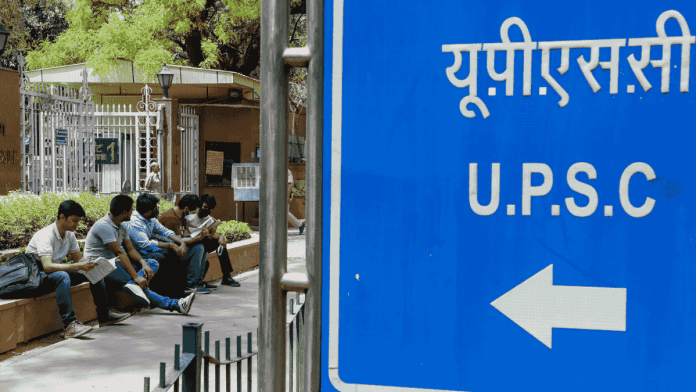
In India, individuals in their mid-twenties are entrusted with some of the country’s most consequential administrative responsibilities. Through the Civil Services Examination conducted by the Union Public Service Commission, candidates enter elite services such as the Indian Administrative Service, Indian Police Service and Indian Foreign Service—often before they have spent meaningful time working in the very sectors they will later regulate.
Civil services trends indicate that the average age of successful candidates is 26–27 years, with a majority between 24 and 28. At this stage, most professionals in other fields are only beginning to understand the operational realities of their industries. Yet in India’s bureaucracy, this is precisely when many begin making decisions that influence millions of citizens.
The roots of this model are historical. Much of India’s administrative architecture evolved from the British-era Indian Civil Service, which recruited academically strong individuals at a young age and trained them internally to manage governance across the subcontinent. At independence, retaining this system ensured continuity for a newly formed nation confronting immense developmental challenges.
However, India today operates in a vastly different environment. The country manages one of the world’s largest and most diverse economies, oversees expanding infrastructure networks, and regulates increasingly complex technological and industrial sectors. Governance in such a context requires not only analytical acumen but also practical understanding of institutional functioning in real-world conditions.
Administrators today supervise development programmes, regulate industries, manage public resources, and coordinate policy implementation across multiple layers of government. These responsibilities demand familiarity with the realities of the sectors they govern. Academic excellence alone cannot substitute for such experience.
A further consequence of the current recruitment model is the early movement of highly specialised graduates away from their professional domains. Many successful candidates come from institutions such as the Indian Institutes of Technology and the All India Institute of Medical Sciences—institutions established to produce engineers, scientists, and doctors who contribute directly to technological innovation, research, and healthcare delivery. When such graduates move immediately into administrative roles, the country may unintentionally lose valuable expertise in sectors where skilled professionals are scarce. A doctor may never practise medicine; an engineer may never contribute directly to infrastructure or technology development. For a nation seeking accelerated industrial, scientific, and healthcare progress, the opportunity cost is significant.
The question of opportunity is equally pressing. Many capable individuals cannot dedicate their early twenties exclusively to preparing for competitive examinations. Economic realities often compel graduates to join the workforce immediately. Others may discover civil service opportunities later in their careers. By the time these individuals gain stability and awareness, they may be nearing the upper age limits for eligibility, potentially excluding candidates with both intellectual ability and practical experience.
Reforming the civil services entry framework could strengthen both administrative maturity and fairness. One approach would be to introduce a minimum period of professional or community experience before candidates become eligible. Even a few years of exposure in engineering, healthcare, education, entrepreneurship, or social service could broaden the perspective of future administrators. Similarly, structured community engagement or public service experience prior to entry could deepen understanding of social realities and development challenges, insights that no examination syllabus can fully impart.
Within the bureaucracy itself, periodic ethics and policy-learning programmes could reinforce accountability, public service, and evidence-based decision-making throughout an officer’s career. These reforms would complement, rather than diminish, the meritocratic nature of the civil services.
Governance improves when policymakers understand systems not only from reports and files but also through lived experience. As India aspires to become a developed nation, the effectiveness of its institutions will be decisive. Faster decision-making, better policy design, and stronger implementation capacity will determine how successfully the country translates economic growth into inclusive progress across regions.
Reconsidering the foundations of administrative recruitment is not criticism but an opportunity to strengthen them for the future. A system that encourages future administrators to first engage with society, industry, and professional life before assuming authority could produce leadership that is both intellectually capable and practically grounded.
India’s development ambitions demand institutions that combine knowledge with experience, and authority with understanding. If governance is to match the nation’s aspirations, it may be time to ask a fundamental question: should administrative authority begin immediately after graduation, or after meaningful engagement with the real world? Encouraging experience before authority could be one of the most constructive steps toward building a responsive, effective, and future-ready administrative system.
Gurbarn Singh, P.Eng., is pursuing a PhD in Metallurgical Engineering through a joint doctoral programme between IIT Madras and the University of Alberta, with over 20 years of international experience in quality management, manufacturing, and heavy engineering industries. He writes on governance, institutional development, and public policy.
These pieces are being published as they have been received – they have not been edited/fact-checked by ThePrint.