








New Delhi: The student-led liberal party, National Citizen Party, is engaged in seat-sharing talks with Jamaat ahead of the Bangladesh elections, and there are speculations of an announcement within a few days. Senior NCP leaders report “positive progress” in negotiations, but disagreements over the distribution of constituencies are ongoing.
Some NCP leaders have also registered their protest over the development, resigning from party posts and vocalising their anti-Jamaat stance on social media.
Earlier, the NCP explored a seat-sharing arrangement with Khaleda Zia’s Bangladesh Nationalist Party. But talks failed to produce an agreement, while the party’s engagement with Jamaat advanced, according to local reports.
Senior NCP leaders, however, believe that prospects for reopening talks with BNP have improved since Khaleda Zia’s eldest son, BNP acting chairman Tarique Rahman, returned to the country Thursday. Many indicate an interest in meeting Rahman to discuss an electoral understanding. But the BNP has not publicly shown any interest so far.
Launched in February, the NCP is a student-led political party formed after Bangladesh’s 2024 July Revolution, during which students protested against the ‘misrule’ of Sheikh Hasina’s government, eventually leading to her ouster.
The NCP leadership has reportedly held meetings with senior Jamaat figures and sought seat-sharing concessions in at least 50 constituencies. But Jamaat, considering it excessive, is yet to go public with a final decision. Further talks between the parties are expected.
Also Read: Bangladesh & Myanmar elections in 2026 pose a danger to India’s Northeast
Internal divisions
The issue has deepened divisions within the NCP—one camp supports an alliance with Jamaat, whereas another strongly opposes it.
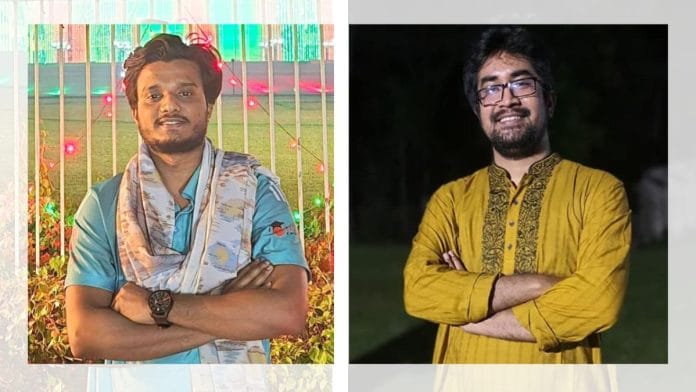
Mir Arshadul Haque, a prominent leader of the anti-Jamaat faction, resigned from the party Thursday over this issue. Haque had served as joint member secretary of NCP and chief coordinator of its Chattogram city unit.
Abdul Kader, another prominent figure of the July uprising and former coordinator of the anti-discrimination student movement, has expressed dissatisfaction over NCP moving towards a formal electoral deal with Jamaat.
In a Facebook post Thursday, he said NCP initially demanded 50 seats but later settled for 30, agreeing not to field candidates in the remaining 270 seats.
“If everything goes according to plan, the announcement of this alliance may come tomorrow. Through this, the NCP will, in effect, be absorbed into the womb of Jamaat. The grave of youth politics is about to be dug,” his post said.
Jamaat-e-Islami Assistant Secretary General Hamidur Rahman Azad told Prothom Alo late Thursday night that discussions with NCP were ongoing.
With the elections around the corner, the NCP formed the Democratic Reform Alliance on 7 December, along with the Amar Bangladesh Party (AB Party), and the Bangladesh Rastro Songskar Andolon (Bangladesh State Reform Movement). At the time of its formation, the alliance had set an aim—to emerge as a strong third force, independent of both the BNP and the Jamaat.
Now, with the NCP and the AB Party pursuing an agreement with either the BNP or Jamaat, visible strains are appearing in the alliance. It has especially angered the Bangladesh State Reform Movement.
Didar Bhuiyan, the joint general secretary of Rastra Sanskar Andolan, said there had been a consensus among the alliance partners on the bloc functioning independently of both major parties.
“That understanding has already been violated by holding talks with both sides,” he told Prothom Alo, adding that an official party statement would soon be issued.
Internal factions in Jamaat
Tensions, meanwhile, have also surfaced within Jamaat’s broader alliances.
Jamaat had an alliance with eight parties. The bloc’s stated aim was to prevent a split in the Muslim vote. Now, some of these allies have warned that they will leave the bloc if Jamaat forges a deal with NCP, reports say. They argue that the bloc’s core objective is to consolidate Muslim votes.
NCP, which always calls itself a ‘liberal party’, earlier publicly stated it would not align with Jamaat.
NCP Joint Chief Organiser Saifullah Haider has recently assured that the party’s position remains firm on reforms.
“Over the past one and a half years, we have seen how some parties want to climb the blood-soaked ladder of July only to grab power, and who have obstructed reforms of the state, politics, and society,” he was quoted as saying by The Business Standard. “Now we are hearing from all sides that a major party is instructing its grassroots to campaign against voting. NCP will not allow July to be defeated. There will be no compromise on state reforms.”
(Edited by Madhurita Goswami)