








Dhaka: “I don’t understand the referendum. I haven’t read it. But I have seen reels on Facebook and think it’s good for the country,” said 23-year-old Mohammed Imran Khan, a tea-seller in Dhaka’s Gulshan locality.
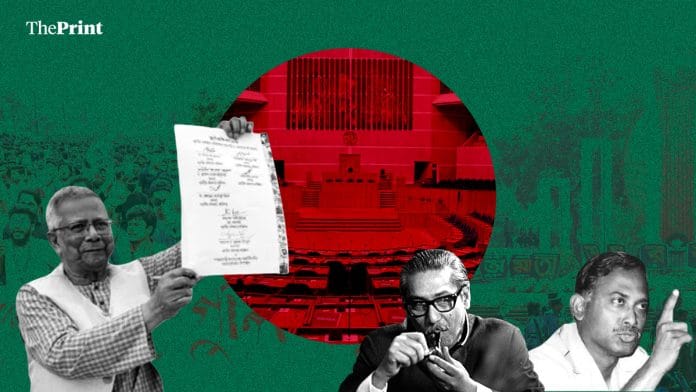
More than three decades after Bangladesh last held a constitutional referendum, voters will return to the polls on 12 February to not only elect a new Parliament but also decide the fate of the July National Charter, a sweeping reform framework drafted after the 2024 anti-Hasina stir and endorsed by the interim government.
But on the streets of Dhaka, there seemed to be little awareness about the document that is set to define the country’s future. Some people appeared clueless about the fact that they had to vote in a referendum, that too on polling day.
Lincoln Stephen Saraow, 33, works at a coffee shop in Gulshan, a posh neighbourhood right behind Bangladesh Nationalist Party (BNP) chairman Tarique Rahman’s residence. He said he is confused about whether to vote ‘yes’ or ‘no’ in the referendum. “I’ve read all the proposed reforms but was told I need to vote ‘yes’ for all to make it a ‘yes’ in total.”
Chief adviser to the interim government Muhammad Yunus Monday framed the referendum as a turning point. If voters approve the July National Charter, he said, the country would undergo a “fundamental transformation”, and misgovernance would not return.
“If the ‘Yes’ vote wins in the referendum, Bangladesh’s future will be built in a more positive way,” he said, while addressing senior secretaries and secretaries at his office in Tejgaon, at a meeting presided over by the cabinet secretary.
According to Yunus, the simultaneous election and referendum, a first in the country’s history, would bring an “unprecedented change” to Bangladesh’s political structure.
Yet, beneath the official optimism lies a dense web of legal, political and legitimacy concerns, particularly around the July National Charter itself.
Bangladesh’s past experience with referendums has centred around constitutional change. The last such vote, held in 1991, recorded a turnout of 35.2 percent, with 83.6 percent voting in favour of restoring parliamentary democracy. Before it, the Fifth Amendment, passed in 1979 during the tenure of President Ziaur Rahman, made referendums mandatory for any changes to the preamble or to particular articles of the Constitution.
That requirement was removed in 2011 through the Fifteenth Amendment under the Awami League government, which abolished the caretaker government system, restored secularism, re-established the four fundamental state principles (nationalism, socialism, democracy, secularism), increased seats reserved for women in Parliament to 50, and recognised Sheikh Mujibur Rahman as the ‘Father of the Nation’.
Now, the stakes are once again constitutional.
Also Read: BNP’s Tarique Rahman a crowd favourite on Dhaka’s streets. But there’s also the ‘third’ front
Confused voters
Rezaur Rahman Lenin, a constitutional analyst based in Dhaka, said the referendum rather than the parliamentary race has emerged as the more contentious issue. “The key issue probably is the referendum,” he said, noting that voters are being asked to cast a single ‘Yes’ or ‘No’ vote on a Charter that bundles together four major reform proposals, including establishment of a bicameral parliament and reforms to the caretaker government system.
“This is exactly what happened when the Consensus Commission worked on the July National Charter,” he said. “People may support one reform but oppose another.”
He further argued that public awareness remains low. “People don’t really know what these reforms are, why they should support them,” he said, adding that in poorer urban areas, the complexity of the bundled choices makes meaningful consent difficult.
Noorzhat, a lawyer who works with the Manabadhikar Shongskriti Foundation (MSF), a well-known human rights group in Dhaka, agreed. “No one really explains what the referendum is all about. A ‘yes’ or ‘no’ vote benefits whom and how do we know what it might entail? As a voter, I did not know,” she added.
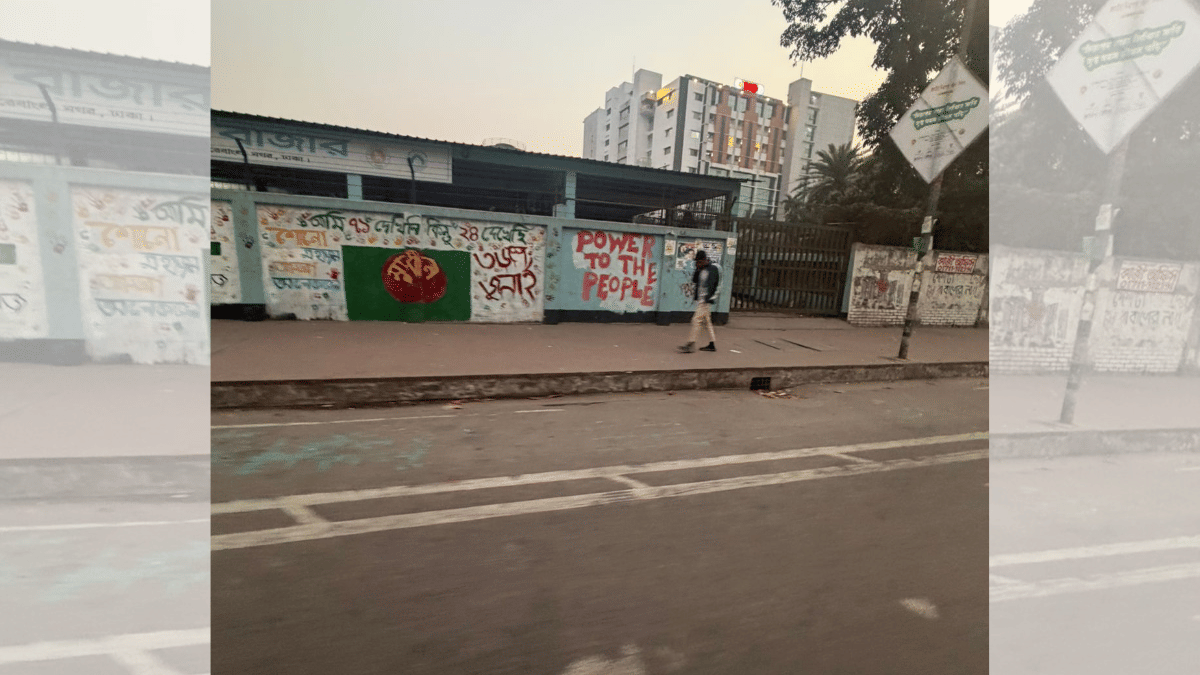
National Citizen Party (NCP) and BNP workers ThePrint spoke to said that in every election rally, contenders ensure voters say ‘yes’ to the consensus. Ahmed Ali, a roadside shop owner in Dhaka’s Karwan Bazaar, was candid. “I know I have to vote ‘yes’; someone was discussing it, but I don’t know what it is about. Isn’t a vote supposed to be between parties?”
Constitutional legitimacy is another fault line.
According to Lenin, legal experts and political groups, including the Awami League and the Jatiya Party, have described the process as unconstitutional, arguing that an interim government lacks the mandate to initiate sweeping constitutional change.
“This interim government took an oath under the existing Constitution,” he said. “Any constitutional lawyer, like me, would agree that it cannot override that framework.”
He also raised concerns about neutrality, noting that the interim administration, including the chief adviser, has openly campaigned for a ‘Yes’ vote. “That violates the rule of law principle. An interim government is not a political government,” he added.
Shifting moods and alliances
Political positions on the referendum, too, are uneven.
The Awami League opposes the referendum but is barred from campaigning against it. On the other side, the Bangladesh Nationalist Party, Jamaat-e-Islami, the NCP, and the interim authorities have all expressed support for a ‘Yes’ outcome.
The NCP’s stance is particularly complex. While its student leaders pushed for going ahead with the July National Charter before elections, the party declined to sign it, conditioning its support on procedural guarantees—some of which were met, others not.
Following an alliance with the Jamaat-e-Islami, the NCP too is now campaigning for its implementation, even as the Jamaat has attached extensive dissent notes calling for stronger language on unlawful arrests, torture, and killings of Islamic scholars and madrasa students.
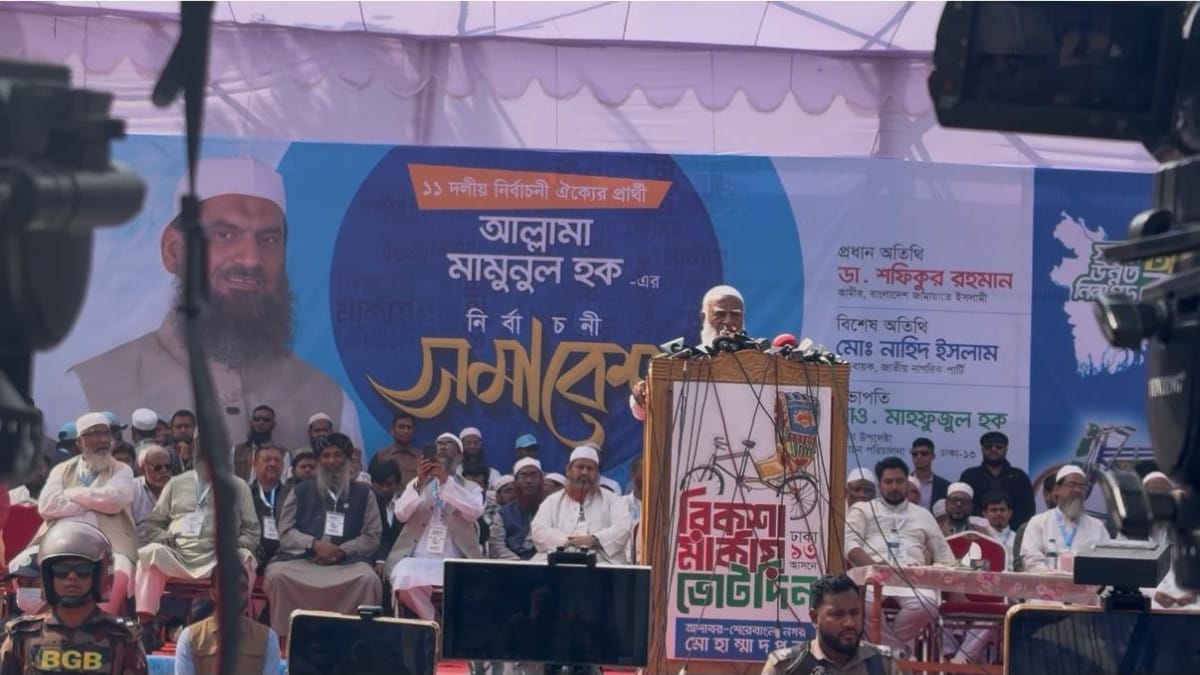
Even BNP chairman Tarique Rahman’s endorsement of the ‘Yes’ vote has raised questions about whether the party intends to work through Parliament or bypass it in favour of the CRC.
The NCP has campaigned across districts in support of the referendum. The BNP, now formally in favour, insists that new MPs will ultimately decide the course of the implementation, if the party comes to power.
Bangladesh’s three previous referendums were all held during moments of crisis.
The 1977 and 1985 referendums were widely viewed as attempts to legitimise the military regimes of Ziaur Rahman and Hussain Muhammad Ershad. The 1991 referendum, by contrast, marked the country’s return to parliamentary democracy.
After the assassination of Sheikh Mujibur Rahman in 1975, Bangladesh entered a period of coups and counter-coups, culminating in Ziaur Rahman assuming the presidency in 1977.
That year’s referendum asked voters whether they had confidence in him and his policies. Official results showed an 88.05 percent turnout and a 98.88 percent ‘Yes’ vote.
A similar pattern followed under Ershad in 1985, when a referendum reported a 94.11 percent approval with a 72.44 percent turnout.
The 1991 referendum held under the Referendum Act of that year was the first to address a constitutional question directly, restoring parliamentary government and reducing the President to a ceremonial role.
Also Read: A day in poll-bound Bangladesh: Mobile phone ban, then a U-turn & Jamaat’s ‘cockpit’ offer for Nahid
What the July National Charter says
The July National Charter seeks to curb the power of the prime minister, enhance the authority of the president, replace the term “Bengali” with “Bangladeshi” in Article 6(2), and introduce structural reforms, including a bicameral legislature.
It contains 84 reform proposals, 47 through constitutional amendments, 37 through laws or executive orders. If approved, the next parliament must implement these reforms within 270 days, or the interim government’s bill passes automatically.
If approved in the referendum, key constitutional changes include all mother tongues to be recognised alongside Bengali as the state language and citizens to be identified as “Bangladeshis” rather than the “Bengali nation”.
Also, the Constitution’s basic principles—Bengali nationalism, democracy, socialism, and secularism—will shift to equality, human dignity, social justice, religious freedom, and harmony.
Two additional fundamental rights will be added: uninterrupted internet access and protection of personal information.
In presidential powers, the president would be elected by secret ballot, instead of a public vote, and would appoint heads of various commissions without consulting the prime minister.
The president would only be able to pardon criminals with consent from affected persons or families and would require a two-thirds vote from both parliamentary houses for impeachment.
The prime minister’s tenure would be limited to a maximum of two terms, or 10 years in total, over a lifetime. He/she would be barred from holding multiple positions simultaneously, and emergency declarations would require full cabinet approval with the Opposition present.
In terms of parliamentary structure, Parliament would become bicameral with a new 100-member Upper House. Seats in the Upper House would be distributed proportionally based on votes polled in the elections, seats reserved for women would gradually increase from 50 to 100, the Deputy Speaker would have to be from an opposition party, and MPs would be allowed to vote independently except on budgets and confidence bills.
The Bangladesh Nationalist Party (BNP) has not agreed to changes proposed in the July National Charter involving the powers of the prime minister and president.
According to a BNP member, who did not wish to be named, strengthening the presidency carries serious structural risks.
The president is not directly elected by the people and, unlike the prime minister, is not politically accountable in the same way. Expanding presidential authority could, therefore, concentrate power in an office that lacks a clear democratic mandate, he argues.
There are also concerns that such a shift could increase the risk of military intervention. Under the existing framework, the armed forces fall under the authority of the president.
Enhancing that office may unintentionally reopen pathways to military influence or coups—a fear rooted in Bangladesh’s political history.
At the same time, critics say the reforms would significantly reduce the powers of the prime minister, a move many see as destabilising rather than corrective. At the same time, the role of non-elected institutions, particularly the judiciary, will be increased in the proposed structure.
In Bangladesh, comparisons are also being drawn with Pakistan, where former prime minister Imran Khan was removed from office through parliamentary impeachment after attempting to recalibrate executive authority.
One analyst, who did not wish to be named, said that his downfall illustrates the dangers of weakening the prime minister’s position without carefully balancing institutional power.
According to him, in countries like the United States and Turkey, presidential authority is rooted in direct popular elections, a condition absent in Bangladesh. Importing elements of those systems without their electoral foundations, they argue, risks creating a hybrid structure that is neither stable nor accountable.
“Sheikh Hasina understood this well,” the analyst said. “Despite all her flaws, she knew that a prime minister cannot afford to be weak.”
A Parliament reimagined
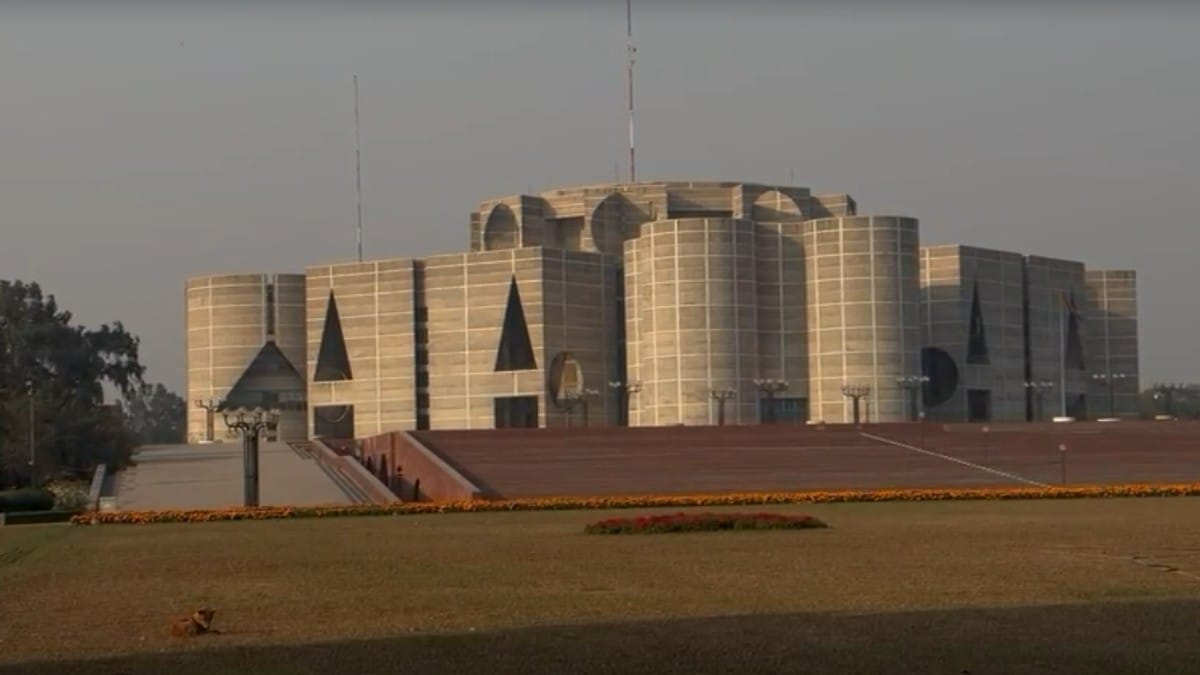
Under the Implementation Order of the July National Charter (Constitutional Reform), 2025, a successful referendum would convert the 13th Parliament into a Constitutional Reform Council (CRC) for 180 working days.
This provision has alarmed constitutional scholars.
Orthodox constitutionalism holds that Parliament derives its authority from the Constitution. Lenin says that by pre-determining the substance and process of reform through an executive order, Parliament is subordinated to the executive.
The concern is compounded by political exclusion.
The Awami League, Bangladesh’s oldest political party, has been de-registered and barred from political activity, both physical and virtual.
The Jatiya Party (Ershad), the Jatiya Samajtantrik Dal, and the Workers’ Party were also excluded from the dialogue that produced the Charter.
The result, therefore, is a referendum conducted without inclusive political authorship.
The Implementation Order says that the July National Charter was “jointly signed and affirmed” by political parties and alliances involved in the July uprising.
But the National Citizen Party (NCP), widely seen as the face of the anti-Hasina stir, did not sign the July National Charter. Other parties withdrew or refused to endorse it.
What’s at stake now
Mohammed Dilawar, a lawyer and a member of the Manusher Pashe Foundation, supports the referendum. According to him, it would plug loopholes that allowed “fascism” to emerge, ensure separation of powers, and ensure due representation for women.
Still, candidates and experts warn that holding a referendum with limited public understanding risks prolonging instability.
“There is very little understanding among the public about the idea and aims of the referendum,” Noorzhat said. “The outcomes of the two processes may create tension.”
As Bangladesh approaches 12 February, the question is not only whether voters will say ‘Yes’ or ‘No’, but whether the process itself can command lasting legitimacy and whether a constitutional order born of exclusion can govern a deeply polarised society.
As Lenin puts it: “Altogether, it’s a chaotic future we have.”
(Edited by Sugita Katyal)
Also Read: Bangladesh women take on Jamaat with memes and marches. Their future is at stake