





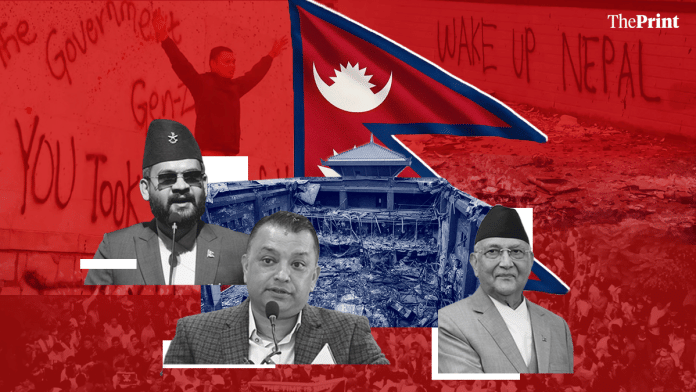



Kathmandu: Six months after a Gen Z-led uprising toppled the government of K.P. Sharma Oli, Nepal is preparing for a national election that is being seen as a verdict not just on political parties, but on the buzzword of “change”, and how it plays out in the country’s political landscape.
On Thursday, approximately 19 million eligible voters, including at least 8 lakh first-timers, will vote to elect a new Lower House of Parliament in Nepal.
It will be the first election after protests last September left more than 70 people dead, over 2,000 injured and forced Oli’s resignation as PM. At that point, the immediate triggers were rising unemployment, mass migration of young Nepalis seeking work abroad and massive corruption among political elites.
But political analysts say the election now unfolding is about whether that anger can be channelled into “institutional change”.
“The 5 March election is not a regular poll, it is the first step towards addressing the demands of the September Gen Z movement. It looks like it will mark a definite shift from the old political guard to a younger leadership,” Pranaya Rana, a Kathmandu-based journalist and analyst who writes the Kalam Weekly newsletter, told ThePrint.
But he also noted that “change is going to be incremental and not immediate”.
“One election cannot immediately change the face of the country, so it is going to take time. I hope that Gen Z will understand this,” he added.
Nepal has been a federal democratic republic since the monarchy was abolished in 2008. Its 2015 Constitution created a three-tier structure and a mixed electoral system intended to ensure representation for historically marginalised communities.
Voters will elect 165 lawmakers through direct, first-past-the-post contests and 110 through proportional representation in the 275-member House of Representatives. The Upper House remains the same since it was not dissolved after the protests but is non-functional due to the lack of an elected Lower House. What is new is that two-thirds of lawmakers from the outgoing Parliament are not seeking re-election.
The question, according to analysts, is not simply who replaces whom.
In a newsletter ahead of the election, political commentator and former editor Sanjeev Satgainya wrote that change has become the “dominant watchword” of the election campaign. But whether that change can be implemented and what it will cost Nepal’s fragile institutions remains in a haze.
“This election is significant not simply because a government fell six months ago, but because it is being framed as a corrective moment, as a response to a youth-led revolt against corruption, unemployment and what many describe as Nepal’s ‘revolving door’ politics. The deeper question is whether it can actually disrupt that cycle,” he told ThePrint.
Also Read: Rapper to mayor & now Nepal’s next hope? Balendra Shah is youth favourite amid national crisis
Eye on three figures
Six major parties are contesting the election: Nepali Congress, Communist Party of Nepal (Unified Marxist-Leninist) (UML), Rastriya Swatantra Party (RSP), Nepal Communist Party, Rastriya Prajatantra Party (RPP) and Ujyaalo Nepal Party.
Three figures dominate the prime ministerial conversation.
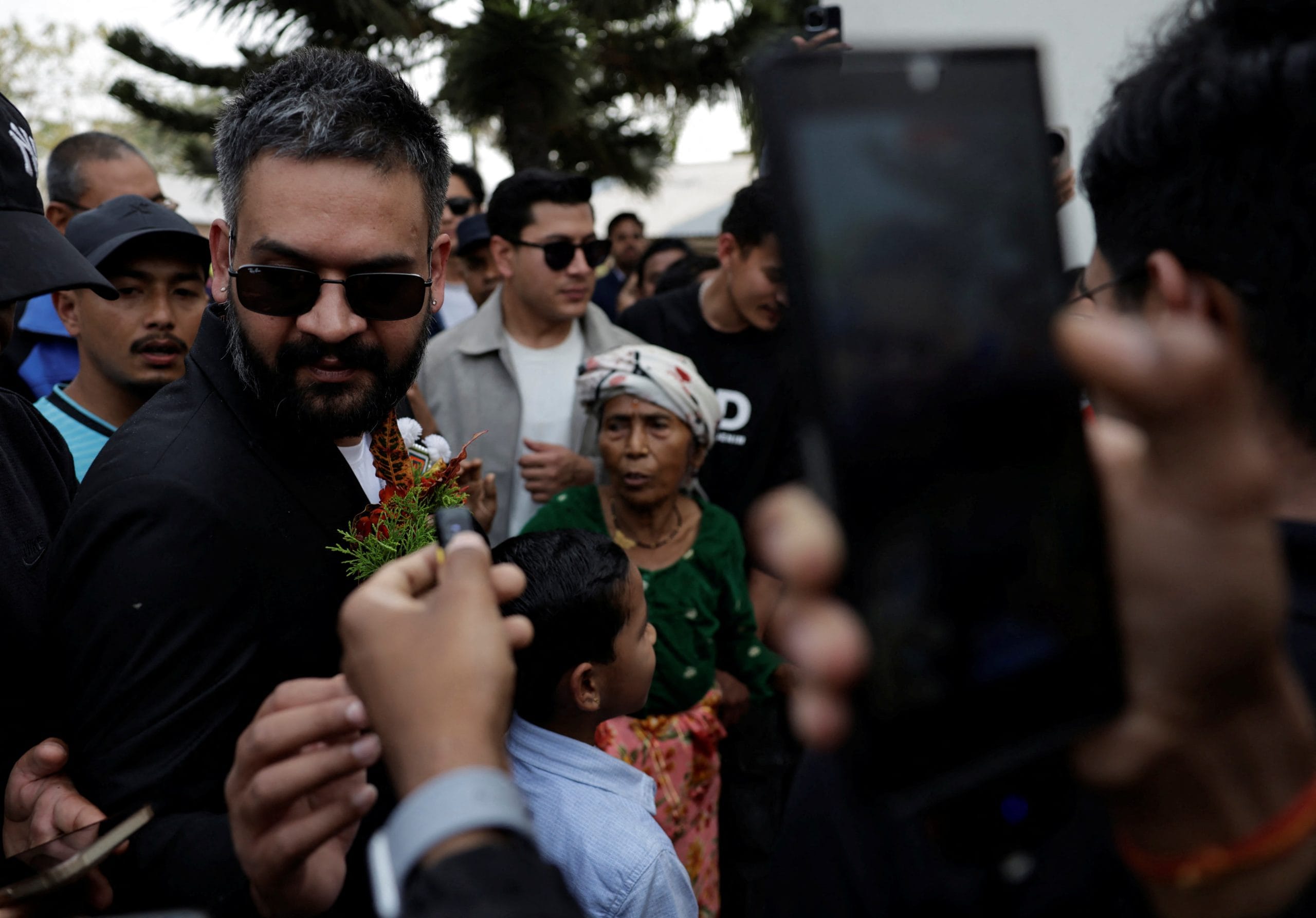
Balen Shah, 35, rapper turned mayor of Kathmandu and RSP candidate, embodies what Satgainya calls a “marmite figure”—polarising but magnetic. His tenure as mayor was marked by high-profile crackdowns on illegal construction and public confrontations with bureaucratic inertia, earning him a reputation for decisive action. Before taking part in the polls, he resigned as mayor and joined former journalist-turned-politician Rabi Lamichhane’s RSP.
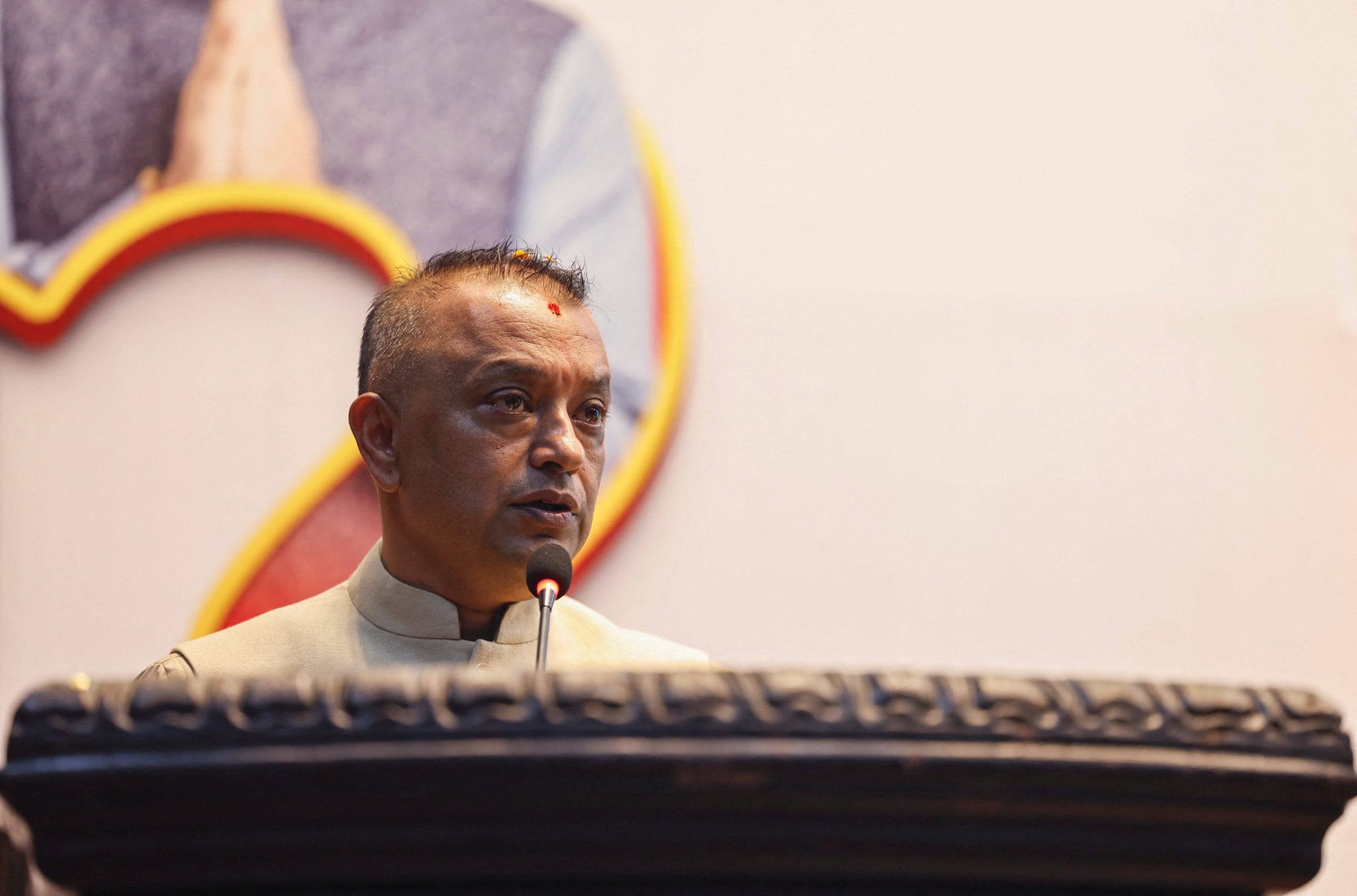
Gagan Thapa, 49, of the Nepali Congress, speaks the language of institutional reform. A former student activist turned parliamentarian, he advocates strengthening democratic processes and internal economic restructuring.
And Oli, 74, former PM and longtime UML leader, represents experience and centralised authority. His previous tenure included controversial dissolutions of Parliament which were later overturned by the Supreme Court and attempts to regulate social media that eventually led to massive protests and fall of his government.
Pushpa Kamal Dahal, 71, another former PM, also known as Prachanda, remains influential too but is less central to this electoral cycle than in years past.
Both Oli and Shah are facing each other in Jhapa-5 constituency. Moreover, Shah is also a Madhesi, although born in Kathmandu, and might tap into the votes of the community as well. The Madhesis are a historically distinct cultural and linguistic group in Nepal’s southern plains.
But beyond personalities lies a deeper debate: whether Nepal doubles down on federal republicanism, reforms it or, in some quarters, reverses it.
The RPP has called for restoring Nepal as a centralised Hindu kingdom, a move that would require a constitutional amendment and two-thirds parliamentary majority. Most analysts say RPP has no support on the ground with barely 2-3% vote-base.
A shifting electorate
On the ground, meanwhile, the mood appears settled. A quick walk through the streets of Kathmandu shows swelling support for Balen. Drivers point at roads and talk about his work, traders say they won’t vote for any sign apart from ghanti (the bell symbol of the RSP).
Interestingly, a female shop owner in Kathmandu’s Thamel, an upscale tourist spot, claimed that Oli is her mama (maternal uncle) but when asked by ThePrint whom she would vote for in the election, she named the bell symbol. Her reason: the work Balen has done for the people of Kathmandu.
This seemed to be the general consensus. Binod Ghimire, a senior journalist who has travelled across constituencies in the last few weeks, described a similar shift in mood even in traditional party strongholds.
“I have been to some of the core places, beyond city areas where traditionally people like the Newaris (indigenous inhabitants of Kathmandu) voted for the same parties through the years. Even they seem to have shifted to the RSP. That was really unexpected,” he told ThePrint.
“They are unaware of the candidate who is contesting there,” he added. “But they are voting for the RSP.”
A strong showing may not, however, translate into governing power.
“Securing 138 seats in a 275-member Parliament is not easy. Nepal’s electoral system does not allow that in a way,” Satgainya explained.
Coalition politics, long a feature of Nepali governance, according to him, is likely to persist.
“Even if there is a groundswell of support for the RSP, securing majority is not easy,” he reiterated. “And a coalition means you have to trade off on your promises.”
He also warned against confusing street momentum with electoral gains. “There is a wave on the street and public support right now before the election (for the RSP), but whether that support exactly translates into votes is a completely different thing.”
Also Read: Nepal’s Gen Z are drawing up roadmap for interim govt. They want ‘clarity, not rowdy leadership’
Demands & promises
The anti-corruption plank appears in every party’s manifesto. Corruption is what led to the fall of the previous government and parties are aware of it.
The Nepali Congress has pledged a high-level asset investigation commission that would scrutinise public officials 1990 onwards. The RSP too has made asset investigations central to its campaign.
The UML has promised “zero tolerance” to corruption, digitised procurement and AI tools to detect irregularities, while describing the September protests as a “planned conspiracy against the state and constitution”.
But there’s a catch. On paper, key parties like the Nepali Congress, UML and RSP have pledged to end corruption. But beyond that common language, the dominant emphasis is not on structural reform but economic development, Satgainya pointed out.
Across manifestos, the focus is more on expanding the economy, generating hydropower, increasing electricity exports, boosting GDP growth and creating jobs.
The UML says it will expand the economy to 100 trillion Nepali rupees within five years and create 5 lakh jobs annually. The RSP claims it will create over 10 lakh jobs and nearly double per capita income. The Nepali Congress proposes 15 lakh jobs over five years. Other parties promise private-sector-led growth, green energy trade with neighbouring countries, including India, and hydropower share offerings to households.
These are long-standing promises in Nepali politics. Yet, what has plagued the system for decades, such as patronage networks, coalition instability and institutional fragility, is referenced, but barely acknowledged.
Moreover, the core demands of the Gen Z protesters, which included accountability, an end to elite impunity, a break from “musical chairs” coalition politics, are not what the manifestos are explicitly centred on.
“It is not that parties are unaware of those demands. Rather, they have folded them into broader development rhetoric instead of articulating a structural reset,” Satgainya said.
“The question is not the government,” he added. “How Nepal’s democracy will be tested after this election is the main question.”
‘Shift to younger leadership is definite’
While they ousted the Nepali government, the Gen Z protesters who sparked the upheaval were largely leaderless. “Who is the Gen Z leader? That’s a difficult question to answer,” Satgainya said.
Some activists are now contesting the polls, while others have joined political parties or returned to civic organising. Several Gen Z leaders like Sudan Gurung of Hami Nepal group are contesting on RSP tickets. Whether their presence translates into legislative leverage remains uncertain.
For Rana, the election’s longer-term significance may lie less in immediate outcomes and more in generational realignment.
“Whether the RSP is able to see through the current wave and emerge as the largest party, or the (Nepali) Congress will manage to retain some relevancy by capitalising on its internal change of guard, remains to be seen,” he said.
“But whichever of the two parties comes out on top, the shift to a younger political leadership is definite.”
“In the long term, this election does mark the coming of age of a generation largely dismissed by the old political class. I don’t know if things will get better, I hope they do, but Nepali politics is never going to be boring,” he added.
(Edited by Nida Fatima Siddiqui)
Also Read: Why Nepal’s elderly watched from the sidelines as Gen Z took on political class, toppled Oli govt