








In Episode 1813 of Cut The Clutter, ThePrint Editor-in-Chief Shekhar Gupta examines how the Israel–Iran conflict has entered a dangerous new phase with Israeli strikes on the South Pars gas field, the world’s largest natural gas reserve shared between Iran and Qatar. He explains the field’s unique geography, its centrality to global energy markets, and why even limited disruption has already triggered volatility in oil and gas prices.
Here’s the full transcript.
After a day away from domestic politics, we are back to the story that dominates everything right now: the war in the Middle East. You can call it the war on Iran, or the war with Iran. Either way, it has taken a new turn, and a serious one at that.
The latest development is the Israeli bombardment of Iranian gas terminals, gas processing units and facilities at South Pars. South Pars is not an island, as it may first appear on a map. It is a vast offshore gas structure, shaped almost like a boomerang or a stretched figure 8, covering about 9,700 sq km. Roughly one-third of it belongs to Iran, because it comes close to Iranian territorial waters, while two-thirds belongs to Qatar.
This is the largest gas field in the world. In fact, if you rank only pure gas fields globally, South Pars is bigger than any other. It contains more gas than all the gas fields in the world put together. Any disruption here has immediate consequences for global energy markets, and we are already seeing prices swing sharply in both crude and gas.
Israel bombed the South Pars side. On the Qatari side, the same field is called North Dome. The naming is relative: for Iran, it is the southern portion of the field; for Qatar, it lies to the north of its coastline. That is why the two countries use different names for the same reservoir.
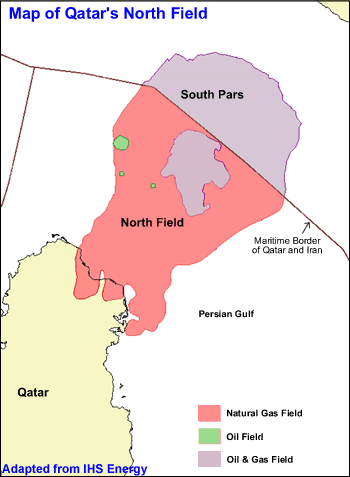
Iran’s side of the field has run down over time, mainly because sanctions have prevented it from bringing in new technology and investment. As a result, its production is far lower than Qatar’s. The entire field spans 9,700 sq km, of which Iran has 3,700 sq km and Qatar 6,000 sq km. Qatar’s section contains much more gas.
The total reserve is estimated at 1,800 trillion cubic feet of gas. Qatar’s current production from the field is about 18.5 billion cubic feet per day, or around 52 million cubic metres daily. That accounts for 80% of Qatar’s revenue. If that flow were to stop, Qatar would effectively come to a standstill.
Iran’s production is much smaller—a little over one-tenth of Qatar’s output— at around 2 billion cubic feet a day, or 5.7 million cubic metres. Most of that gas is consumed domestically, because Iran has a large population and high energy needs.
That comparison matters. The six Gulf Cooperation Council countries—Bahrain, Kuwait, Oman, Qatar, Saudi Arabia, and the United Arab Emirates (UAE)—together have a population of just over 6 crore. Iran alone has a population of around 9.2 crore. Its domestic energy demand is therefore much greater, and much of that demand is met by its own gas reserves.
South Pars is not all of Iran’s gas, but it still accounts for about 36% of Iran’s gas output. Since Iran’s total recoverable gas reserves account for roughly 10% of the world’s recoverable gas reserves, that 36% is still a very large amount of energy. For Qatar, South Pars alone accounts for about 14% of global recoverable natural gas reserves.
That is why the field matters so much. Qatar has been able to invest heavily in it. Iran has not. If the Iranian side of the field is knocked out or disrupted, Iran can face electricity shortages and wider energy problems.
The Israelis have said, according to the Israeli press, that the strike was meant to cut off a revenue source for the IRGC, the Islamic Revolutionary Guard Corps, because it needs money to pay salaries and sustain its war effort.
The Israelis also said they carried out the strike in consultation with the Americans. But after the attacks, and after Iran retaliated by striking oil and gas facilities in Qatar, Saudi Arabia and Kuwait, US President Donald Trump posted on Truth Social saying the US had no idea what was going on. He claimed Israel should not have done this and that energy facilities should not have been targeted.
Trump then said, in all capitals, that no more attacks would be made by Israel. He also warned that if Iran continued striking energy facilities and other infrastructure in Gulf countries, the US would respond with a “massive attack that would blow up the entirety of South Pars with a force Iran had never seen before”. In effect, Trump has tried to bring about a truce in this energy-versus-energy phase of the conflict.
At the same time, US Treasury Secretary Scott Bessent has said the US may unfreeze sanctioned Iranian crude sitting in tankers at sea in order to help control oil prices. So, even as the fighting continues, there is some give and take around the oil market.
The shipping and oil-energy websites say more than 90 tankers have passed through the Strait of Hormuz. Many may be carrying Iranian crude, much of it bought by China. South Pars and North Dome were first identified in 1971, but prospecting and development are expensive, risky and time-consuming. Even when prices rise, there is no guarantee of a return on the money invested.
Real investment in South Pars on the Iranian side began only in 1988, after the Iran-Iraq war ended. Initial production began then, but output picked up significantly only 10 to 12 years later. Since then, the field has become central to global energy markets. Most of what Qatar produces is exported—to Turkey, to the wider world and to India, which has long-term LNG contracts with Qatar.
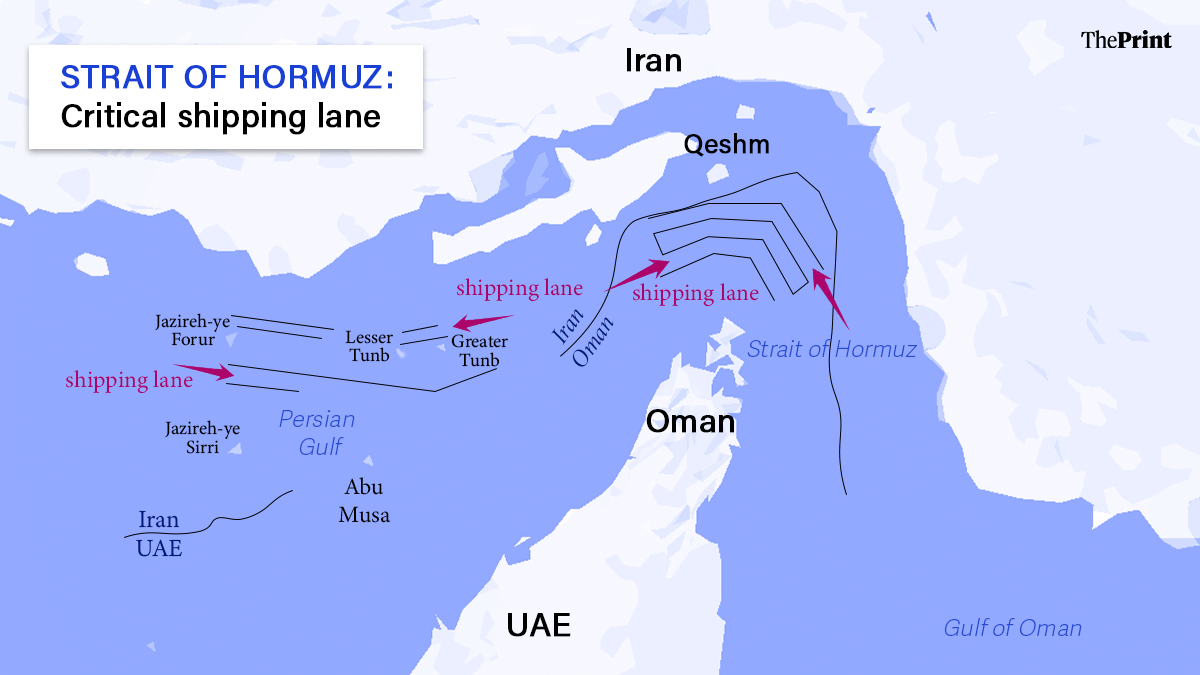
Qatar has built large facilities to cool and liquefy gas so it can be loaded into LNG tankers and shipped out. If these facilities are disrupted, the impact on global energy markets would be severe. Right now, there is already a problem because tankers cannot freely move out of the Gulf due to the blockade in the Strait of Hormuz. If the oil fields are also damaged, or if the terminals are hit, as Iran tried to do, the world could face a long-term energy crisis.
Iran’s retaliation has been formidable. Many of the ballistic missiles appear to have been intercepted, but even intercepted missiles can cause damage when debris falls. That debris is often hot, burning and heavy, and it can hit refineries and other facilities. Four ballistic missiles were intercepted over Riyadh, according to reports put out by the BBC and the Saudi spokesperson. Drones, however, are a bigger problem, because Iran can launch them in large numbers. They are highly effective.
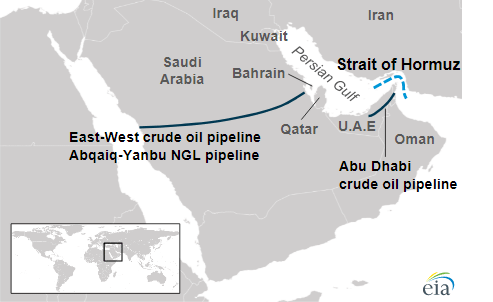
One drone, for instance, hit the big refinery at Yanbu on Saudi Arabia’s Red Sea coast. That means it must have travelled at least 2,000 km. When drones are launched in large numbers and in different directions, it becomes extremely difficult to ensure that none reaches its target. That is how installations in Kuwait, Qatar, Saudi Arabia and the UAE have been hit.
The UAE has been a favourite target for Iran. Qatar was alarmed because it is such a small country. The Saudis responded more emotionally. Foreign Minister Prince Faisal bin Farhan said “whatever trust Saudi Arabia had built with Iran had been shattered”, and that Saudi Arabia would do “whatever was necessary to protect itself”.
A major meeting was then held in Riyadh, bringing together Islamic countries that, despite their many differences, had a common cause in “condemning” the attacks. The list was striking: Azerbaijan, Bahrain, Egypt, Jordan, Kuwait, Lebanon, Pakistan, Qatar, Saudi Arabia, Syria, Türkiye, and the UAE.
They condemned the attacks on all GCC countries and on Turkey, Azerbaijan and Jordan as well. Their statement described the strikes as “deliberate ballistic missile attacks” targeting residential areas, civilian infrastructure, oil facilities, desalination plants, airports and diplomatic missions. It affirmed the right of countries hit by such attacks to self-defence under Article 51 of the UN Charter. It also called for the Strait of Hormuz to remain open and for obstruction to be avoided at Bab el-Mandeb, on the Red Sea, as well.
The significance of the word “condemn” is that this is probably the first time Pakistan has signed a statement condemning an Iranian action. Until now, Pakistan had been trying to balance both sides. It had shown solidarity with Iran, and Iranian President Masoud Pezeshkian had thanked Pakistan. But a day later, he also thanked the Taliban government in Afghanistan for its sympathy and solidarity, which many in the strategic community saw as Iran signalling that it was no longer fully trusting Pakistan’s balancing act.
Now Pakistan has clearly moved to the Saudi side. That is important, because Pakistan had only recently formalised its defence agreement with Saudi Arabia. Saudi officials have said that the arrangement means what it means: Pakistan and Saudi Arabia are bound to come to each other’s defence. So Pakistan signing the condemnation statement is not a minor matter.
There are, of course, layers within this grouping. There is the GCC bloc, Egypt is in its own category, Syria is in its own category, and Lebanon has its own problems. The statement also says Lebanon’s sovereignty should be protected, because the country is under heavy attack from Israel and large parts of it remain under Hezbollah’s influence.
Within the wider grouping, there are also sub-groupings. There is the Pakistan-Saudi alliance, and there is the Pakistan-Azerbaijan-Türkiye alignment, which in many ways is directed against India. It is in this clutter that the joint statement has emerged, which is why Pakistan’s signature matters.
For the Gulf Arab states, this is a moment of truth. They had long assumed they were protected in three ways. First, by the Americans and other Western powers, whose bases are spread across the region. Second, by the weaponry they bought and the armed forces they trained. Their militaries are small, because their populations are small, but they believed that combination would be enough deterrence. Third, they continued dealing with Iran in a conciliatory way.
Saudi Arabia had been conciliatory with Iran. So had the UAE, which had tried to normalise ties. Qatar had allowed all sides to play their games on its soil. It hosted the family of Osama bin Laden. It has allowed Hamas and the Muslim Brotherhood to operate there for all practical purposes. Iranians also move in and out freely. The UAE, meanwhile, allowed Iranian shadow banking and tanker operations to flourish, believing that would guarantee security.
Those calculations have failed. The reality is that, barring the UAE, which has defended itself relatively well, the others have struggled to protect themselves—especially Qatar. And that is why the game has changed completely.
Think of Qatar. It is a tiny territory with a native population of less than four lakh. Yet it is the richest country in the world because it sits on enormous energy wealth. Around 80% of its revenue comes from this one gas field. For the first time, Qatar has been jolted out of the complacency that came from believing all its bases were covered.
The first major shock came when the Israelis carried out an assassination raid that used Saudi and possibly Jordanian airspace. A key Hamas figure was killed, and a villa housing Hamas leaders was bombed. Trump then pretended to be shocked, suggesting the Israelis could not have done it without the Americans knowing. There is no way anything enters Qatari airspace without American knowledge, because the US operates the key radars there. But Trump created the drama of plausible deniability, and even had Netanyahu apologise to Qatar’s emir on camera, in front of the press.
Now, after Israel has struck the South Pars gas field, Trump is again claiming plausible deniability and saying Israel should not have done it. He says he has told them not to do it and that they will not do it again. But the Arab countries are seething because they are helpless. They know they are being led up the garden path, and they also know they are at American mercy. Their defence is effectively outsourced to the US.
That is why they have to lump it. They can barely protest. And that is the game being played out in the Middle East right now.
(Edited by Tony Rai)
Also Read: Why every war in Gulf triggers oil crisis & role of Saudi, UAE pipelines | Cut The Clutter