








New Delhi: A Chinese court this week held 27 people guilty of smuggling over 166 metric tonnes of antimony bars, in violation of the country’s export control rules related to rare earths.
The key accused, Wang Wubin, was sentenced to 12 years in prison and fined 1 million yuan. The others received terms ranging from four months to five years.
Between February and March 2025, Wang allegedly coordinated with smuggling groups, some of them overseas, to illegally procure the ingots for illegal exports of dual-use items. These are products, materials or technologies that can be used for civilian and military purposes.
Over the years, China has broadened its export controls, specifically those related to rare earth elements, including antimony.
A dual-use metalloid
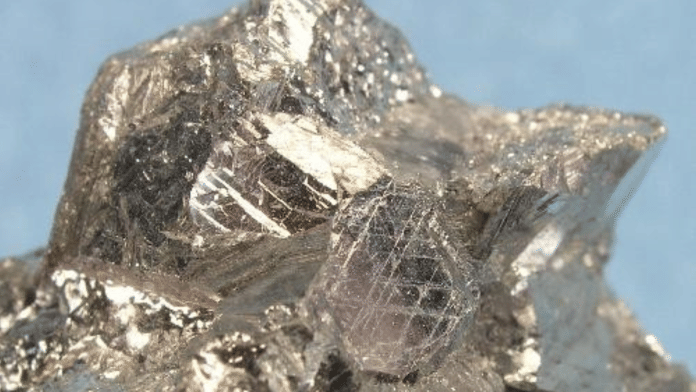
It is a brittle, silver metalloid—with characteristics of both metal and non-metal. Though inert on its own, it is useful when combined with other metals, as it improves durability, ductility and non-corrosive properties.
For this purpose, it is widely used in flame-retardant compounds and has applications in manufacturing sectors involving chemicals, ceramics, glass, heat stabilisers and plastics.
In the defence sector, it is used for making ammunition, bullets, and armour-piercing projectiles.
The US government lists antimony as a critical mineral with high economic worth and supply risks. The element—with atomic symbol Sb, short for ‘stibium’—is also listed under the European Union’s ‘Critical Raw Material List’.
According to the US Geological Survey’s Mineral Commodity Summaries 2025, reserves of antimony are scattered across countries, but China dominates its production, accounting for nearly half of it, followed by Tajikistan (13 percent).
The US has antimony deposits too, but lacks large-scale production capacity, forcing it to rely mostly on imports.
While it is useful, mining and processing of antimony leads to the release of toxins such as heavy metals and gases such as sulphur dioxides. High exposure causes respiratory irritation, cardiovascular ailments, gastrointestinal disorders, and irritation to the eyes and skin.
Production is also tricky because of the environmental impact of mining. Antimony is typically extracted from stibnite ores by crushing, flotation and smelting, all of which generate toxic waste and pose risks to surrounding soil, water sources and air quality.
There are also technological and economic challenges, such as depletion of high-grade stibnite ores, energy-intensive processing for refining, financial constraints and gas emissions.
China, though, has managed to barrel ahead with antimony mining and production by setting area limits and strict norms to ensure environmental compliance. There are reports of local opposition to the country’s two largest antimony mines, in Guizhou and Hunan provinces, but little is known about them through official records.
Also Read: Why India needs more mining to power its manufacturing future
Global supply chains
According to data from the US Geological Survey, global antimony ore reserves in 2023 were approximately 2.17 million tonnes, concentrated in China, Russia, Bolivia, Kyrgyzstan, Australia, Myanmar and other countries.
China’s share of antimony supply—at 48 percent of all antimony processed worldwide—enables it to control both production and price pressures. Currently, it exports antimony to the US, Japan, South Korea, and others.
This dominance, in the wake of geopolitical and economic tensions, has prompted other countries to look for alternative supply chains.
In a bilateral visit, President Trump and Japanese Prime Minister Sanae Takaichi signed a joint framework this October, intending to build resilient supply chains of raw and processed critical minerals and rare earths crucial to domestic industries of both the countries.
Similarly, EU’s May 2024 Critical Raw Materials Act (CRMA) aims to secure a sustainable supply of critical raw materials to meet its 2030 climate objectives.
The UK’s VISION 2035 and the Minerals Security Partnership—between Australia, Canada, Estonia, Finland, France, Germany, India, Italy, Japan, Norway, South Korea, Sweden, the UK, US and EU—all aim towards building a China-independent supply chain for critical minerals such as antimony.
Akshata Rawat is an intern with ThePrint.
Also Read: Pakistan is bluffing. There’s no proof for $6 trillion mineral wealth claim