





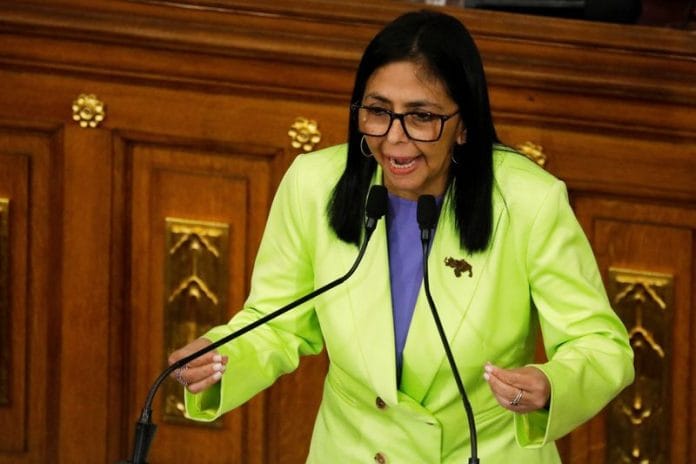



Jan 15 (Reuters) – Venezuela’s interim President Delcy Rodriguez said on Thursday that she was submitting a proposal to reform the country’s hydrocarbon law, as investors in the U.S. push for easier access to the South American country’s oil industry.
Rodriguez said the reforms would “allow these investment flows to be incorporated into new fields, fields where no investment has ever been made and into fields where there is no infrastructure.”
Rodriguez said funds from oil would go to workers and public services.
The U.S. says around $500 million has already been generated from oil sales under a deal with Caracas and this is being held in U.S.-controlled bank accounts. An industry source familiar with the plan said the main account was located in Qatar.
Rodriguez, who was sworn in ten days ago after the U.S. ouster of her predecessor, spoke in an annual presidential address to lawmakers.
She took over the presidency on an interim basis after the U.S. military captured President Nicolas Maduro and flew him to the U.S. to stand trial on drug charges, which he denies.
Rodriguez also called for diplomacy with the U.S., marking a shift in historically tense rhetoric between the two countries, and said should she need to travel to Washington, she would do so “walking on her feet, not dragged there.”
Rodriguez said she had a plan for 2026 and would “forge a new politics in Venezuela”. She also praised many long-standing members of the country’s government.
The address came shortly after opposition leader Maria Corina Machado met U.S. President Donald Trump in the White House, while the press secretary told reporters Trump liked what he saw with Rodriguez and considered her extremely cooperative.
Trump has not changed his view that Machado is not a realistic alternative for Venezuela, the press secretary said.
Machado, who briefly spoke to reporters after the meeting, said that the meeting had gone well and that she and her supporters could count on Trump.
(Reporting by Reuters staff)
Disclaimer: This report is auto generated from the Reuters news service. ThePrint holds no responsibility for its content.