





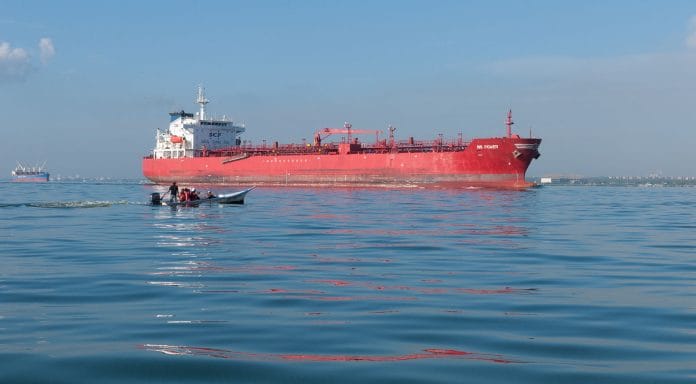



Washington: Two empty supertankers attempted to make their way through the Strait of Hormuz and into the Persian Gulf on Sunday, only to make a last-minute U-turn just as peace negotiations between the US and Iran broke down, threatening a fragile ceasefire.
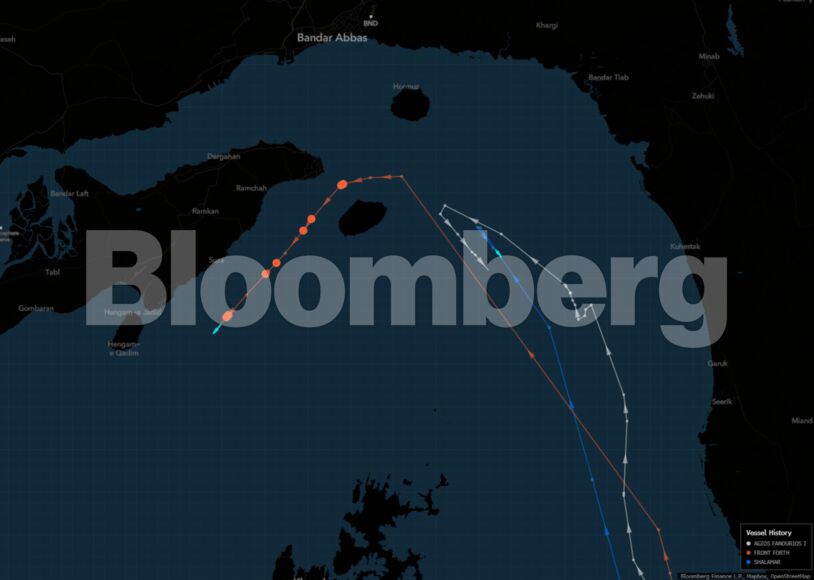
A trio of very large crude carriers — all without direct links to Iran — began to approach the narrow waterway from the Gulf of Oman late on Saturday, ship-tracking data show, arriving near Iran’s Larak island early on Sunday. At that effective checkpoint, Iraq-bound Agios Fanourios I and Pakistan-flagged Shalamar, destined for Das island in the United Arab Emirates, turned back.
A third VLCC, Mombasa B, was sailing ahead and made its way between Larak and Qeshm islands, an Iran-approved route into the Persian Gulf. It is not currently signaling a clear destination.
The specific reasons behind the about-turns — and the third, successful passage — are not clear, as both Iraq and Pakistan had earlier received approvals from Iran to transit the strait. But their change of heart came just as negotiators in Islamabad announced they had failed to reach a deal.
The Strait of Hormuz is one of the world’s most important energy thoroughfares and its effective closure since the US and Israel began strikes on Iran six weeks ago has resulted in unprecedented supply disruption. Its reopening has been a crucial point of discussion during weekend negotiations, but remains an area of disagreement.
In recent weeks, several ships have attempted to transit the strait only to abort their efforts, reflecting a constantly changing security situation and persistently high risks. The vast majority have been attempting to leave the Persian Gulf, but empty tankers are also needed inside, to be loaded with new cargoes.
Two Chinese container ships U-turned late last month before finally successfully exiting, while a liquefied natural gas carrier turned back last week.
A successful exit by all three ships on Sunday would have continued a positive uptick in transits through the waterway, controlled by Iran and dominated by Iran-linked vessels since the end of February. On Saturday, two Chinese supertankers and a Greek vessel exited the gulf via Hormuz, laden with crude.
Agios Fanourios I is managed by Eastern Mediterranean Maritime in Greece, while Pakistan National Shipping Corp. owns Shalamar. The two companies did not immediately respond to emailed requests sent outside of working hours.
Mombasa B had recently switched its name from Front Forth. It is now owned by Haut Brion 8 SA that shares the same address as its South Korea-based manager, Sinokor Maritime Co. Sinokor did not respond to a request for comment outside of regular business hours.