








By Valerie Volcovici
WASHINGTON, Jan 8 (Reuters) – The Trump administration’s decision to withdraw the United States from the foundational U.N. climate treaty, which the U.S. Senate unanimously adopted more than 30 years ago, may be illegal, according to some legal experts who say that Congress would need to approve its exit.
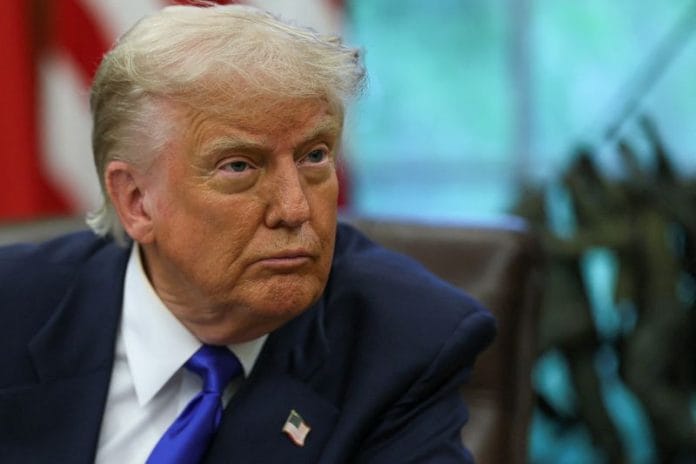
President Donald Trump said on Wednesday that the United States would withdraw from dozens of international and U.N. entities, including the U.N. Framework Convention on Climate Change as well as the scientific Intergovernmental Panel on Climate Change, that “operate contrary to U.S. national interests” of focusing on oil, gas and mining development.
Trump, a vocal critic of renewable energy who has called climate change a “con job” and a hoax, went beyond his previous action of withdrawing the U.S. – the world’s biggest historical greenhouse gas emitter – from the Paris climate agreement, by removing the country from the underlying UNFCCC.
He also pulled the U.S. out of the key scientific climate change body called the Intergovernmental Panel on Climate Change and a host of other U.N. bodies focused on environment, health, arts and women’s rights.
SOME EXPERTS QUESTION PRESIDENT’S POWERS TO WITHDRAW
Some international law experts said the president’s unprecedented move on Wednesday raises major legal questions because case law has not been clear on whether a president can unilaterally withdraw the country from a treaty that has been ratified by a majority of the Senate.
“Because the U.S. entered the UNFCCC with advice and consent of the Senate in 1992, it’s our legal view that it also must be exited using the same process in reciprocation,” Jean Su, energy justice director at the Center for Biological Diversity told Reuters. “Letting this lawless move stand could shut the U.S. out of climate diplomacy forever.”
The CBD is currently evaluating whether to take the U.S. government to court on this, Su said.
White House officials were not immediately available to respond to Reuters questions on the legality of the move.
Quitting the UNFCCC would take effect a year after notification and would mean the U.S. would withdraw from all global climate negotiations including the central Paris climate agreement.
The U.S. already skipped the annual U.N. international climate summit last year in Belem, Brazil for the first time in three decades and Trump announced the withdrawal from the Paris pact a year ago. It is the only country to exit the UNFCCC.
The UNFCCC requires wealthy industrialized countries to take measures to cut their emissions, adopt policies to limit greenhouse gas emissions, publicly report their emissions, and provide funding to help poorer nations address climate change.
While the rules around ratifying a treaty are clear, the rules around withdrawing from a treaty are not spelled out in the U.S. Constitution, said Curtis Bradley, a professor at the University of Chicago Law School.
This has meant that some presidents have asserted the authority to withdraw the United States from treaties and international agreements without seeking Congressional approval. For example, Republican President Ronald Reagan withdrew the U.S. from UNESCO in 1983 over his concerns about that agency’s perceived politicization.
Bradley said Congress could enact legislation to prevent a president from unilaterally withdrawing from a treaty. Congress did pass a law in 2023 to stop a future administration from withdrawing from the NATO treaty.
“But that is not likely to happen for the UNFCCC,” he said, given the polarization around climate change policy in Congress.
HOW EASY IS IT TO GET BACK INTO A TREATY?
Legal experts are also split around how difficult it would be to rejoin the UNFCCC.
Some legal groups believe that if a future administration wants to get back in, it would need to go through a new process of getting the two-thirds support in the U.S. Senate required for treaty ratification.
Other experts argue that the U.S. can easily rejoin after 90 days, using the “advise and consent” that the Senate used to ratify the treaty unanimously in 1992 under Republican President George H.W. Bush.
In recent years, achieving a two-thirds majority in the highly polarized U.S. Congress has been near impossible, especially on divisive issues.
The U.S. has entered into more than 90% of international agreements through different mechanisms that rely on executive authority or pre-existing domestic laws.
Sue Biniaz, former deputy special envoy for climate change during the Biden administration, said she is in the camp of legal scholars who believe that rejoining the UNFCCC could be “seamless” because of the unanimous Senate approval it won in 1992.
“There are multiple future pathways for rejoining the key climate agreements,” she said.
(Reporting by Valerie VolcoviciEditing by Frances Kerry)
Disclaimer: This report is auto generated from the Reuters news service. ThePrint holds no responsibility for its content.