








By Haseeb Alwazeer, Nidal al-Mughrabi and Rami Ayyub
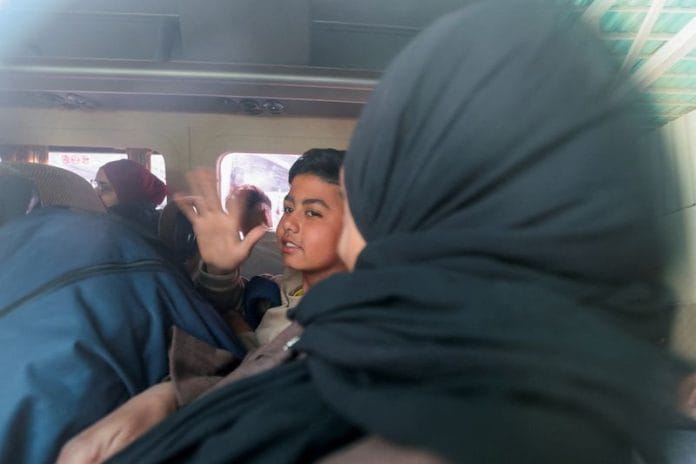
GAZA/CAIRO/JERUSALEM, Feb 2 (Reuters) – Dozens of Palestinians were expected to leave or return to Gaza on Monday after Israel reopened the sole pedestrian crossing to Egypt, a major step in the ceasefire intended to end the war, though with strict limitations on access.
The Rafah crossing, in what was once a city of a quarter of a million people that Israel has since completely demolished and depopulated, is the sole route in or out for nearly all of Gaza’s more than 2 million residents.
It has been largely shut for most of the war, and reopening it to allow access to the outside world is one of the last major steps required under the initial phase of a U.S.-brokered ceasefire reached in October.
An Israeli security official said Rafah had opened around 9 a.m. “for both entry and exit”. A Palestinian source said that on the first day 50 Palestinians were expected to reenter the enclave.
Five patients seeking to leave Gaza for health treatment, each escorted by two relatives, were driven to the crossing compound from the Gaza side in a vehicle escorted by World Health Organization personnel, health officials said.
By mid-afternoon the first Palestinians had yet to complete the crossing in either direction, three Palestinian sources said, blaming delays on Israeli security checks. Israel’s military had no immediate comment.
“The crossing is a lifeline for Gaza, it is the lifeline for us, the patients,” said Moustafa Abdel Hadi, 32, who receives kidney dialysis at Al-Aqsa Martyrs hospital in central Gaza and is one of 20,000 Gazans hoping to leave for treatment abroad. “We want to be treated in order to return back to live our normal life.”
Israel seized the border crossing in May 2024, about nine months into the Gaza war. Since then, it has largely been closed apart from a brief period during an earlier ceasefire in early 2025.
Reopening the crossing was one of the requirements under the October ceasefire that outlined the first phase of U.S. President Donald Trump’s plan to stop fighting between Israel and Hamas militants.
In January Trump declared the start of the second phase, meant to see the sides negotiate Gaza’s future governance and reconstruction.
Even as the crossing reopened, Israeli strikes killed at least four Palestinians on Monday, including a three-year-old boy, in separate incidents in the north and south of the Strip. The Israeli military had no immediate comment on the incidents.
ISRAELI INSPECTION
In the war’s early months before Israel shut the crossing, some 100,000 Palestinians exited to Egypt through Rafah.
Though Egypt has repeatedly made clear it will not allow a large-scale exodus, the route is seen as vital for wounded and sick Palestinians to seek medical care. While it was closed, only a few thousand were allowed out for medical treatment in third countries through Israel.
Palestinians seeking to cross at Rafah will require Israeli security approval, three Egyptian sources said. Reinforced concrete walls, topped with barbed wire, have been installed along the crossing area, the sources said.
At the crossing they will have to pass through three separate gates, including one administered by the internationally recognised Palestinian Authority under supervision of a European Union task force but controlled remotely by Israel.
FOREIGN JOURNALISTS BARRED FROM GAZA
Despite the reopening of Rafah, Israel is still refusing to allow the entry of foreign journalists, banned from Gaza since the start of the war. Reporting from inside Gaza for international media including Reuters is carried out solely by journalists who live there, hundreds of whom have been killed.
Israel’s Supreme Court is considering a petition by the Foreign Press Association that demands foreign journalists be allowed to enter Gaza. Government lawyers argue this could pose risks to Israeli soldiers. The FPA says the public is being deprived of a vital source of independent information.
Under the first phase of the ceasefire, major combat was halted, hostages held in Gaza were released in return for thousands of Palestinian prisoners held by Israel and a surge in humanitarian aid was promised.
Israeli forces still hold more than 53% of Gaza’s territory, where they have ordered residents out and demolished many remaining buildings. Residents are now confined to a strip along the coast, most living either in makeshift tents or damaged buildings.
The next phase of Trump’s plan foresees Hamas giving up its weapons and relinquishing control to an internationally backed administration that would oversee reconstruction, including luxury residential buildings along the Mediterranean coast.
Many Israelis and Palestinians see this as unrealistic. Hamas has yet to agree to give up its weapons and Israel says it is prepared to restart the war to disarm the group by force.
The war began when Hamas fighters attacked Israel in October 2023, killing 1,200 people and capturing more than 250 hostages, according to Israeli tallies. Israel retaliated, destroying much of Gaza and killing more than 70,000 people, according to Gaza health authorities.
Since the October deal was struck, Israeli attacks in Gaza have killed more than 500 Palestinians, health officials say, while militants have killed four Israeli soldiers.
On Saturday, Israel launched some of its most intense airstrikes since the ceasefire, killing at least 30 people, in what it said was a response to a Hamas violation of the truce.
(Editing by Timothy Heritage, Jon Boyle, Peter Graff)
Disclaimer: This report is auto generated from the Reuters news service. ThePrint holds no responsibility for its content.