





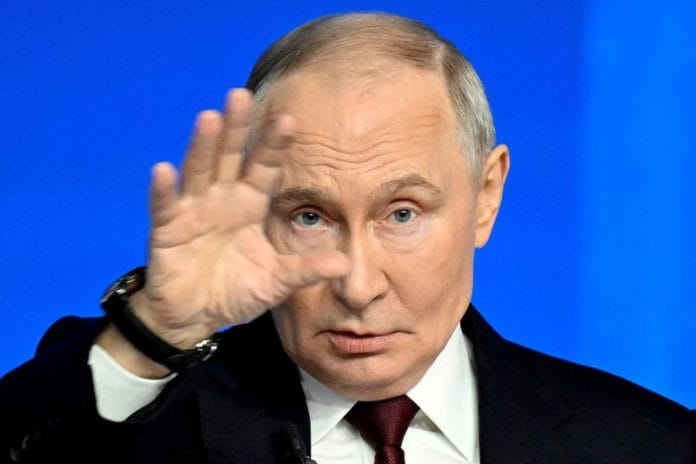



MOSCOW, March 30 – Russian President Vladimir Putin signed a decree on Monday overhauling the production of animal vaccines following an outbreak of cattle disease that led to the deeply unpopular mass culling of livestock in a Siberian region.
The deaths of thousands of animals in Novosibirsk region sparked rare protests in wartime Russia and prompted calls by farmers for the resignation of top government officials overseeing agriculture.
Putin’s decree merged several state-owned enterprises in different parts of the country into one entity – the Russian Biological Industry Company.
It said the measure was aimed at “securing technological independence, sustainable development, and encouraging investment in the field of veterinary medicine”.
Russian authorities have blamed pasteurellosis and rabies for the outbreak that has spread to other areas. The head of a local state veterinary service also said that irregular vaccination on local small farms had led to a mutation of the pathogen.
In a report published on March 20, the U.S. Department of Agriculture’s Foreign Agricultural Service cited “local sources and trading contacts” who alleged that “the scale of these measures may indicate an unconfirmed outbreak of foot-and-mouth disease”.
It added that the authorities’ response to the outbreak “raised concerns about the adequacy of current vaccines and the potential impact on Russia’s cattle trade”.
Russia’s agriculture watchdog dismissed the allegations in the U.S. report and said that planned vaccinations against foot-and-mouth disease have been carried out in the Novosibirsk region since 2022 and are routinely monitored by the agency.
Russia imported up to 70% of its animal vaccines before 2022, when it was hit by Western sanctions in response to its military action in Ukraine.
In 2024, agriculture watchdog chief Sergei Dankvert said the situation had reversed, with up to 70% of vaccines being produced domestically.
The agency said that Russia’s leading producer, Shchelkovo Biokombinat, one of the companies now being merged, was expected to increase production tenfold in 2024 compared with 2021.
(Reporting by Gleb Bryanski and Olga Popova; Editing by Andrew Heavens)
Disclaimer: This report is auto generated from the Reuters news service. ThePrint holds no responsibility for its content.