








By Alessandra Prentice and Mark Trevelyan
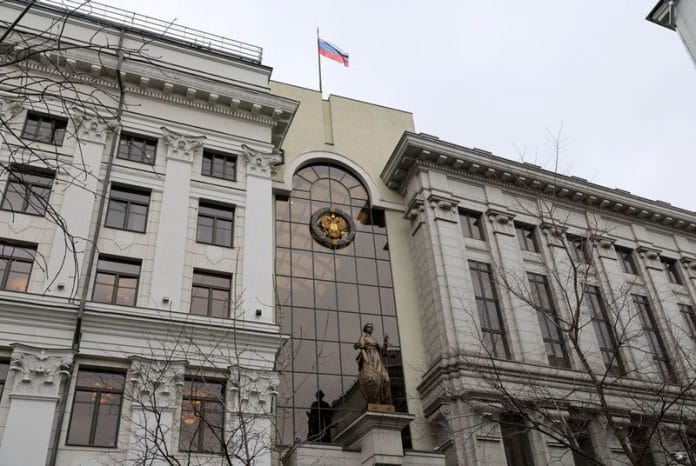
LONDON, April 9 (Reuters) – Russian human rights group Memorial was designated an “extremist” movement on Thursday in a closed-door hearing of the country’s Supreme Court, state news agency TASS said.
The ruling – the latest in a sweeping, years-long crackdown on free speech in Russia – provides a legal mechanism for authorities to prosecute anyone who contributes to the work of the Nobel Prize-wining organisation or shares material that it publishes.
Memorial said shortly before the judgment was announced that it had no doubt about the outcome.
“The case against Memorial is yet another attempt to intimidate all dissent in the country and force civil society into silence,” it said in a statement.
Memorial was founded in the late 1980s to document political repression in the Soviet Union. It has defended freedom of speech and recorded human rights abuses from the time of Soviet dictator Josef Stalin to the present.
In December 2021, less than two months before Russia’s full-scale invasion of Ukraine, the authorities banned two of Memorial’s flagship organisations, alleging that their work had “justified terrorism and extremism” – charges the group called absurd.
Memorial has continued to operate, however, mostly from outside Russia, and provide support to what it says are more than 1,500 political prisoners in the country. The Kremlin says Russia is rightly enforcing its laws against people who commit crimes.
Thursday’s ruling is directed against “the international public movement Memorial”. Memorial said that no such organisation exists and that the vague designation was deliberately designed to enable prosecutions of anyone speaking out on human rights or historical crimes.
It said the effort would not succeed, and “Memorial will outlive the Putin regime and will be able to openly return to Russia” one day.
Once the ruling comes into force, supporters within Russia should not donate money or show support for its activities online to avoid attracting the attention of the authorities, it warned.
Memorial shared the 2022 Nobel Peace Prize jointly with Belarusian activist Ales Bialiatski and the Ukrainian Centre for Civil Liberties, in an award widely regarded as a condemnation of Moscow’s invasion of Ukraine earlier that year.
Memorial leader Oleg Orlov was sentenced to prison in 2024 for “discrediting the armed forces” by protesting against the war in Ukraine and accusing President Vladimir Putin of leading a descent into fascism. He was freed later that year in a major prisoner swap agreed between the United States and Russia.
Anticipating Thursday’s court ruling, the Norwegian Nobel Committee said on Wednesday it was alarmed by the application from Russia’s justice ministry to label Memorial as “extremist”.
“If the claim is upheld, all activities of Memorial will be criminalised. Anyone taking part in, or funding, Memorial’s work — or even sharing its published materials — will risk imprisonment,” it said in a statement.
(Reporting by Alessandra Prentice and Mark Trevelyan; Editing by Hugh Lawson)
Disclaimer: This report is auto generated from the Reuters news service. ThePrint holds no responsibility for its content.