





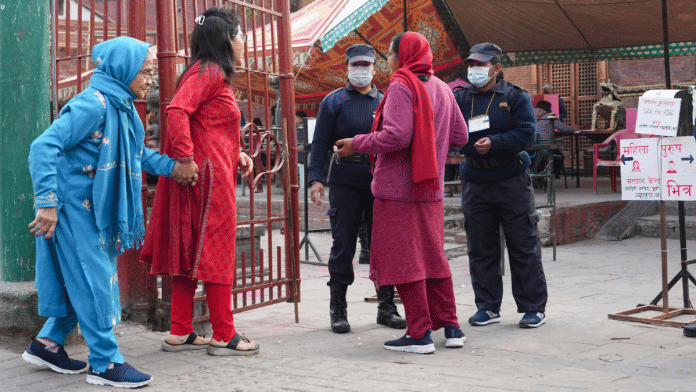



Nepal votes today to elect a new government in the first poll to be held since the Gen Z uprising last year toppled the K.P. Sharma Oli-led administration last year.
Around 19 million voters will elect the 275-member House of Representatives, 165 through direct contests and 110 via proportional representation from party lists.
In the race is the old guard—Oli and his Communist Party of Nepal (Unified Marxist-Leninist or UML), which has dominated the country’s politics for decades. A familiar but reformed Nepali Congress, led by Gagan Thapa, and three-year-old Rastriya Swatantra Party (RSP), whose Prime Minister candidate is rapper-turned Kathmandu mayor Balendra Shah, are the parties raising the GenZ issues.
Counting of results will begin as polling concludes Thursday. The complete results may be announced in a day or two as Nepal’s mountainous terrain makes it difficult to transport ballots.
Nepal elections 2026 | HIGHLIGHTS
4.00 pm: Province-wise turnout figures
Nepal’s Election Commission has not released overall turnout figures, but data cited by The Kathmandu Post said Koshi Province recorded the highest turnout, at 58 percent, till 3 pm Thursday. Kathmandu Valley recorded 51 percent turnout.
The provinces with less than 50 percent turnout were Gandaki, Lumbini, Karnali and Sudurpaschim.
1.50 pm: Turnout 24% till 1pm
Nepal’s election turnout is increasing steadily and closing in on the one-fifth-mark, with its poll panel recording the percentage at 24 till 1pm Thursday.
The Kathmandu Post says Kathmandu Valley has recorded 36 percent turnout and the Kathmandu district is at 41 percent.
Beyond the valley, Karnali province of Nepal has the highest turnout, at 31 percent.
So far, 4.45 million votes have been cast across the country.
1.30 pm: Two injured in clash between party workers
Two functionaries of the CPN-UML were allegedly beaten up by Nepali Communist Party workers while they were trying to stop ‘fake’ polling in Rolpa, party leaders said Thursday.
According to Kathmandu Post, police have taken three people in custody, and investigation was ongoing.
1.20 pm: From remote village, a 26-year-old fights for visibility in Parliament
For 26-year-old Tashi Lhazom, politics is personal. The first-time candidate is contesting the 2026 Nepal election from Halji, a remote Himalayan village on the Nepal-Tibet border. Lhazom seeks to highlight the lived realities of indigenous communities that are often neglected by the state.
“My work in climate advocacy consistently revealed that moral or evidence-based persuasion alone does not produce structural change… Without political leverage, advocacy risks remaining symbolic,” she said. Read the full report by ThePrint’s Debdutta Chakraborty.
12.50 pm: Turnout up to 18% till noon
More than 3.16 million ballots cast nationwide as voting continues largely peacefully, the Election Commission announces, adding that voting percentage was up to 18 percent by noon.
12.20 pm: Four-time PM casts his vote
Former Prime Minister and CPN-UML’s K.P. Sharma Oli casts his vote at a polling centre in Bhaktapur.
Oli was forced to step down as protests against a social media ban evolved into a larger agitation and eventually turned violent in September 2025.
#WATCH | Nepal: Former Prime Minister and Prime Ministerial Candidate of Communist Party of Nepal (Unified Marxist–Leninist) (CPN-UML), KP Sharma Oli casts his vote at a Polling Station in Bhaktapur, for Nepal's General Elections 2026. pic.twitter.com/4q3YpZCIYh
— ANI (@ANI) March 5, 2026
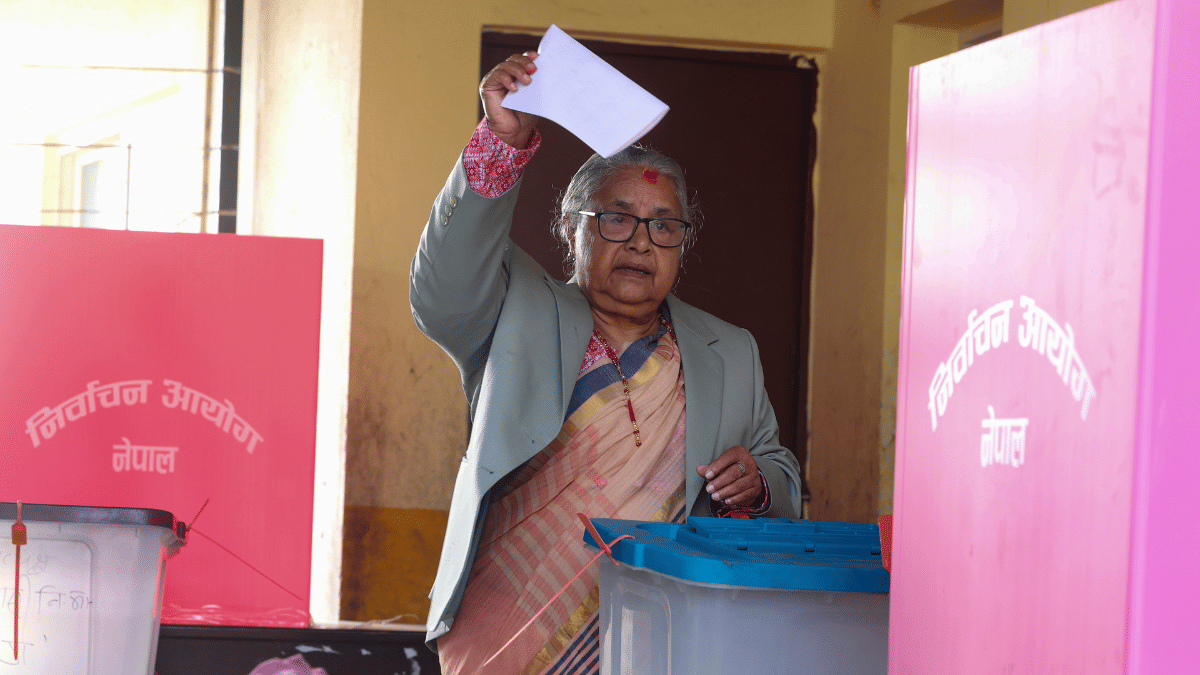
11.45 am: Polling turnout touches 10%
As voting continues, the Election Commission has estimated polling percentage at 10 percent till 11am. Most of the process is going on smoothly, apart from few disruptions, officials have said.
According to The Kathmandu Post, no ballots were cast at two polling centres in Dang-3. Polling was briefly suspended at a centre in Sarlahi-4 after a dispute erupted over assistance to elderly voters.
10.35 am: Turnout 6% so far, says poll panel
Nepal’s Election Commission recorded voter turnout of 6 percent till 9:30am, officials said.
They added that polling was going on smoothly, with the exception of minor incidents in a few locations. In Dolakha, a dispute over candidate representatives prompted police to fire warning shots at a polling centre in Tamakoshi Rural Municipality, The Kathmandu Post reports.
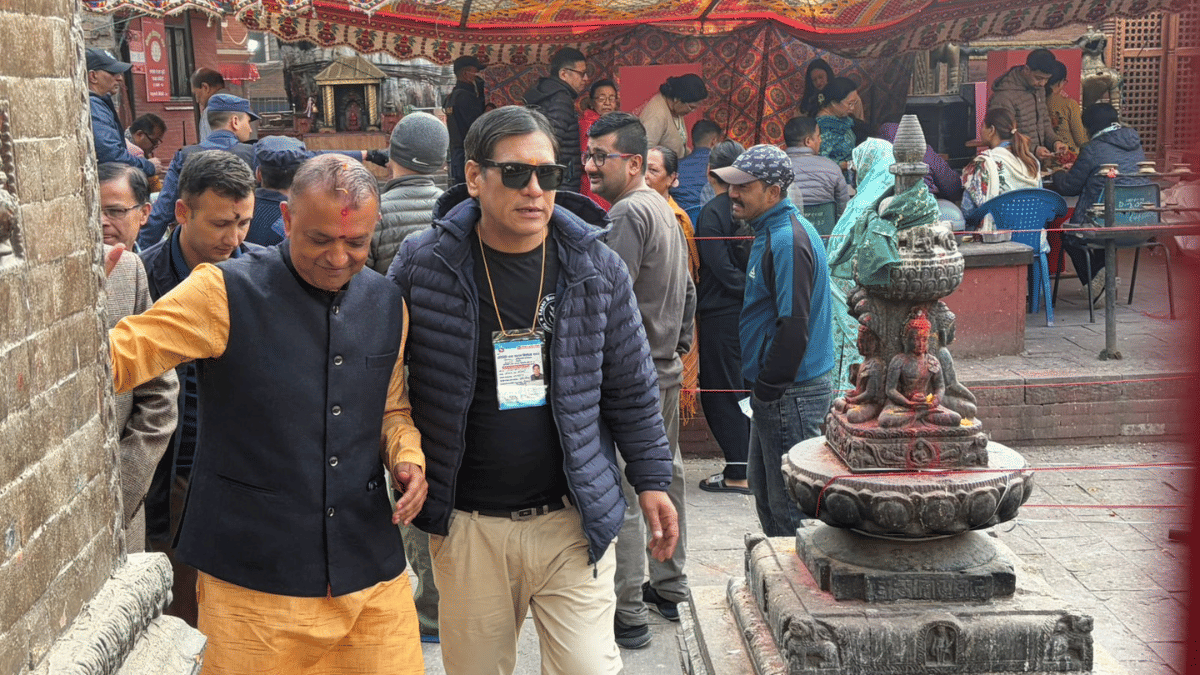
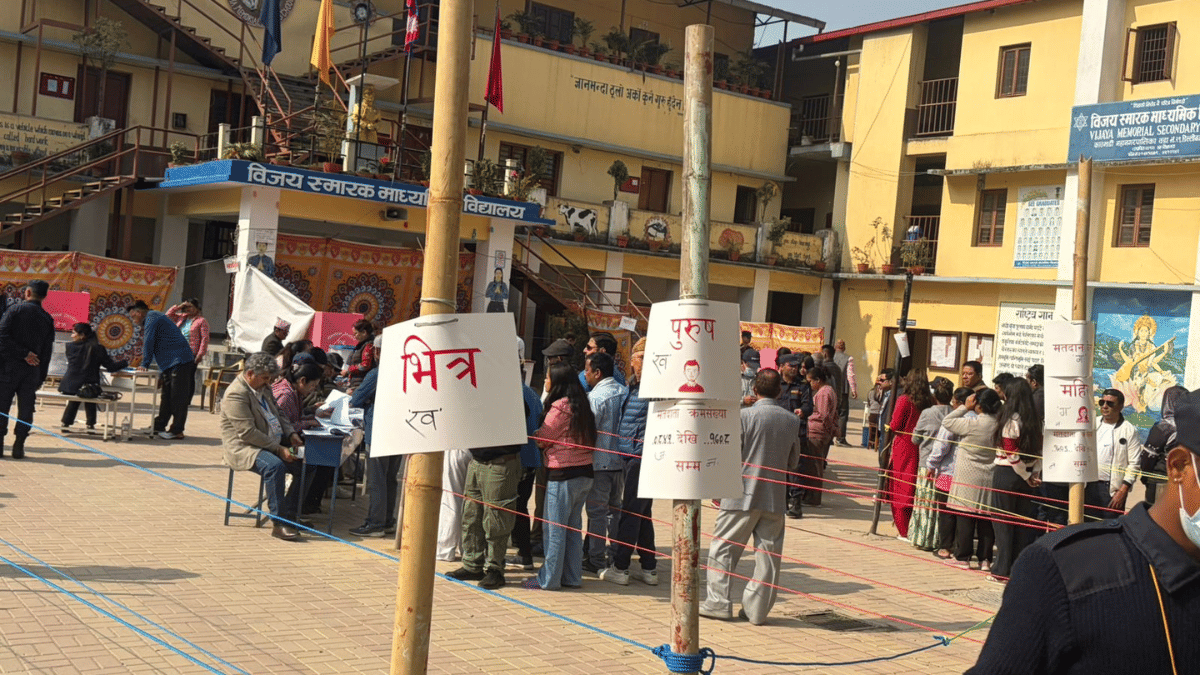
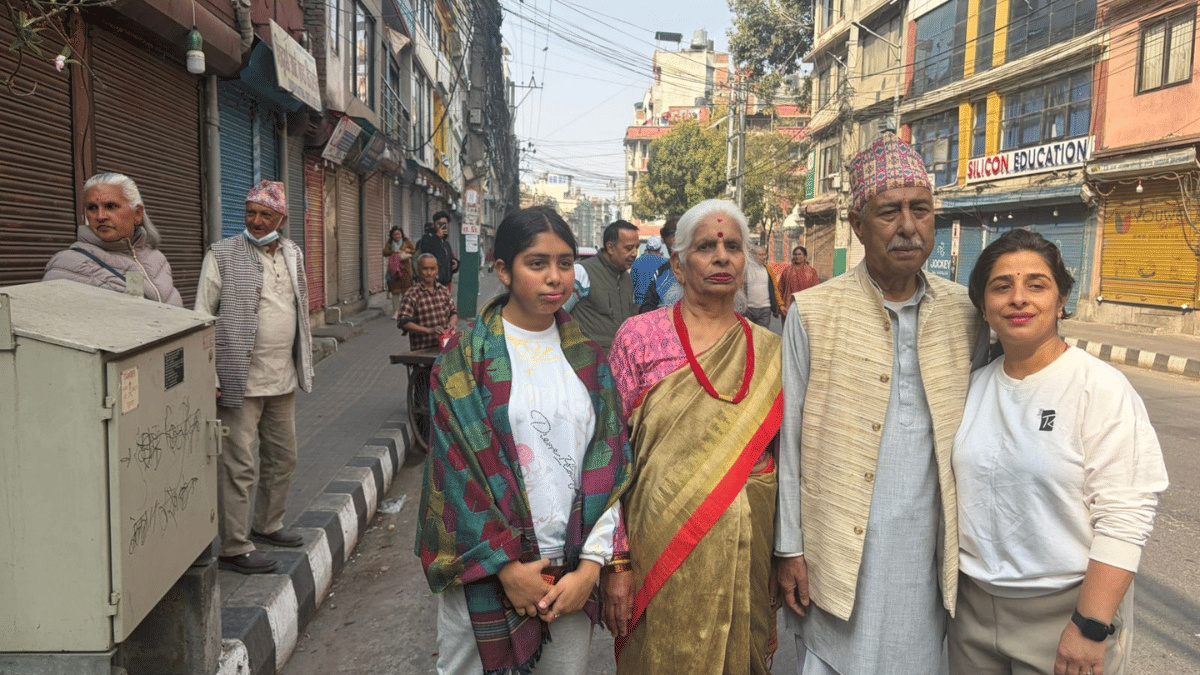
10.30 am: Scenes from Kathmandu
10.00 am: PM candidate says he’s excited
Nepali Congress’s PM candidate Gagan Thapa said he was “quite excited” and was “hoping for the best” for his party.
“Nepal, at this point in time, needs a very mature leadership, experienced as well as one who has an appetite for change. I have this appetite… At the same time, I know our strength, and I also know the limitations of Nepal. I know the diversity of Nepal… The politics need to deliver. The government has to deliver,” Thapa said.
He added that the transformation won’t happen overnight, but “positive change” had already begun.
#WATCH | Nepal: Prime Ministerial Candidate of Nepali Congress, Gagan Thapa casts his vote at Polling Station Maiti Devi Mandir, in Kathmandu, for Nepal's General Elections 2026. pic.twitter.com/quKRtDIxMD
— ANI (@ANI) March 5, 2026
9.30 am: Polling peaceful
Nepal’s Election Commission spokesperson Narayan Prasad Bhattarai said voting was underway across the country, with no disruptions.
“We have not observed any initial disruptions. Voting has started smoothly, and the electoral process is being conducted securely,” the spokesperson was quoted as saying by The Kathmandu Post.
9.00 am: Former mayor-PM candidate votes
Balendra Shah, former Kathmandu mayor and RSP’s Prime Minister candidate, votes in the Nepal capital.
Shah is taking on four-time PM K.P Oli on his home turf, the Jhapa district from where 74-year-old has won six times during his long political career. If Shah and the RSP are able to take power, it could upend the politics of the Himalayan nation, which has been long roiled by instability wrought by established parties.
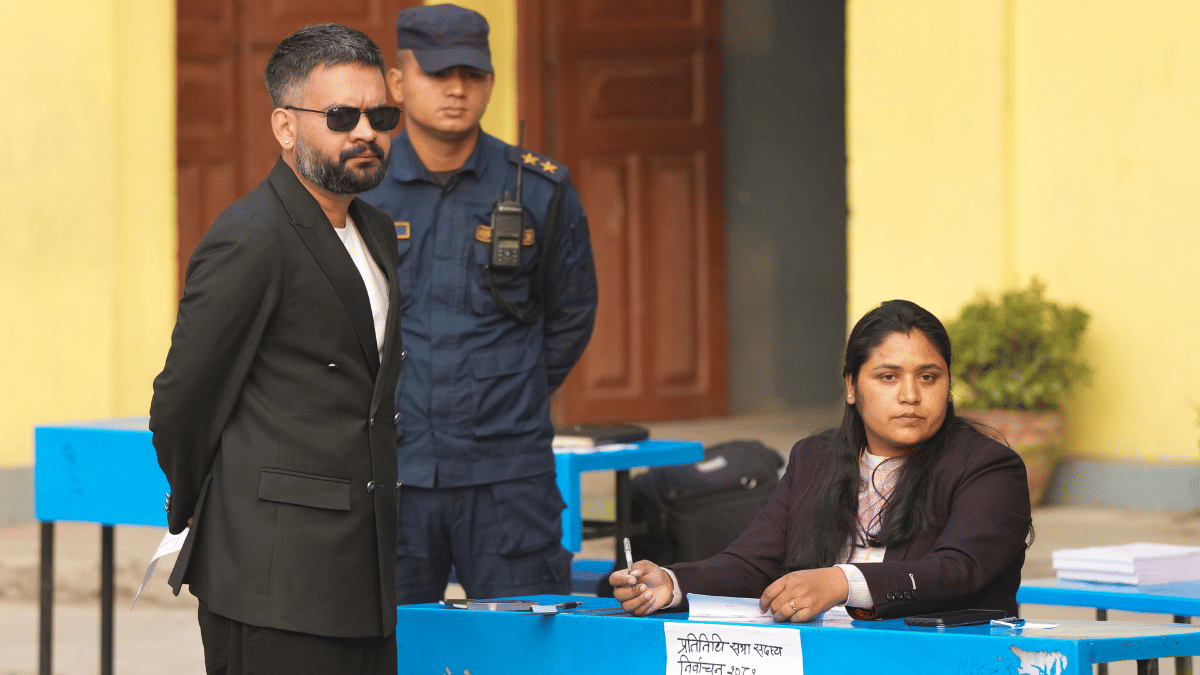
8.30 am: What does the youth want?
Several protest leaders, including Sudan Gurung, convener of Hami Nepal, and Tashi Lhazom, have joined the RSP—the party that has positioned itself as an anti-establishment alternative.
Some have rallied behind the Nepali Congress, particularly around the party’s PM candidate Gagan Thapa. And others have entered the electoral fray as Independents, carrying the movement’s language into their campaigns without a party label.
Read the full report here
8.00 am: ‘My duty is completed’
Nepal’s interim Prime Minister Sushila Karki said her “duty has been completed” after casting her vote for the general election in Kathmandu.
The interim government led by former chief justice Sushila Karki has walked a precarious line over the past few months. It was tasked primarily with conducting elections, but was also propelled into office by public demand for accountability and an end to corruption. Read ThePrint’s ground report by Debdutta Chakraborty.
7.00 am: Voting begins
Polling has begun in the mountainous country, months after the GenZ uprising ousted the K.P. Oli-led government.
Also Read: China’s long shadow over the upcoming Nepal elections—Red Lines and regional rivalries