








A look at the day ahead in European and global markets from Wayne Cole.
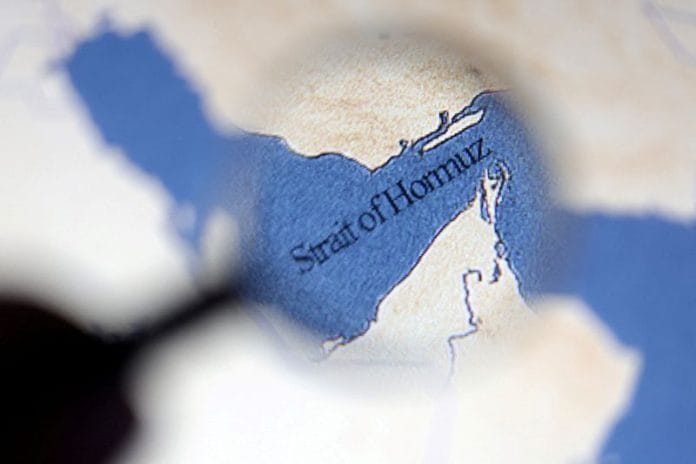
Asian trading has again been all about the Strait of Hormuz and President Trump’s odds of strong-arming U.S. allies, and others, into helping escort shipping through the vital waterway.
Early reports said the White House would soon announce multiple countries had agreed to provide naval protection, but were still talking about whether operations would begin before or after the end of hostilities.
That morphed into Trump just talking to seven countries about escorts, with no agreement reached. Mentioned were France, Japan, South Korea, Britain and China, with the latter sure to raise diplomatic eyebrows.
Beijing actually has more suitable naval vessels for such operations than the U.S., which is hamstrung by a lack of frigates and minesweepers. Imagine the optics of the Chinese navy doing what the U.S. navy could not by opening the Strait. It could be used as a bargaining chip in U.S.-China trade talks underway in Paris.
European ministers meet today to discuss the Strait, though Trump may not have won many friends by seeming to threaten the future of NATO should allies turn him down.
Net, the Strait remains effectively throttled and trouble is building in the supply chain and not just with crude. Various nations, including China, are clamping down on the export of refined products to preserve domestic supplies, and that is rippling through the Asian region. Australia, in particular, faces shortages of the diesel that is vital for mining and farming.
Even with a coalition agreement there are real doubts naval ships alone could guarantee safe passage through such a narrow waterway, with Iran looming in the north. Seizing the northern shore would involve ground troops, risking heavy casualties. Which is one reason Brent is up more than 1% in Asia, with trading again very choppy.
It’s a headache the host of central banks meeting this week really didn’t need, and has put paid to hopes for any policy easing. Indeed, investors think the next moves for the European Central Bank, Bank of England, Bank of Canada and Riksbank are up, while the Reserve Bank of Australia is probably set to hike for a second straight meeting.
There is just one rate cut now priced for the Federal Reserve, though it’s possible the median dot plot for rates will remove that easing too.
Key developments that could influence markets on Monday:
– U.S. Treasury Secretary Scott Bessent holds trade talks with Chinese Vice Premier He Lifeng in Paris
– Empire State PMI, U.S. Feb industrial output, NAHB housing sentiment
(By Wayne Cole; Editing by Kate Mayberry)
Disclaimer: This report is auto generated from the Reuters news service. ThePrint holds no responsibility for its content.