








Here’s a complete transcript of the episode, edited for clarity.
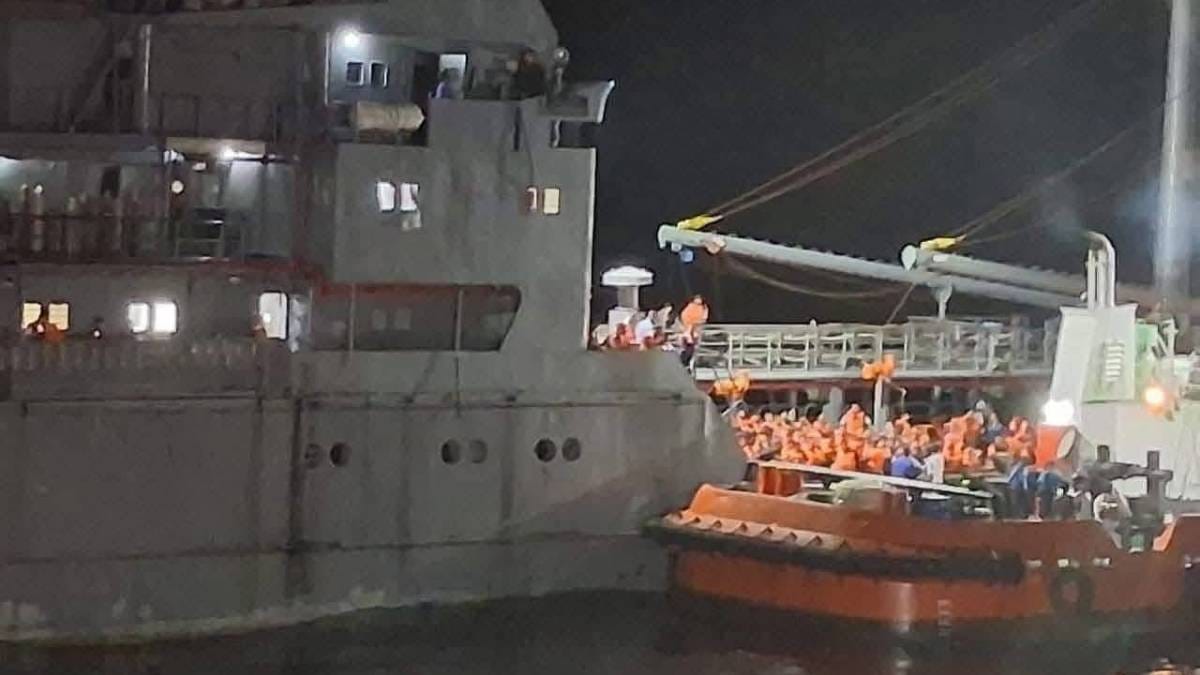
One of them, IRIS Bushehr, found shelter in Sri Lanka because it sought shelter in time. The other one, IRIS Lavan, similarly found refuge in India. That one is now docked in Kochi. Its people have been taken off the ship—184 people—and they’ve been put up in the nearby naval facilities. In Sri Lanka also they did not want to keep the ship in Colombo because Colombo is a very busy commercial port, so they’ve offloaded the crew in Colombo and kept them there but took the ship to Trincomalee, where it is kept now.
We need to understand exactly what happened. First of all, we know what the ships are. Bushehr is 108 metres—actually Bushehr is the biggest of these ships, 108 metres, with 208 people on top of it. It has people in different categories that I will tell you. It is a replenishment ship which was built in Germany in 1972–74 and has been in service since 1974. So really an obsolete ship, but a replenishment ship with 4,748 tons displacement.
Lavan was commissioned in 1985. That’s a British-built ship, a little bit smaller, 25,581 tons, and that had 184 people who are now in India’s custody—India’s protective custody, I would say.
The third one, Dena, we spoke about at more length just the other day. Dena is more of a combat ship. It’s a frigate. The other two are not so much active combat ships. Although every naval ship carries some weapons, these two ships, Lavan and Busherh, had a large number of naval cadets—Iranian naval cadets and cadet officers—because this was training. This was a bit of a furlough. After all, they were coming on a ceremonial visit.
Even on the ship that India now has, Lavan, our External Affairs Minister S. Jaishankar said just the other day at Raisina Dialogue that a lot of them were cadets as we understand. He said that the ship had some problems and asked us for permission to dock at Kochi on the 28th of February. February is a 28-day month this year. On the next day, the first, I think, there was a mention at the CCS—the Cabinet Committee on Security—after which, this was granted permission to come to Kochi.
Similarly, the other ship Bushehr was granted permission by the Sri Lankans to come to their port.
Now, there is a little bit of a hazy area in terms of what happened to Dena. There were some reports that Dena also sought refuge in India but did not quite come in. That is not clear. In fact, there is no evidence yet that that happened.
However, there is evidence—or at least credible reports from Sri Lanka—and this started from Jaffna Monitor, a newspaper there, saying that the Sri Lankan delegation at the International Fleet Review in Visakhapatnam had asked these Iranian ships to make a port call at their ports on their way back as a matter of goodwill.
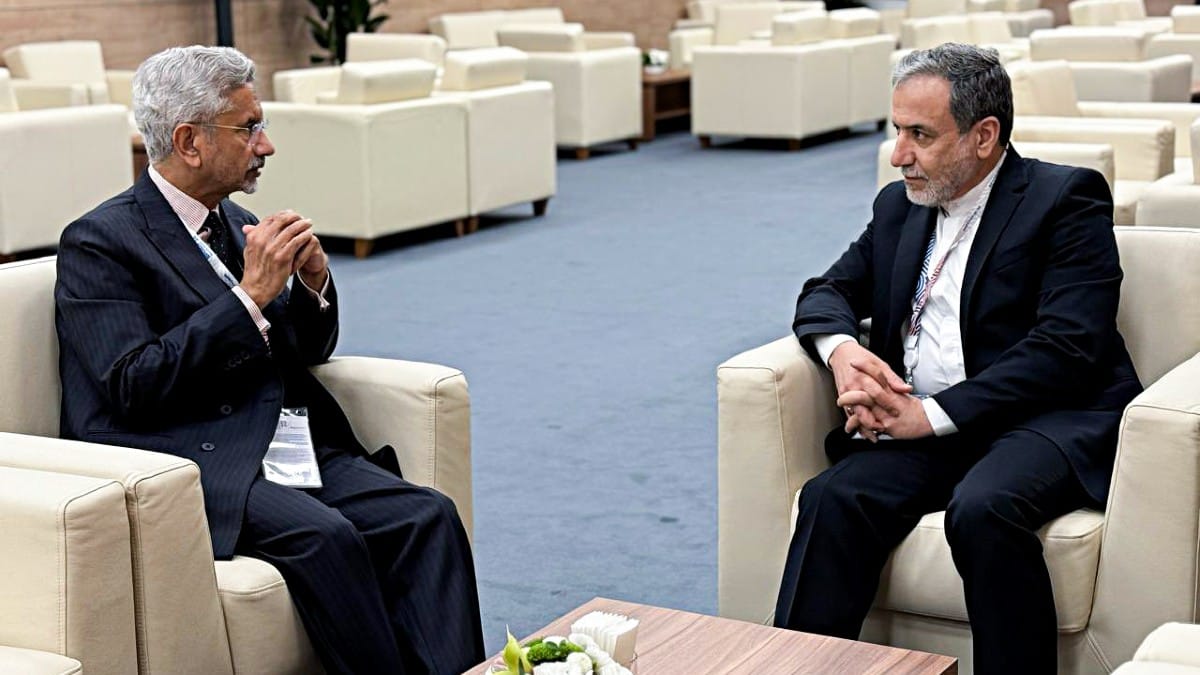
Many of these navies even had their chiefs there. The Iranian Navy had its chief there. Pictures have come out of the Iranian Navy chief and our Navy chief together in a meeting. So this was a very high-level international Fleet Review.
Also Read: Iranian naval ship Lavan with crew of 184 docked in Kochi same day US torpedoed IRIS Dena
It looks like—according to Jaffna Monitor—that the Sri Lankan Navy officially asked the Iranians to make a port call at their ports on their way back as a matter of goodwill. Now it so happened that as they started their journey back, the war broke out. That is what Jaishankar describes as these ships being caught on the wrong side of events.
Now the war broke out and these captains had to figure out where to go. It looks like, according to the Jaffna Monitor story, that the captain of Dena thought he was heading for Sri Lanka. But Sri Lanka by this time—because everybody was taken aback by how suddenly the war started—got into indecision.
Everybody knew it would start someday, but it started a bit too suddenly. Even I had thought that whatever it is, Donald Trump and Benjamin Netanyahu would not be so insensitive as to start this war during the month of Ramadan. But they did.
Once the war started, it’s possible—at least that’s what the reports tell us—that the Sri Lankan government got into indecision: this is a warship, should you let it come in or not? In that indecision, this ship spent 11 hours hanging out in the high seas away from Sri Lanka’s territorial waters, although within the Exclusive Economic Zone.
Now the laws of maritime conflict we need to understand. The laws of maritime conflict tell you that once a war breaks out at sea, any asset of the other side—any asset of the other belligerent—is fair game as long as it’s on the high seas or international waters.
Which means the protection, if anything, would be within the territorial waters of a neutral state—a territorial water of a non-belligerent state. Which also implies that anything which is in another neutral state’s Exclusive Economic Zone can also be attacked, because the Exclusive Economic Zone is not any country’s territory except to the extent that only that country has the right to prospect it for natural resources or economic benefit.
Otherwise this is as good—or bad in this case—as the high seas.
And that’s what happened with Dena. Because of this 11-hour indecision it was hanging out there, unfortunately, and that’s where it got caught by the American Navy.
Now I will tell you a couple of things that Jaishankar said. He said: “For us, the ship wanted to come in and that too in difficulties. I think it was a humane thing to do and we were guided by that principle.”
He also said two ships had similar problems—two had a similar situation in Sri Lanka—and they took the decision they did. Unfortunately one did not make it. That is Dena.
The day after the Sri Lankans gave refuge to IRIS Busherh, Anura Kumara Dissanayake, the Sri Lankan president, made a statement in parliament saying that they had taken the ship in custody along with 200 people on it. This included 53 officers, 84 cadet officers, 48 senior sailors and 23 sailors.
Also Read: Another Iranian vessel seeks Sri Lanka’s help, day after US submarine strike sunk IRIS Dena
Now what exactly is international maritime law?
International maritime law when it comes to naval warfare is a combination of two laws. In fact, all law of warfare is a combination of two laws on the seas.
One is the United Nations Convention on the Law of the Sea—UNCLOS—which the US has not signed. The US has not signed many of these international conventions, that governs maritime activity: what your territorial waters are, what your EEZ is, etc.
Remember an American warship had come into the Lakshadweep area into India’s EEZ just to assert freedom of navigation. That’s called a freedom of navigation patrol.
However, UNCLOS does not apply to belligerents in a war. Law of naval warfare runs parallel to UNCLOS, which means that any asset of the other belligerent is a legitimate target on the high seas and international waters.
The UN Charter however—Article 51—gives any belligerent the freedom to fight a war.
However, the larger humanitarian law is codified by the ICRC—the International Committee of the Red Cross. They say that for a war to be legitimate it should ideally be cleared by the UN Security Council, which almost never happens because somebody has a veto.
Law of naval warfare is a subset of the law of armed conflict because the Geneva Conventions and the Hague Conventions govern armed conflict.
These are called the two “city laws”—named after the cities where they were drafted and codified.
These two govern all armed conflict including conflict at sea.
Protection of combatants from undue violence, civilians, and neutral actors engaged in conflict at sea is the essence of these laws.
In any case, once a war breaks out at sea, the law of naval warfare takes precedence over UNCLOS because UNCLOS governs peaceful shipping.
The law of naval warfare says warships are legitimate targets to achieve military objectives.
To that extent, the American sinking of Dena was not illegal.
However, I will add a bit of opinion: given the fact that America, India, Japan and Australia have the Quad partnership and see each other as friendly forces in the Indian Ocean, to do this without any information and not that far from Sri Lankan and Indian coasts was not particularly necessary.
From the Indian point of view, this also embarrassed India.
The Geneva Convention of 1949 says that if a vessel has been hit in conflict at sea, the other side must take all possible measures to search for survivors and provide medical treatment.
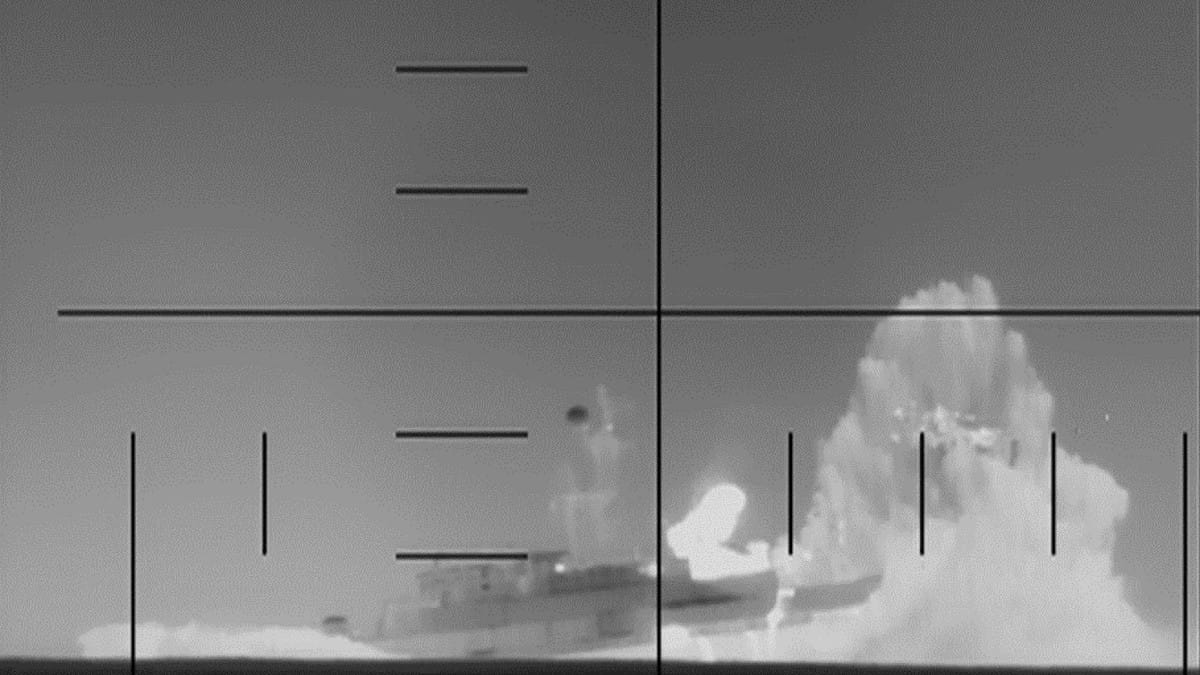
However, submarines have limitations in doing this.
If they cannot do it, they must inform authorities or other vessels nearby so that the wounded, sick or shipwrecked can be rescued.
That is the international humanitarian law.
Several days after this episode, a lot of haze still prevails.
ICRC summarises these laws together as international humanitarian law—the law of war or the law of armed conflict.
The Geneva Conventions protect victims of armed conflict. Soldiers who are incapable of fighting and civilians no longer participating must be protected.
The Hague Conventions lay down the rights and obligations of the belligerents.
After additional protocols in 1977, both were combined and are broadly referred to as international humanitarian law.
These laws shape the rules of war on land and at sea.
Force should be the minimum necessary to achieve legitimate military objectives.
Once the enemy submits, war should be stopped at the earliest possible moment with minimal loss of life and resources.
But that does not always happen.
In war, no side has unrestricted power to cause damage or use indiscriminate weapons.
The wounded and sick must be searched for and cared for.
Neutral states also have obligations.
If belligerent warships enter a neutral port because of damage or weather, they can seek refuge for 24 hours.
After that they must leave.
If repairs take longer, the neutral state can intern the ship and crew so they cannot rejoin the war.
That is exactly what India and Sri Lanka have done.
They have detained the ships, taken off their crews and interned them so they cannot be used by Iran but also cannot be harmed by the Americans.
So three Iranian ships were caught in these events.
One was given refuge by Sri Lanka. One was given refuge by India.
One was caught in the middle during indecision.
Two got lucky. One did not.
Warfare is cruel and brutal.
Also Read: Why Strait of Hormuz is critical oil chokepoint & how Iran is weaponising it | Cut The Clutter