





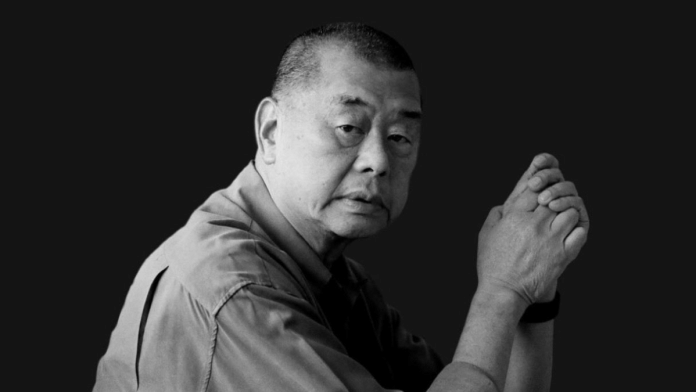



New Delhi: On 9 February, a Hong-Kong court sentenced ex-media mogul Jimmy Lai for 20 years under the contentious National Security Law. The 78-year-old has been incarcerated since December 2020 when he was found guilty of conspiring with others to collude with foreign forces endangering national security and conspiracy to publish seditious articles.
Critics said 20-year term awarded to the founder of Hong-Kong’s now defunct Chinese-language independent newspaper, Apple Daily, was essentially a life sentence.
The landmark national security trial that led to Lai’s conviction stretched nearly 160 days, almost double the original estimate.
His case has drawn significant attention from across the globe as a test of press freedom and judicial independence in the Asian financial hub.
Who is Jimmy Lai
The ex-media tycoon started out doing odd jobs and knitting at a small clothing shop in Hong Kong. Born before the communists came to power in mainland China in 1949, Lai was just 12 years old when he stowed away on a fishing boat to reach Hong Kong, and freedom.
The British citizen founded a whole business empire in the next two decades, which included the international clothing retailer Giordano. The year 1989, when Beijing sent army tanks to Tiananmen Square to squash out six weeks of student-led, pro-democracy protests, saw Lai transform into a steadfast advocate of democracy and a fierce critic of mainland China.
Starting out by writing columns against the crackdown, Lai founded in 1990 his own publishing house, Next Media, which would go on to become the largest listed media company in Hong-Kong.
In 1995, Lai launched Apple Daily, reportedly named after the Biblical forbidden fruit that brought Adam and Eve to sin. “If Eve hadn’t bitten the forbidden fruit, there would be no sin, no right and wrong, and of course – no news,” Lai once told local media.
The daily started off as a tabloid, gaining a reputation for national headlines and paparazzi shots, but over the 26 years that it remained in publication, it took on the role of one of Hong-Kong’s most vocal defenders of democratic society. Its editorial stance was openly critical of the Chinese state. When it was first launched, Lai even used the phrase ‘an apple a day keeps the lies away’ as the commercial slogan.
As expected, the newspaper was a regular target of Hong-Kong authorities. Even after Lai’s arrest, the paper continued to be defiant of the state, but in June 2021, just days before its 26th anniversary, it had to close down after its offices were raided by hundreds of police personnel and its assets frozen over allegations of breaching the national security law.
In 2019, Hong Kong saw one of the largest protests in its history, starting out in response to an anti-extradition bill before transforming into a whole pro-democracy movement.
The next year, Beijing responded by imposing the national security law, whose provisions define four main crimes—secession, subversion, terrorism, and collusion with foreign or external forces. These crimes are punishable with a maximum sentence of life in prison.
In the largest national security case to date, a group known as the Hong Kong 47 were put on trial for ‘subversion’, which is undermining the power or authority of the central government, for alleged involvement in organising an unofficial legislative council election primary. They include, among others, Jimmy Lai.
“Time is running out for my father,” The Guardian reported Lai’s son Sebastien Lai as saying at a UK parliamentary hearing. “Surely a man who defended freedom deserves a bit of it himself.”
(Edited by Tony Rai)
Also Read: Indian Vlogger claims was detained at Chinese airport for 15 hrs over video on Arunachal woman