








By Ahmed Fahmy, Amr Abdallah Dalsh and Alexander Cornwell
Near Tyre, LEBANON/TEL AVIV, March 22 (Reuters) – Israel struck a main bridge linking Lebanon’s south to the rest of the country on Sunday after ordering its military to destroy all crossings over Lebanon’s Litani River and to step up the demolition of homes near the southern border.
The destruction of bridges and homes marks a significant escalation in Israel’s military campaign in Lebanon, which was pulled into the regional war on March 2 when armed group Hezbollah fired into Israeli territory.
International law generally prohibits militaries from attacking civilian infrastructure, and the United Nations human rights chief has criticised Israel’s actions in Lebanon, particularly its use of widespread evacuation orders.
Sunday’s strike pulverized a crossing on Lebanon’s coastal highway that ran through farmland and was one of the main routes linking southern and central Lebanon.
An Israeli military spokesperson had announced the army would strike the bridge earlier on Sunday.
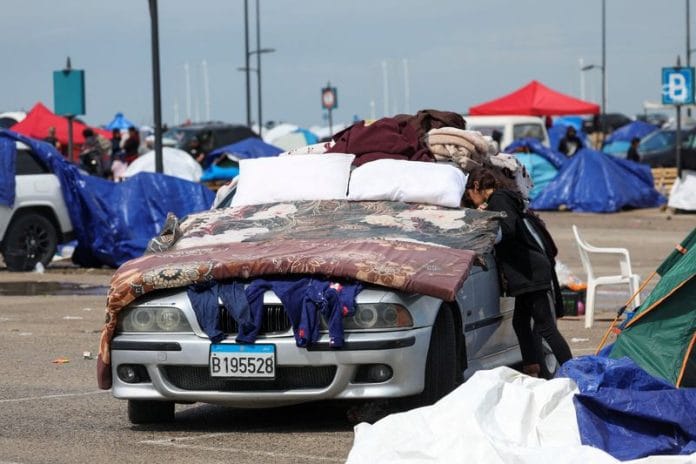
Lama al-Fares, who lives on farmland adjacent to the crossing, said her family packed whatever they could into their car when they saw the warning. They drove about a kilometre north on the highway and waited out the strike on a hilltop overlooking the highway.
“Our house is right next to the bridge. It was destroyed in the last war and we had rebuilt a basic structure to live in – I hope it’s still standing,” she told Reuters.
ISRAELI CIVILIAN KILLED
Earlier, an Israeli was killed in his car near the border with Lebanon after what the military described as a “launch” from Lebanese territory. It was the first Israeli civilian death linked to fire from Lebanon in the current war. Two Israeli soldiers have also been killed in fighting in southern Lebanon.
Israel’s strikes on Lebanon have killed more than 1,000 people, including nearly 120 children, 80 women and 40 medical personnel, according to Lebanon’s health ministry. Lebanese authorities do not otherwise distinguish between civilians and militants.
Defense Minister Israel Katz said on Sunday that the military had been ordered to destroy all bridges over the Litani River used for “terrorist activity,” to prevent Hezbollah militants and weapons from moving south.
The Israeli military had already destroyed three bridges in southern Lebanon in the last 10 days.
Katz also said the military was ordered to accelerate the demolition of Lebanese homes in “frontline villages” to neutralize threats to Israeli communities.
He described the approach as similar to the model used in Beit Hanoun and Rafah in Gaza, where the military created buffer zones by clearing and demolishing buildings near the border.
‘HUMANITARIAN CATASTROPHE’
Ramzi Kaiss, Lebanon researcher at Human Rights Watch, told Reuters that international law requires armed actors to take into account the civilian harm caused by strikes on infrastructure like bridges, even if the targets were being used for military purposes.
“If all these bridges are struck, and the region that is south of the Litani becomes isolated from the rest of the country, then the civilian harm is going to be so immense that you have a humanitarian catastrophe as people still living in the south won’t be able to access food, medicine and other basic needs,” Kaiss said.
Destroying homes in southern Lebanon wholesale would amount to wanton destruction, which is a war crime, he added.
The Israeli military says its troops are carrying out what it describes as ground maneuvers and targeted raids on Hezbollah militants and weapons stores in southern Lebanon. Israeli officials say the air and ground campaigns are aimed at protecting residents in northern Israel near the Lebanese border from Hezbollah attacks.
French Foreign Minister Jean-Noel Barrot met with his Israeli counterpart, Gideon Saar, in Jerusalem on Friday, telling reporters that he had expressed France’s reservations about a ground operation of “significant scale and duration”.
Barrot said he had urged Lebanese and Israeli officials to find a lasting solution, which he said could not be achieved through military force alone.
Earlier this month, Katz warned the Lebanese government it would face infrastructure damage and territorial losses unless Hezbollah was disarmed. The Lebanese government has outlawed Hezbollah military activity and said it wanted to engage in direct talks with Israel.
(Reporting by Ahmed Fahmy and Amr Abdallah Dalsh near Tyre and Maya Gebeily in Beirut, Alexander Cornwell in Tel Aviv; Editing by Christina Fincher)
Disclaimer: This report is auto generated from the Reuters news service. ThePrint holds no responsibility for its content.