





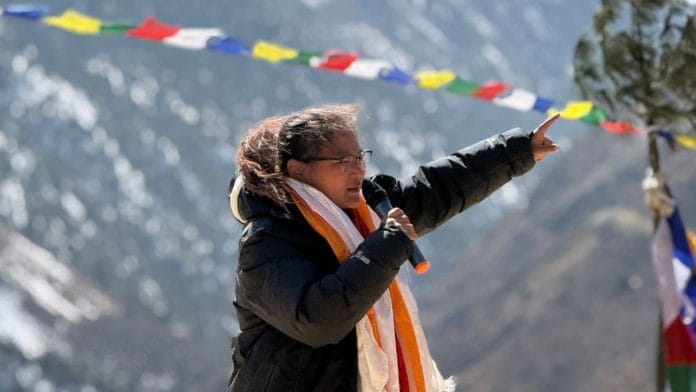



Kathmandu: Tashi Lhazom’s politics is born out of personal experiences. The 26-year-old candidate for Nepal’s Parliament from the remote Himalayan village of Halji on the Nepal-Tibet border seeks to highlight the lived realities of indigenous communities living on the periphery, and often neglected by the state.
“In 2011, Halji was hit by a glacial lake outburst flood,” the climate activist-turned-politician told ThePrint. “The destruction was immediate and severe. But what stayed with me most was that relief did not arrive for two years.”
For Lhazom, the delay exposed more than the vulnerability of mountain communities to climate change. It revealed what she describes as deeper structural neglect of remote Himalayan regions. “Our community was left to cope largely on its own,” she says. “The issue was not only environmental vulnerability, but the reality that remote communities often remain peripheral to the state’s emergency response mechanisms.”
In 2013, just two years after the flood, her family experienced a personal setback. As herders, they lost several yaks to an avalanche that struck at an unusual time and in an unexpected place.
“My involvement in climate activism emerged from these experiences. I began speaking about what was happening in Limi to bring visibility to our community’s vulnerability. Over time, that advocacy expanded to indigenous knowledge, glacial risk, and the structural neglects of highland districts. At its core, it has always been about representation and ensuring that remote communities are not excluded from national and global conversations,” she adds.
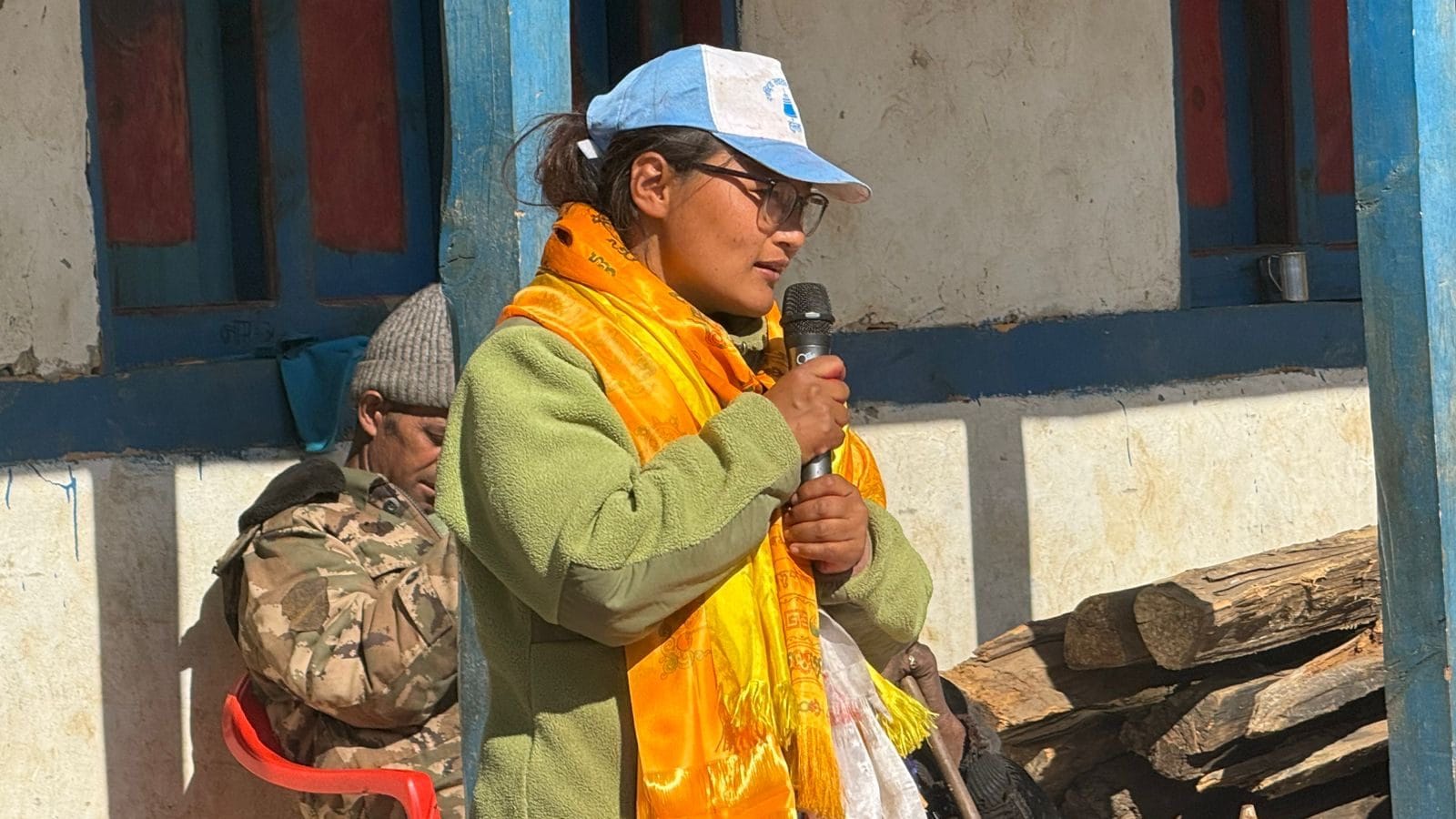
Lhazom is now contesting the 2026 Nepal polls as a first-time candidate to ensure “structural changes” in remote regions. “My work in climate advocacy consistently revealed that moral or evidence-based persuasion alone does not produce structural change,” she says. “Without political leverage, advocacy risks remaining symbolic.”
Running for office, she says, became “a logical extension of advocacy, not a departure” from it. If climate-vulnerable districts are to shape national adaptation policy, their representatives must be positioned within decision-making structures.”
Halji remains extremely remote by modern standards. Snowbound and cut off for nearly six months each winter, the village has no mobile network connectivity. The district headquarters, Simikot, is a five-day walk away, and reaching Kathmandu means an expensive flight from there.
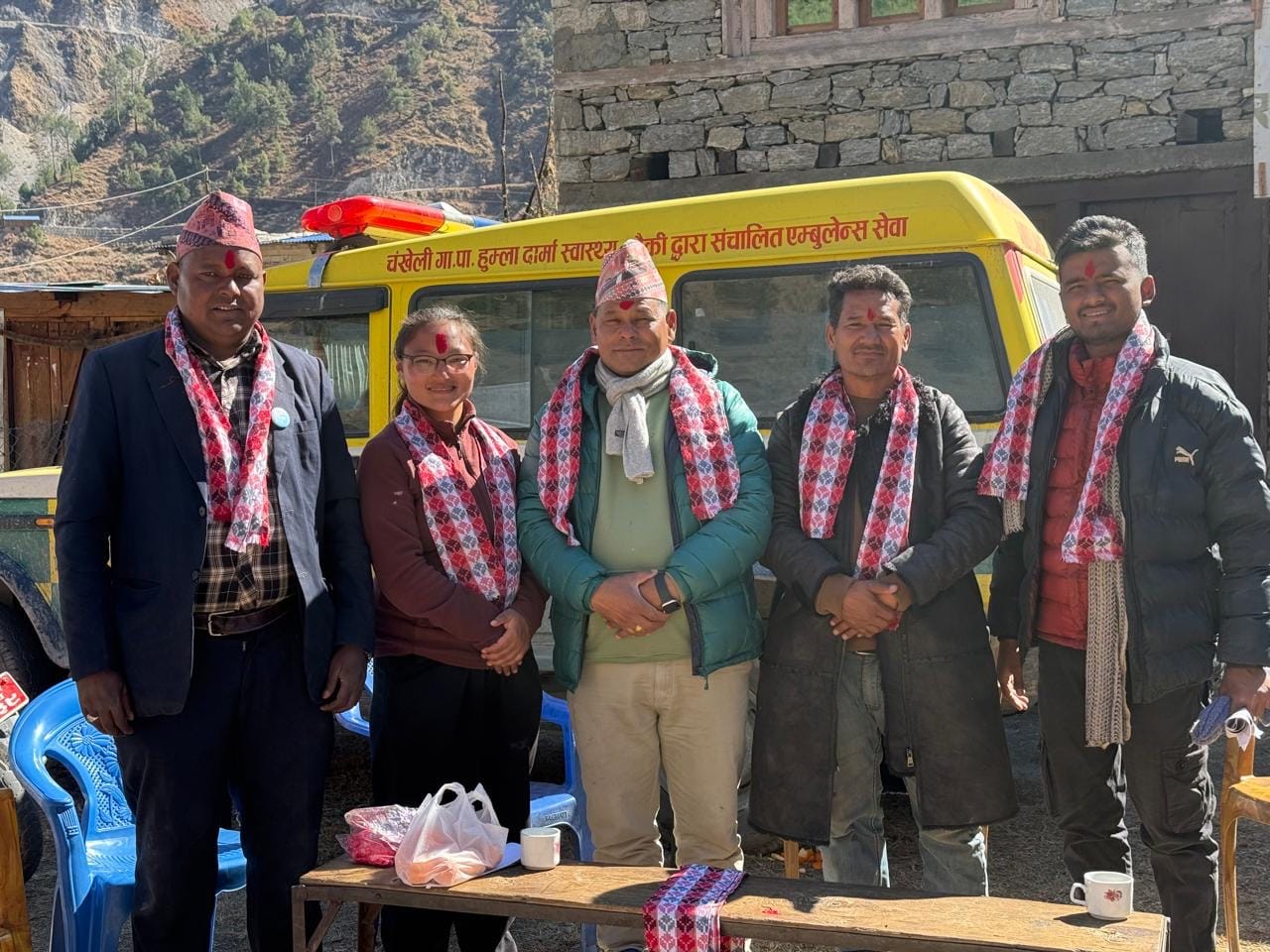
Campaigning in Humla has brought its own realities. Many villages require multi-day journeys on foot across steep mountain paths. “Fuel costs alone have exceeded Rs 50,000, excluding vehicle hire and maintenance,” she says.
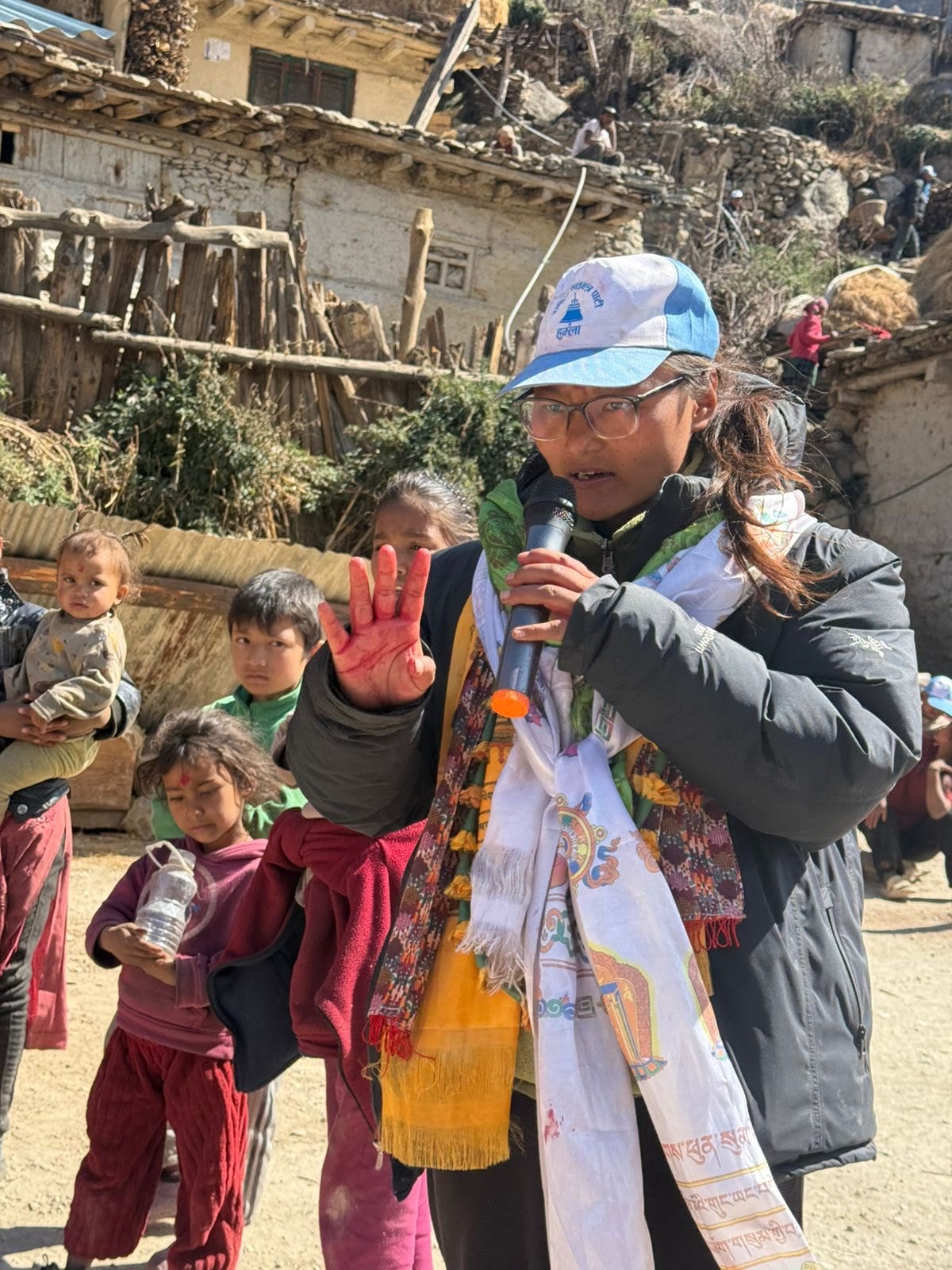
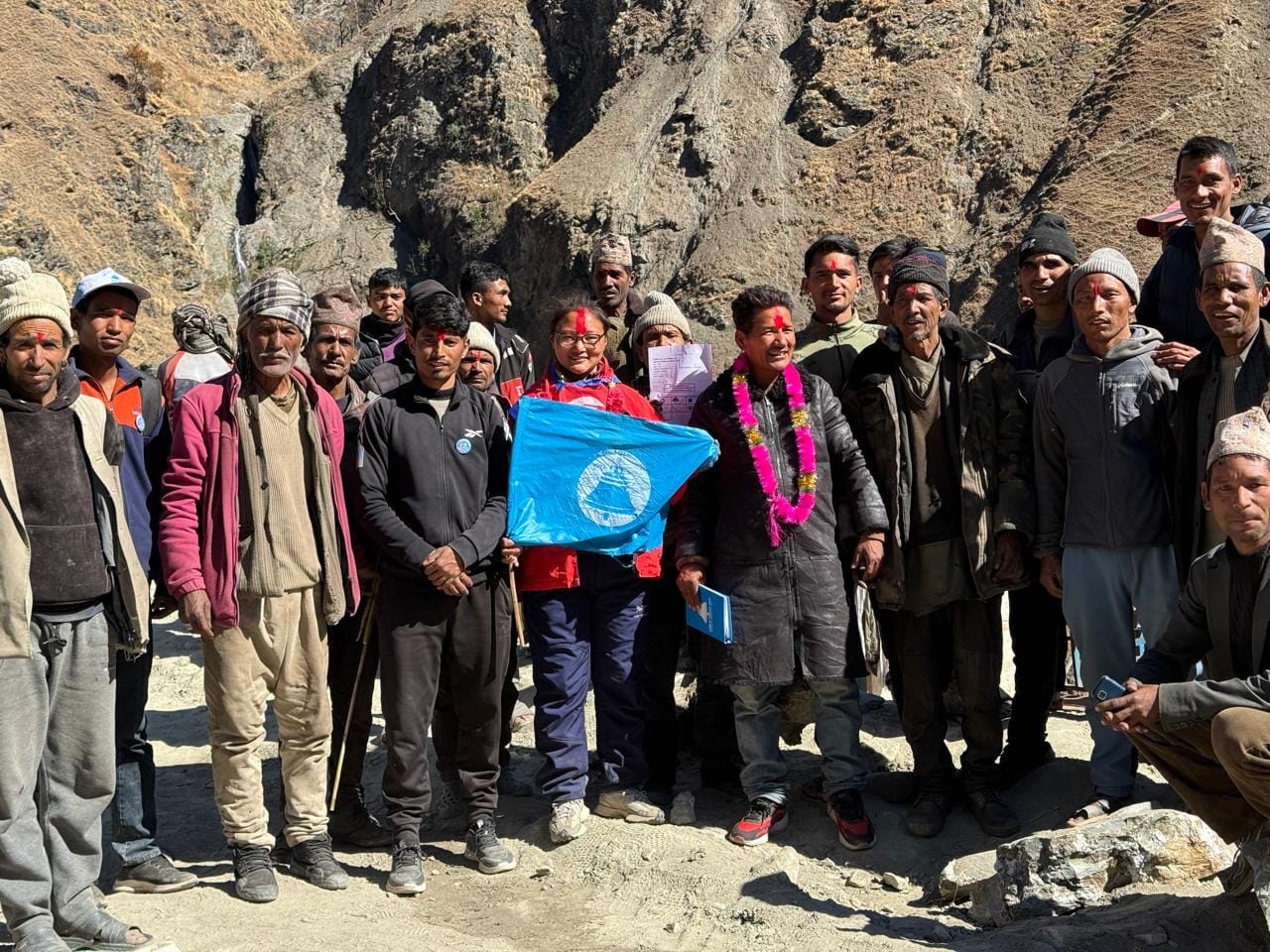
Without the dense grassroots networks that established parties possess, Lhazom’s campaign relies heavily on volunteers. “Our strategy has centered on immersion rather than spectacle,” she says. “I’ve spent extended periods in villages, staying in homes, meeting voters in their fields and engaging directly with families.”
Also Read: Nepal elections 2026 LIVE UPDATES: As voting begins, interim PM Karki says her ‘duty is completed’
Indigenous and ingenious
Lhazom first returned to her native Limi Valley in 2019 to launch the region’s first grassroots climate and women’s empowerment campaign, amplifying local voices and inspiring change. She then directed the documentary No Monastery, No Village—the first film in Limi Kye—to highlight the climate impact on the region’s 1,000-year-old monastery and went on to co-found Born to Lead, advocating for the recognition of the Limi people as a distinct indigenous community.
She also actively participated in the Gen Z protests in September last year, which brought thousands of young people to the streets demanding accountability from political leaders. “The protests were not merely generational; they were inevitable,” she says. “It was a moment when citizens finally claimed public space to challenge the entrenched status quo.”
For her, the protests marked a shift from frustration to responsibility. “Protest alone cannot sustain reform. Institutionalisation is required,” she declares.
Lhazom is the only Gen Z woman contesting the polls and the only female candidate in Humla. Entering formal politics, however, revealed structural barriers that many young candidates face.
“My entry into politics emerged through protest, not party politics—and that distinction is important,” she says. Nepal’s political ecosystem, she explained, remains dominated by entrenched party hierarchies that reflect broader social inequalities. “For women and indigenous youth, and those of us without wealth or generational party ties, access to a ticket becomes extremely difficult.”
The financial burden of campaigning in a remote district like Humla adds a whole new layer of challenges. “When one cannot fund their campaign, their access to opportunities becomes greatly limited,” Lhazom says. The experience, she notes, has also reinforced the importance of proportional representation in Nepal’s electoral system.
Also Read: A street mandate put Nepal in hands of an interim govt led by first woman PM. How it fared
Geopolitics and its personal impact
Lhazom’s emergence as a political figure isn’t entirely free of controversy. Last year, when her name reportedly surfaced as a possible ministerial candidate representing Karnali Province, questions began circulating online about her citizenship and alleged links to the “Free Tibet” movement.
Members of Gen Z Karnali issued a statement urging the government to verify her background before considering any appointment. The statement also referenced Nepal’s diplomatic relationship with China, particularly its proximity to the Tibet Autonomous Region, where political activism related to Tibet remains highly sensitive.
Some political figures amplified the claims. Gyanendra Shahi, spokesperson of the pro-monarchy Rastriya Prajatantra Party, alleged that the United States Embassy in Kathmandu had lobbied for Lhazom’s selection — a claim that has not been substantiated.
Geopolitical sensitivities also surfaced during her selection within the Rastriya Swatantra Party in 2025, which had reportedly offered her a nomination under its Proportional Representation women’s quota before removing her name from the final list.
In a public response on Instagram, Lhazom strongly denied the allegations. “I have reaffirmed it again and again that I am not a Tibetan,” she wrote. “I am not connected with ‘Free Tibet’ activism in any manner.”
“I challenge the accusers to publicise their evidence,” she adds.
The party has not publicly clarified the reasons behind the decision, but the episode highlights how geopolitical sensitivities can intersect with Nepal’s domestic politics.
For Lhazom, however, the experience was instructive rather than discouraging. “It offered insight into how party structures function and how representation is negotiated within formal political organizations,” she says. “Rather than viewing it as a setback, I approached it as an opportunity to reflect on my political trajectory.”
“I am also reflecting on how dissent shapes Nepal’s democracy, and it is noteworthy that there is room to fight for what one believes in, whether in the form of a leaderless Gen Z movement or as an individual within the party structures. It may not be the most inviting, and often unsafe at times, but the fact that there is room for dissent is indicative of Nepal’s evolving democracy,” she adds.
The Nepal she imagines
After witnessing climate vulnerability, electoral inequity and youth frustration firsthand, Lhazom says institutional reform must accompany generational change. “This experience has reinforced the importance of institutional design in shaping democratic inclusion,” she says.
She believes reforms such as inter-district voting and external voting provisions could reduce barriers for migrant workers who must travel long distances to vote.
“The Nepal I am working toward,” she says, “is one in which a Humla citizen does not migrate out of necessity for basic services, medical care, education or bureaucratic access. It is a Nepal where the state does not require citizens to demand visibility but proactively reaches peripheral communities.”
(Edited by Nardeep Singh Dahiya)