








By Kirsti Knolle, Thomas Escritt and Sarah Marsh
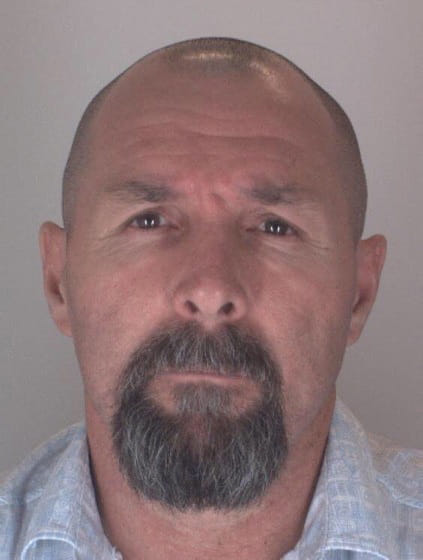
BERLIN (Reuters) – The German government said it had not taken lightly the decision to release Vadim Krasikov, a Russian convicted of the murder in of a former Chechen militant in Berlin in 2019, as part of a major prisoner swap between Moscow and the West on Thursday.
Krasikov was among the Russians released by the West in exchange for 15 people imprisoned “unjustly” in Russia and a German who had been sentenced to death in Belarus, the German government said in a statement.
Those released from Russia included U.S. Wall Street Journal reporter Evan Gershkovich.
Russian President Vladimir Putin had hinted in February he would release Gershkovich in exchange for Krasikov, referring in an interview to a person who “due to patriotic sentiments, eliminated a bandit in one of the European capitals”.
But such a swap was politically complicated for Germany given the brazenness of the murder, committed in broad daylight a few minutes’ walk from parliament and the office of then-Chancellor Angela Merkel.
“The state’s interest in the completion of the prison sentence of a convicted criminal was counterbalanced by the freedom, physical well-being and – in some cases – ultimately the lives of innocent people imprisoned in Russia and those unjustly politically imprisoned,” the government said.
“Our obligation to protect German nationals and our solidarity with the USA were important motivations.”
U.S. President Joe Biden acknowledged that Germany had had to make significant concessions to achieve the prisoner swap.
In advance of Thursday’s swap, some German officials had feared such a deal would embolden Russia to take German citizens hostage in the hope of reciprocal favours.
GERMAN CITIZENS TARGETED?
After the detention of several German citizens in Russia in the latter half of 2023 and the start of this year, the Foreign Office sharpened its warnings in March against travelling to Russia, saying Germans were “urgently warned” not to go there.
Among the risks it cited was that of arbitrary imprisonment, and it warned in particular that Russia did not recognise Russian-German dual citizens as Germans, which was the case with three of the five Germans released on Thursday from jail in Russia and Belarus.
In one of the most high profile cases of detentions, Russia ally Belarus had sentenced to death German national Rico Krieger on terrorism charges.
Krieger said last week in an interview with Belarus-1 state TV that Ukraine’s SBU security service had told him to photograph military sites in Belarus in October, and to plant explosives on a train line southeast of Minsk. The explosives went off but no one was hurt.
It was not clear whether Krieger was speaking under duress at the time. In a sign of the impending swap, Belarus President Alexander Lukashenko pardoned Krieger on Tuesday.
Also included in Thursday’s swap was Kevin Lick, a 19-year-old dual Russian-German citizen, who was sentenced in December 2023 to four years in prison for treason.
Lick, the youngest person convicted of treason in the history of the Russian Federation, was detained for allegedly sending photos of a military unit visible from his apartment window to the German security services, according to non-profit organization Rights in Russia which is based in Britain.
Lick denies the charges, his mother said in an interview with Der Spiegel magazine in April.
(Reporting by Kirsti Knolle, Sarah Marsh, Thomas Escritt, Friederike Heine, Riham Alkousaa; Editing by Thomas Seythal, Alex Richardson and Frances Kerry)
Disclaimer: This report is auto generated from the Reuters news service. ThePrint holds no responsibilty for its content.