








VAUX-DE-CERNAY, France, March 26 (Reuters) – Foreign ministers from the world’s leading Western democracies meet in France this week against the backdrop of wars in Iranand Ukraine, economic uncertainty, and mounting unease over an increasingly unpredictable U.S. foreign policy.
The two-day gathering at the restored 12th-century Abbaye des Vaux-de-Cernay, about 40 km (25 miles) southwest of Paris, brings together ministers from the G7 – Britain, Canada, France, Germany, Italy, Japan and the U.S. – alongside the European Union.
The grouping, which first met as six in nearby Rambouillet 50 years ago, traditionally approached its core economic and geopolitical challenges with a broad consensus.
That cohesion has frayed since Donald Trump returned to the U.S. presidency in 2025.
US SEEN AS DESTABILISING ELEMENT
Allies and adversaries alike have spent the past year scrambling to respond to abrupt U.S. policy shifts, from tariffs to Ukraine, and now the Middle East conflict, which European diplomats and officials say lacks clear objectives or an exit strategy.
France’s army chief on Wednesday bemoaned Washington’s unpredictability, saying it was impacting allies’ interests and security.
“The U.S. attitude is an element of destabilisation of the international system for all players, not only for members of the G7, but also for China, (and) for many, many countries in the world,” said Thomas Gomart, director of the Paris-based French Institute of International Relations.
Underscoring the break from past practice, officials have abandoned efforts to craft an agreed all-encompassing final communique to avoid open tensions.
ALLIES SEEK IRAN CLARITY FROM RUBIO
A top priority for Washington’s partners will be a debriefing from U.S. Secretary of State Marco Rubio, who will attend the meeting’s second day on Friday.
Officials said allies are hoping to get greater clarity on the U.S. and Israeli military operations against Iran and on whether any meaningful diplomatic channel exists to end the conflict.
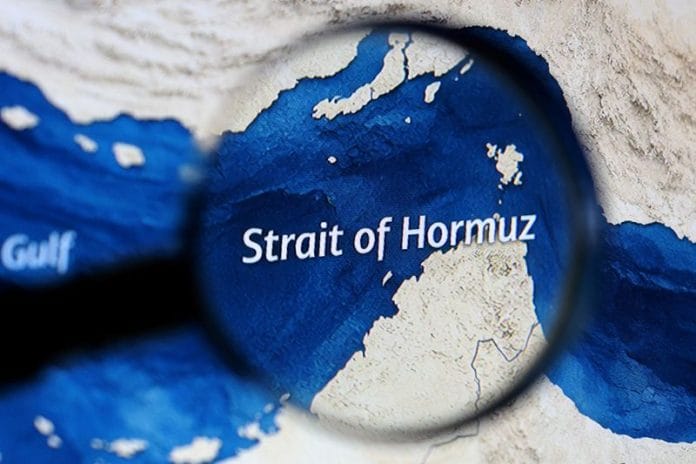
Talks will also focus on the Strait of Hormuz, which Iran has effectively closed, choking about a fifth of global oil supplies.
Ministers from Brazil, India, South Korea and Saudi Arabia, all key economic heavyweights whose alignment is pivotal on global security, energy, and diplomatic crises, will also attend.
NO BAD DEAL FOR UKRAINE
Negotiations to end Russia’s war in Ukraine have stalled, and European officials fear that the U.S. – which has led negotiation efforts and pursued a rapprochement with Moscow – could push Kyiv into an unfavourable peace deal ahead of U.S. midterm elections in November.
European officials said they would stress to Rubio that such an outcome would be unacceptable, arguing instead for tougher sanctions on Russia and immediate efforts to prepare Ukraine for another winter of war.
These should include safeguarding its energy sector, repeatedly targeted by Russian attacks, as well as continuing military support for Kyiv, they said.
“We will reiterate firm support for Kyiv and for U.S. mediation efforts, stressing the need to maintain strong pressure on Moscow through sanctions,” an Italian diplomatic source said.
Ukraine’s foreign minister will attend the talks.
The meeting also feeds into French priorities ahead of its G7 leaders’ summit in the Alps next June, including how to address global imbalances and the crisis of multilateralism. Paris has sought to associate China more closely with those discussions.
One area where officials see potential consensus during the French presidency is the creation of a G7 task force to tackle drug smuggling.
(Reporting by John Irish, Editing by Rosalba O’Brien)
Disclaimer: This report is auto generated from the Reuters news service. ThePrint holds no responsibility for its content.