








Kathmandu: Months ago, they were dodging tear gas on the streets of Kathmandu. Today, they are knocking on doors, drafting alliance charters, and asking Nepal’s nearly 19 million voters to trust a generation with reforming power in the country.
When Nepal’s youth protesters took to the streets in September 2025 demanding accountability and an end to what they called “old politics”, something extraordinary followed: some of them decided to run for office. All of them in their mid-20s—lawyers, consultants, climate advocates—they are first-time candidates who have gone, in the space of half a year, from barricades to the ballot.
With parliamentary elections set for 5 March, the Gen Z movement has arrived at its first real test of power since it toppled the K.P Sharma Oli-led government. Voters in the Himalayan nation will choose 275 members of the House of Representatives, 165 through direct contests and 110 via proportional representation from party lists.
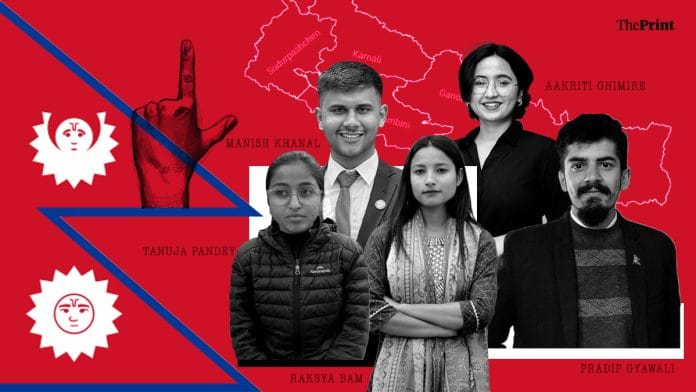
“We don’t want speeches. We want implementation,” said 26-year-old Manish Khanal, a law graduate contesting from Nawalparasi in eastern Nepal under the banner of the Rashtriya Swatantra Party (RSP).
The generational argument is blunter still. “Old people make laws for themselves. We want to make laws for the public,” Khanal added.
Nepal, straddled between China and India, has seen 32 changes in government since 1990. Its economy is largely agrarian, forcing many to leave the country in search of education and work.
Also Read: Will a Gen Z revolt spur Nepal to pick young over old? The chatter on the streets of Kathmandu
From digital rights to regime change
The protests that shook Nepal began with a narrow demand: lift the ban on social media. While the then Oli government reversed the restrictions, the protests quickly expanded into a broader call for anti-corruption reforms and good governance.
When security personnel responded with force, killing at least 77, the movement hardened. Violence eventually engulfed it—former Prime Minister Sher Bahadur Deuba and his wife were assaulted; and Rajyalaxmi Chitrakar, wife of former Premier Jhala Nath Khanal, died after arsonists set her home ablaze.
Rakshaya Bam (26), a Master’s student working closely with the interim administration, was among the earliest participants in the September protests and subsequently played a role in the formation of the interim administration after Oli stepped down as Prime Minister.
Bam now runs Nepal GenZ Front, a civil society group established in the movement’s aftermath. She describes it as a non-partisan and accountability-focused outfit.
“Right now, it is asking questions to the interim government as well, to the older parties and to the new parties. We are only asking questions right now and we are looking forward to the election,” she said.
After the unrest, a drafting committee that included Manish Khanal negotiated a six-point agreement with the interim administration, led by former Chief Justice Sushila Karki. The agreement laid out commitments on accountability, governance reform and youth participation.
Khanal recalls the moment with clarity.
“The situation was chaotic… After the protest, we gathered and took the initiative for dialogue,” he said.
For civic rights activist Aakriti Ghimire—another prominent youth voice during the protests and founder of the civic platform HowtoDeshBikas—the agreement is the benchmark against which any incoming government must be measured.
“The expectation going ahead,” she said, “whoever wins will begin implementing the Gen Z agreement from day one.”
One movement, many strategies
Unity, though, ends there.
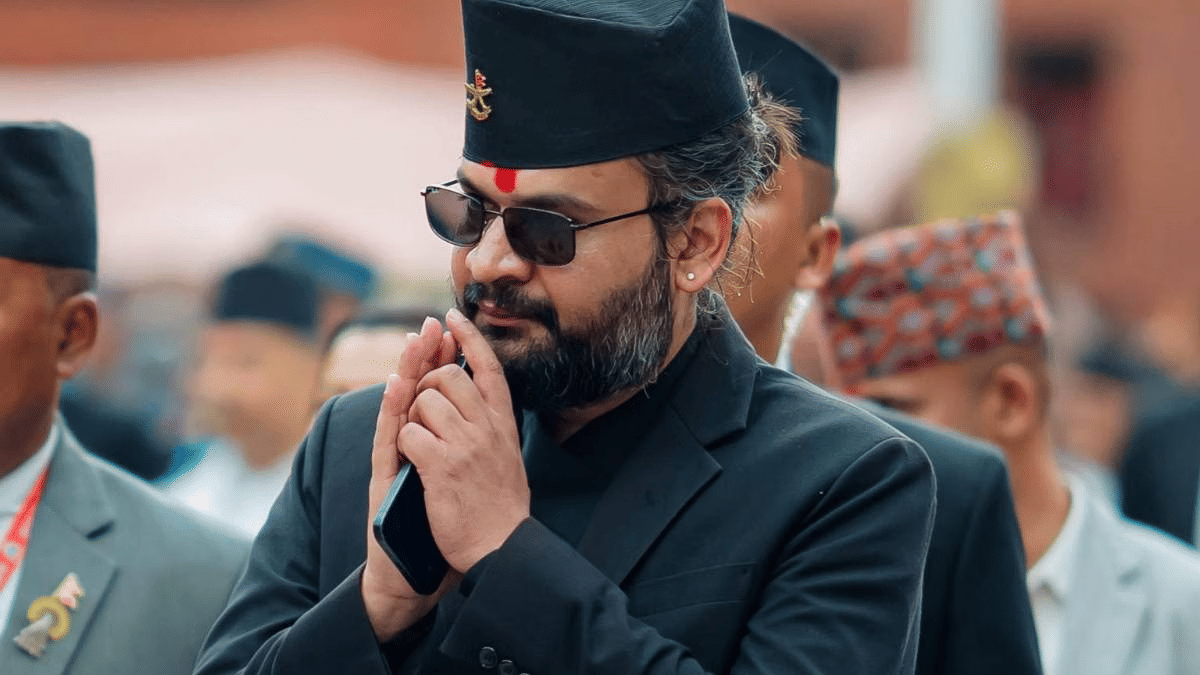
Several protest leaders, including Sudan Gurung, convenor of Hami Nepal, and Tashi Lhazom, have joined the RSP—a three-year-old party that has positioned itself as an anti-establishment alternative. Former Kathmandu mayor Balendra Shah, known widely as Balen, is its prime ministerial face.
Some youth leaders have rallied behind the Nepali Congress, particularly around the party’s PM candidate Gagan Thapa, a parliamentarian and a familiar political face who has promised reforms. And others entered the electoral fray as Independents, carrying the movement’s language into their campaigns without a party label.
The electoral race also includes the Oli-led Communist Party of Nepal (Unified Marxist-Leninist or UML), which has dominated national politics in Nepal for decades.
Among ordinary supporters, there is a perception that newer parties uphold the GenZ mandate—and the RSP is widely seen as the primary beneficiary of the protest wave. But that narrative meets scepticism in some corners.
“Many Gen Z friends have chosen different parties based on ideology and opportunity,” said Ghimire.
“Some have joined party leadership. Some are contesting directly. Some are on the proportional representation list. Others have chosen to become watchdogs and shape the next civil society. Everyone will most likely support different people—and that’s the whole point of democracy,” she added.
Tanuja Pandey, 26, a human rights lawyer and another prominent face of the protests alongside Bam and Gurung, mapped this fragmentation with precision–Civic Forum that refuses partisan politics, Gen Z Movement Alliance, Gen Z Front; and Council of GenZ, formed by Sudan Gurung.
“There is no one force everyone is supporting right now,” Pandey said.
The 2025 movement, which Pandey helped organise partly through her Instagram handle @gen.znepal, which has nearly 23,000 followers, was intended to be peaceful. She maintains that the protests were later “hijacked” by violent mobs and that the escalation was organised rather than spontaneous.
“How can a movement that fights for proper use of public funds burn down institutions built by that same money,” she asked.
Bam put the divisions plainly.
“We have division on this issue like some of our friends are in new parties, some of our friends are in older parties, like the Nepali Congress, which accepts the demands of the GenZ,” she said.
Bam pointed to shifts within traditional parties as evidence that the movement’s pressure had already had an impact on politics in the country.
“They (Nepali Congress) have held special elections within the party and they now have new leadership. So, some of our friends are in that party and some of our friends in a new party and some of us are still on the streets asking questions,” she said.
The accountability gap
One test looms over all others: the fate of the judicial inquiry into deaths recorded during the September protests. The interim administration had formed a Judicial Committee to investigate the killings, but its findings have not been made public. Youth leaders say they have pressed the government to release the report before leaving office.
“We have seen many reports go unpublished earlier,” said 24-year-old Pradip Gyawali, who rose from protest organiser to central committee member of the RSP. “Everyone should know what happened,” he said.
Pandey is more critical.
“It seems like the administration is trying to protect people,” she said, noting that local newspapers have reported that RSP’s most prominent contenders, including Gurung, were seen outside the Parliament building on the day it was burnt.
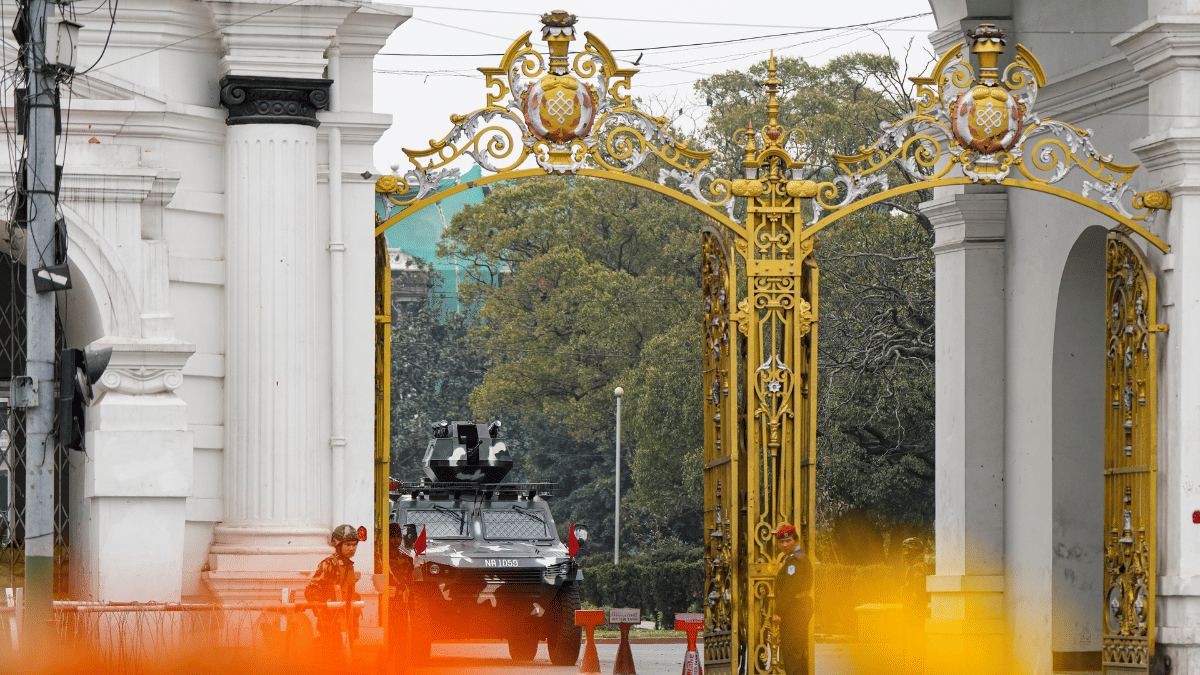
Public anger had swelled despite Oli’s resignation during the protests, with demonstrators targeting government buildings and houses of political leaders across Nepal. The Parliament in Kathmandu, too, was vandalised and set afire in the chaos.
For Pandey, a larger concern is political opportunism—the possibility that both established and emerging parties may capitalise on youth anger without committing to structural reform.
“People think change in faces means systemic change. But changing faces does not automatically change structures,” she said.
She is equally firm about the movement’s intent.
“We wanted reform within the existing political system. If you call it a ‘revolution’, then you must accept that revolutions bring bloodshed and retaliation. That was never our intention,” Pandey said.
Also Read: A street mandate put Nepal in hands of an interim govt led by first woman PM. How it fared
Governing is harder than mobilising
On the ground, the transition from protest to candidacy has not been seamless.
In Nawalparasi, Khanal’s electoral pitch spans the national and the local: anti-corruption enforcement, digital governance and implementation of the protest agreement sit alongside flood control along Narayani River, managing human-wildlife conflict near Chitwan National Park and encouraging markets for local farmers.
At 26, his first challenge has been convincing voters he is ready for the job.
“They see me as their son, their younger brother,” he said. But he does not concede the point. “I grew up here. I know the problems,” he said.
Across districts, young candidates report scepticism from older voters, enthusiasm among first-timers and a shared question—can this generation actually deliver?
“The people are fed up. They want transparency, accountability and participation. They want to be heard between elections, not only during them,” said Gyawali of RSP.
He described the past six months as an accelerated education in statecraft. “It was a tough moment for the country. We learned about democracy, about stability, about security in real time,” he said.
Youth leaders in Nepal broadly want lawmakers between the ages of 26 and 40 to occupy a meaningful bloc in Parliament—not as tokens, but as agenda-setters. Much of that energy, it appears, has coalesced around Balendra Shah, whose mayoral record in Kathmandu is cited as proof that younger leaders can win and govern. But some activists privately worry that once inside formal structures, the urgency of the streets dissipates.
Still, experience matters.
Nepal’s Thursday election will be the second in the region—after Bangladesh—to be triggered by GenZ protests that ousted the incumbents. The youth-driven party in Bangladesh won only six seats in the 300-member Parliament in the general election held this February.
What comes after
Bam is cautious but clear-eyed about what she wants to see.
“At this moment, I am hopeful that the systematic change we demanded will come and that the newly elected government will be more accountable, more transparent, and committed to reforming the country’s laws and institutions. One of the biggest challenges facing youth is the lack of employment opportunities. Because of this, many are forced to leave the country. We may not be able to stop that entirely, but we must reduce it,” she said.
On emigration, Bam said they may not be able to stop people from leaving the country, but we “have to minimize that ratio or that rate”.
According to a United Nations 2019 estimate, half of Nepal’s households had at least one member of the family who was either working overseas or had returned.
“The youth of this country need to see the dream to develop this country within the country,” she said.
On what history will make of the election, Bam was resolute. “We don’t know. But I just don’t want to be remembered for the streets. I want to be remembered for what we built after. I have always been vocal and I will continue to do so,” she said.
(Edited by Prerna Madan)
Also Read: How did Nepal become a ‘Hindu Rashtra’?