





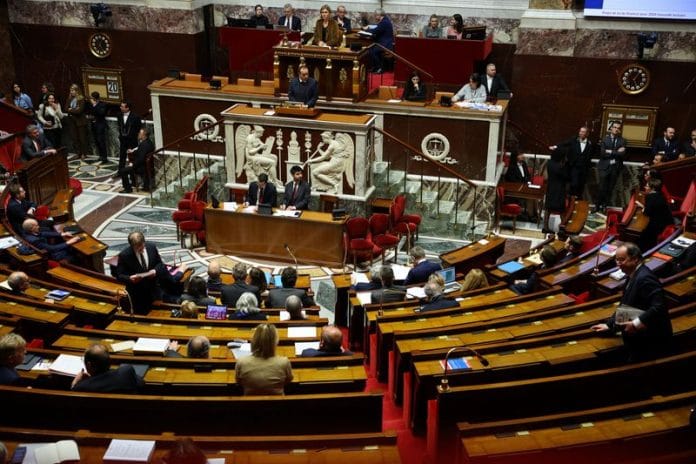



PARIS, Jan 20 (Reuters) – France’s Prime Minister Sebastien Lecornu made use of a special constitutional power on Tuesday to force part of his 2026 budget bill through the deeply divided lower house of parliament without a vote.
Lecornu invoked Article 49.3 of the Constitution on the income side of the legislation to get it through the lower house, where it had become deadlocked after three months of discussions.
“The budget bill is blocked, and no longer votable regardless of (political) configurations or circumstances. And yet France needs a budget,” Lecornu said, announcing the move in the lower house.
In response, the hard-left France Unbowed (LFI) said it had filed a no-confidence motion against the government and the far-right National Rally (RN) was expected to do likewise.
Lecornu and his government, however, appear to have won enough political backing, notably from the Socialists, to survive the no-confidence votes, which are likely to take place on Friday.
The legislation is due to head to the Senate next before returning to the lower house. Lecornu will also need to force the spending side of the budget bill through the lower house before a final push on the overall package.
Lecornu’s minority government expects the budget to be definitively passed in the first half of February, one official has said.
He had previously promised to abstain from forcing the budget bill through parliament without a vote but was forced to do so after failing to win over enough lawmakers to pass the legislation with a vote, despite offering a series of concessions.
Lecornu’s move nevertheless brings France closer to a conclusion to getting a 2026 budget through parliament that keeps the fiscal deficit to a maximum of 5% of its projected economic output for the year.
(Reporting by Elizabeth Pineau, Dominique Vidalon and Leigh Thomas; Editing by Hugh Lawson and Gareth Jones)
Disclaimer: This report is auto generated from the Reuters news service. ThePrint holds no responsibility for its content.