





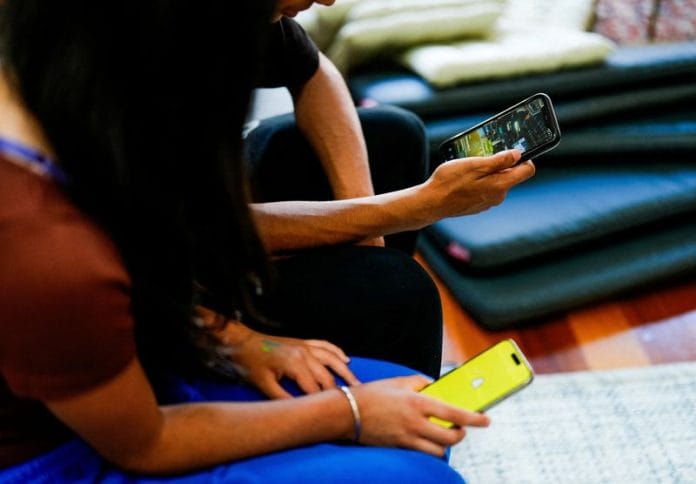



Jan 20 (Reuters) – Australia in December became the world’s first country to ban social media for children under 16, blocking them from platforms including TikTok, Alphabet’s YouTube and Meta’s Instagram and Facebook.
The ban is being closely watched by other countries considering similar age-based measures, with Britain being the latest one to flag such plans, as concerns mount over the effects of social media on children’s health and safety.
Below is a summary of what countries and tech companies are doing to regulate access to social media.
AUSTRALIA
A landmark law passed in November 2024 forced major social media platforms to block minors younger than 16 from December 10, 2025, one of the world’s toughest regulations targeting major tech platforms.
Companies that fail to comply could face penalties of up to A$49.5 million ($33.3 million).
BRITAIN
Britain is considering an Australia-style ban on social media to better protect children online, Prime Minister Keir Starmer said on Tuesday.
The government did not specify an age threshold, but said it was considering a ban “for children under a certain age”, and whether the current digital age of consent was set too low.
CHINA
China’s cyberspace regulator has put in place a so-called “minor mode” programme that requires device-level restrictions and app-specific rules to restrict screen time depending on age.
DENMARK
Denmark said in November it would ban social media for children under 15, while allowing parents to give exemptions for youngsters down to the age of 13 to access certain platforms.
A majority of parties in the parliament said they would back the plan ahead of a formal vote.
FRANCE
In 2023, France passed a law requiring social platforms to get parental consent for minors under 15 to create accounts. However, according to local media, technical challenges have impeded its enforcement.
GERMANY
Minors between the ages of 13 and 16 are allowed to use social media only if their parents provide consent. But child protection advocates say controls were insufficient.
ITALY
In Italy, children under the age of 14 need parental consent to sign up for social media accounts, while no consent is required from that age upwards.
MALAYSIA
Malaysia said in November it would ban social media for users under the age of 16 starting from 2026.
NORWAY
The Norwegian government in October 2024 proposed raising the age at which children can consent to the terms required to use social media to 15 years from 13, although parents would still be permitted to sign off on their behalf if they are under the age limit.
The government has also begun work on legislation to set an absolute minimum age limit of 15 for social media use.
THE U.S.
The Children’s Online Privacy Protection Act prevents companies from collecting personal data from children under 13 without parental consent.
Several states have also passed laws requiring parental consent for minors to access social media, but they have faced court challenges on free speech grounds.
EU LEGISLATION
The European Parliament in November agreed on a resolution calling for a minimum age of 16 on social media to ensure “age-appropriate online engagement”.
It also urged a harmonised EU digital age limit of 13 for social media access and an age limit of 13 for video-sharing services and “AI companions”.
The resolution is not legally binding.
TECH INDUSTRY’S OWN REGULATION
Social media platforms including TikTok, Facebook and Snapchat say people need to be at least 13 to sign up.
Child protection advocates say the controls are insufficient, however, and official data in several European countries shows huge numbers of children under 13 have social media accounts.
($1 = 1.4857 Australian dollars)
(Compiled by Christine Chen in Sydney and Hugo Lhomedet in Gdansk; Editing by Thomas Derpinghaus and Milla Nissi-Prussak)
Disclaimer: This report is auto generated from the Reuters news service. ThePrint holds no responsibility for its content.