








By Andrew Mills and Rachna Uppal
Abu Dhabi, Jan 7 (Reuters) – Turmoil in Yemen’s south has exposed a major feud between Saudi Arabia and the United Arab Emirates, yet their $30 billion trade ties are proving remarkably resilient.
There is unlikely to be any repeat of the trade boycott that hit Qatar in 2017 during its standoff with Gulf states, because there is simply too much at stake for both Saudi and the UAE.
WHY IS THE SAUDI-UAE ROW NOT LIKELY TO HIT TRADE ?
Saudi Arabia and the UAE are so deeply enmeshed in trade, investment and logistics that analysts say a full-blown economic rift is unlikely.
In June 2017, Saudi Arabia, the UAE, Bahrain and Egypt severed ties with Qatar, accusing it of fomenting regional unrest, supporting terrorism and getting too close to Iran, all of which Doha denied. Trade and travel links were severed almost overnight.
But the Qatar blockade targeted a smaller economy with fewer interdependencies.
Gulf states have little appetite for new regional confrontations and are unlikely to risk an economic showdown, said Robert Mogielnicki, a Middle East political economist. Both Saudi Arabia and the UAE see foreign policy as a tool to support business, a mindset that’s helping keep economic ties intact, he added.
HOW CONNECTED ARE THEIR ECONOMIES?
Saudi-Emirati bilateral annual trade totalled around $30 billion at the end of 2023, according to Saudi data — up roughly 42% since 2020. The UAE was the kingdom’s fifth-largest destination for exports and its third-largest source of imports in 2024.
WHAT DOES TRADE LOOK LIKE?
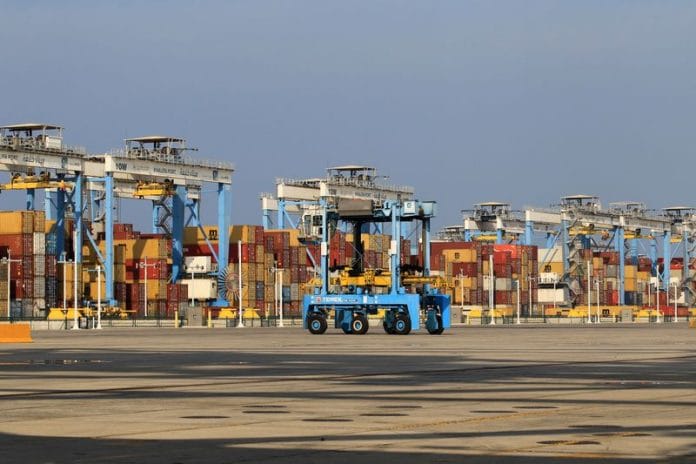
Saudi-UAE commerce runs deep, spanning everything from refined petroleum and gold, to jewellery and re-exported consumer goods like electronics. Much of this trade flows through Dubai’s Jebel Ali port, a major hub for goods entering the Saudi market, even as Riyadh spends big to expand its own ports to capture more direct shipments.
Consumer markets are deeply intertwined: shoppers at Lulu hypermarkets, an Emirati chain ubiquitous in both countries, routinely toss Saudi-made staples into their trolleys: Almarai milk, Jomara dates, Alyoum chicken.
WHAT ABOUT INVESTMENTS?
Emirati investments in Saudi Arabia exceed $9.2 billion, while Saudi direct investments in the UAE are over $4.3 billion, according to Emirati data. More than 4,000 Saudi trademarks and dozens of commercial agencies operate in the Emirates, alongside joint ventures in logistics, retail, and hospitality.
ARE THE TWO GULF STATES ECONOMIC RIVALS?
Yes. The UAE has forged nearly 30 bilateral trade deals with countries, leapfrogging slow Gulf Cooperation Council negotiations that would have included Saudi Arabia.
Saudi Arabia has also taken steps seen as competitive, such as its 2021 directive requiring foreign firms to set up regional headquarters in Riyadh to qualify for government contracts – a move widely viewed as an effort to lure companies away from Dubai.
Competition between Saudi Arabia and the UAE is nothing new, but any move toward a boycott would undermine both countries’ wider economic goals, said Alice Gower, a partner at London-based advisory firm Azure Strategy.
WHY DO THEIR TRADE TIES MATTER FOR THE MIDDLE EAST?
The Saudi-UAE economic relationship underpins much of the region’s trade and investment flows. Both countries act as a gateway for capital, goods, and services – Saudi Arabia as the largest Arab economy and the UAE as a major logistics and financial hub.
Regional stability is the top priority for both Gulf states, and any boycott would risk undermining confidence in their long-term economic masterplans and discourage investment and engagement in the region, Gower said.
Any prolonged strain between the two states would ripple across the Middle East.
(Reporting by Rachna Uppal and Andrew Mills; Writing by Andrew Mills, Editing by Alexandra Hudson)
Disclaimer: This report is auto generated from the Reuters news service. ThePrint holds no responsibility for its content.