








By Ingrid Melander
PARIS, March 22 (Reuters) – France holds the second round of municipal elections on Sunday, the last major ballot ahead of next year’s presidential election.
The vote will help measure the strength of the far-right National Rally (RN) and show how increasingly fragmented France’s political landscape has become.
WHY FRENCH MUNICIPAL ELECTIONS MATTER
Heading nearly 35,000 communes – from major cities to villages with only a few dozen residents – mayors are France’s most trusted elected officials.
There are runoffs for just over 1,500 municipalities, including many key medium and big cities. Elsewhere, largely in small towns, there was a winner in the first round.
Local results can shape national momentum and reveal which themes resonate with voters. Messy negotiations between the two rounds, which have led rival parties on the left to strike alliances in some cities and reject them in others, have added to the confusion in French politics.
Municipal councillors elect senators, making Sunday’s election key for the line-up of France’s upper house of parliament.
WHAT IS AT STAKE FOR THE RN
The anti-immigration, eurosceptic party, which has struggled to make meaningful gains at a local level and only won about a dozen cities in the previous municipal elections in 2020, has been treating the March votes as a critical step toward building momentum for the 2027 presidential ballot.
It won re-election in Perpignan and smaller towns in the first round but its first-round results also underscored the limits of the RN’s appeal beyond its core territories. In major cities outside its Mediterranean heartland, the party barely registered.
WHICH CITIES AND PARTIES TO WATCH
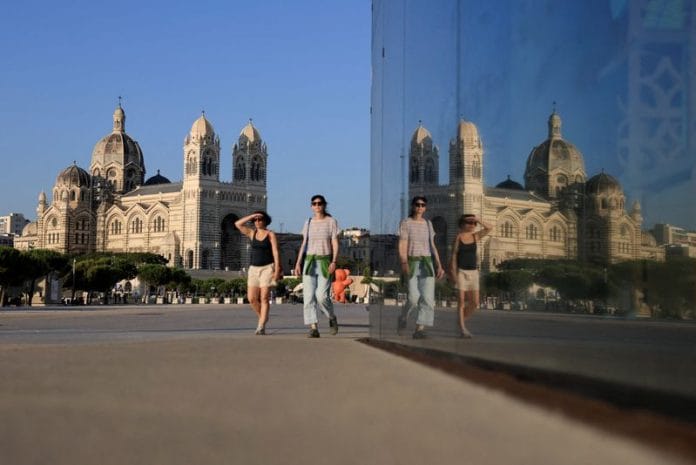
– In Marseille, France’s second-largest city, the incumbent Socialist mayor and the RN were neck-and-neck in the first round. The hard-left candidate pulled out of the race between the two rounds to try to help block the RN from winning the city.
– Paris is another key battleground. Once dominated by conservatives, the city has had a Socialist mayor since 2001. But a candidate from a smaller far-right party dropped out of the race after the first round to help the right snatch the city from the Socialists. The hard left did not pull out. Opinion polls show this will be a close race.
– The RN is also targeting Toulon, a city of 180,000 in southern France, but is not guaranteed to win it. And an RN ally, Eric Ciotti, is in a good position to win Nice, France’s fifth-biggest city.
– Former Prime Minister Edouard Philippe might keep his seat as centre-right mayor of the port city of Le Havre, an opinion poll showed, which could bolster his presidential ambitions for 2027.
– The left did well across France in the last municipal elections in 2020. It is now weakened nationally. Whether it can keep some of the cities it won last time, such as Nantes for the Socialists, or Lyon and Strasbourg for the Greens, will be in focus.
– The hard-left France Unbowed (LFI), which like the RN has never been strong in local elections, is also hoping to make gains.
– The conservative Republicans (LR) have lost heavily in the last national elections but have long been strong in municipal elections.
– President Emmanuel Macron’s allies hold relatively few municipalities, limiting the potential for an anti-government vote.
WHEN ARE THE RESULTS DUE?
Voting starts at 8 a.m. (0700 GMT) and closes between 6 p.m. and 8 p.m., depending on the size of city. Results will trickle in during the evening. Exit polls for major cities are expected around 2000 GMT.
(Additional reporting by Makini Brice, Michel Rose; Writing by Ingrid Melander;Editing by Alison Williams and Andrei Khalip)
Disclaimer: This report is auto generated from the Reuters news service. ThePrint holds no responsibility for its content.